Modern bathrooms are no longer purely functional spaces. Increasingly, they are being designed as environments that support cleanliness, ease, and quiet restoration within the home. As daily life becomes more demanding and health awareness continues to rise, homeowners are beginning to expect more from the spaces where daily rituals begin and end. For architects and […]
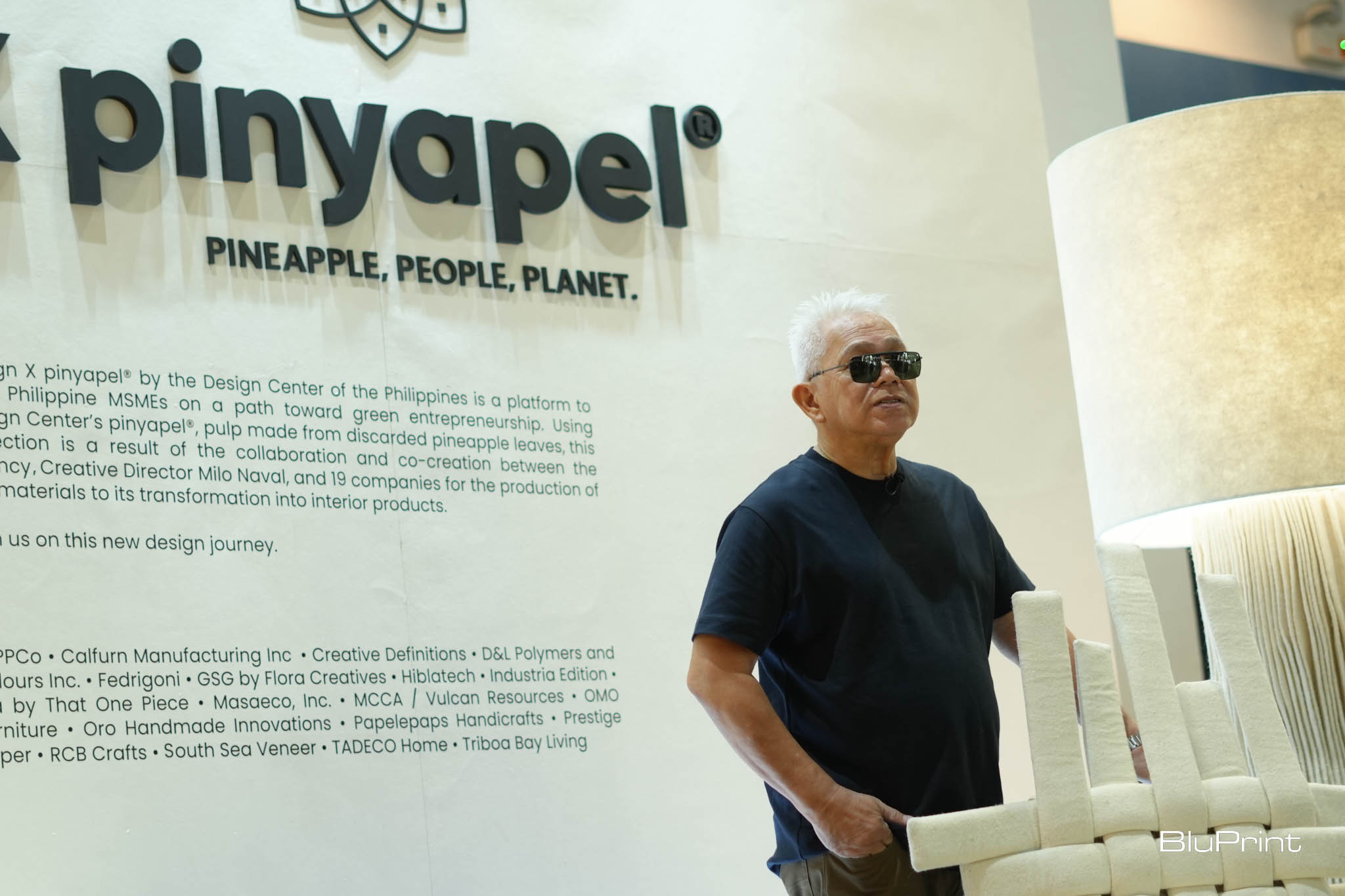
‘Design x Pinyapel’: Milo Naval Leads New Vision of Sustainable Materials



Design x Pinyapel, recently launched Manila FAME, showcased the immense potential of a groundbreaking sustainable material made from discarded pineapple leaves. Spearheaded by renowned Filipino furniture designer Milo Naval as Creative Director, the exhibit presents an innovative collection of furniture and works crafted from this eco-friendly material.
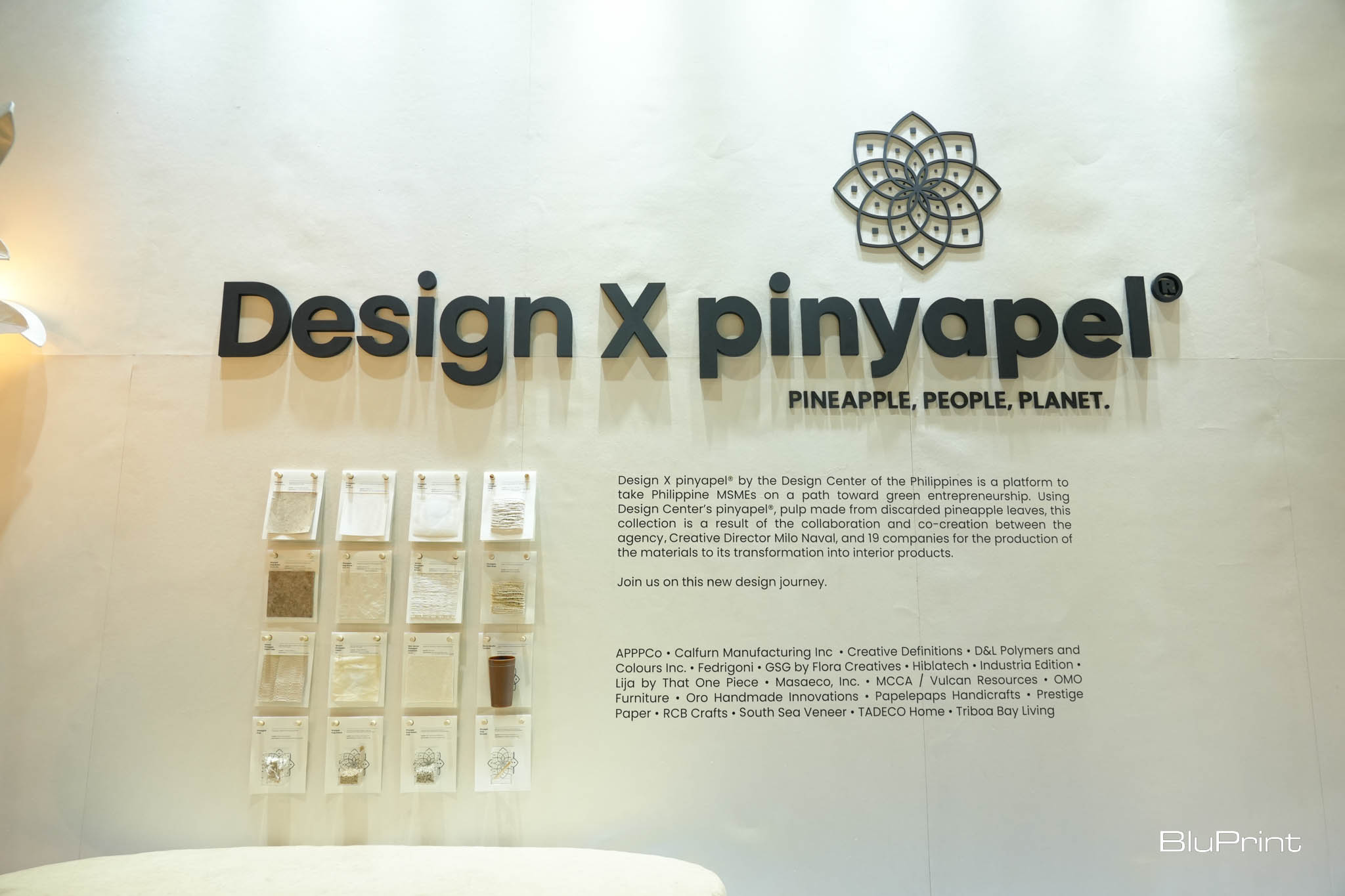
Naval collaborated with over 20 designers and brands, curating a range of products that highlights the versatility of Pinyapel. The exhibit offers viewers a glimpse into the future of sustainable design. From functional pieces to artistic creations, Pinyapel represents the future of eco-conscious craftsmanship in the Philippines.
Operationalizing Pinyapel
The Design Center of the Philippines developed Pinyapel as an “eco-friendly alternative to traditional paper products.” The textile comes from discarded pineapple leaves and processed to become a raw and sustainable material for different designs and products.
The Design Center got the idea for Pinyapel due to the country being a top exporter of pineapple. Over 2.8 million metric tons are harvested yearly, and yet “up to 50% of this crop is often wasted, primarily in the form of discarded leaves.” Thus, the project doesn’t just reduce plastic consumption in furniture making, but also ensures less environmental waste in the country overall.
Advertisement
“By providing a biodegradable solution that can replace nonbiodegradable materials, Pinyapel aims to play a pivotal role in promoting sustainable practices,” the Design Center said in a statement.
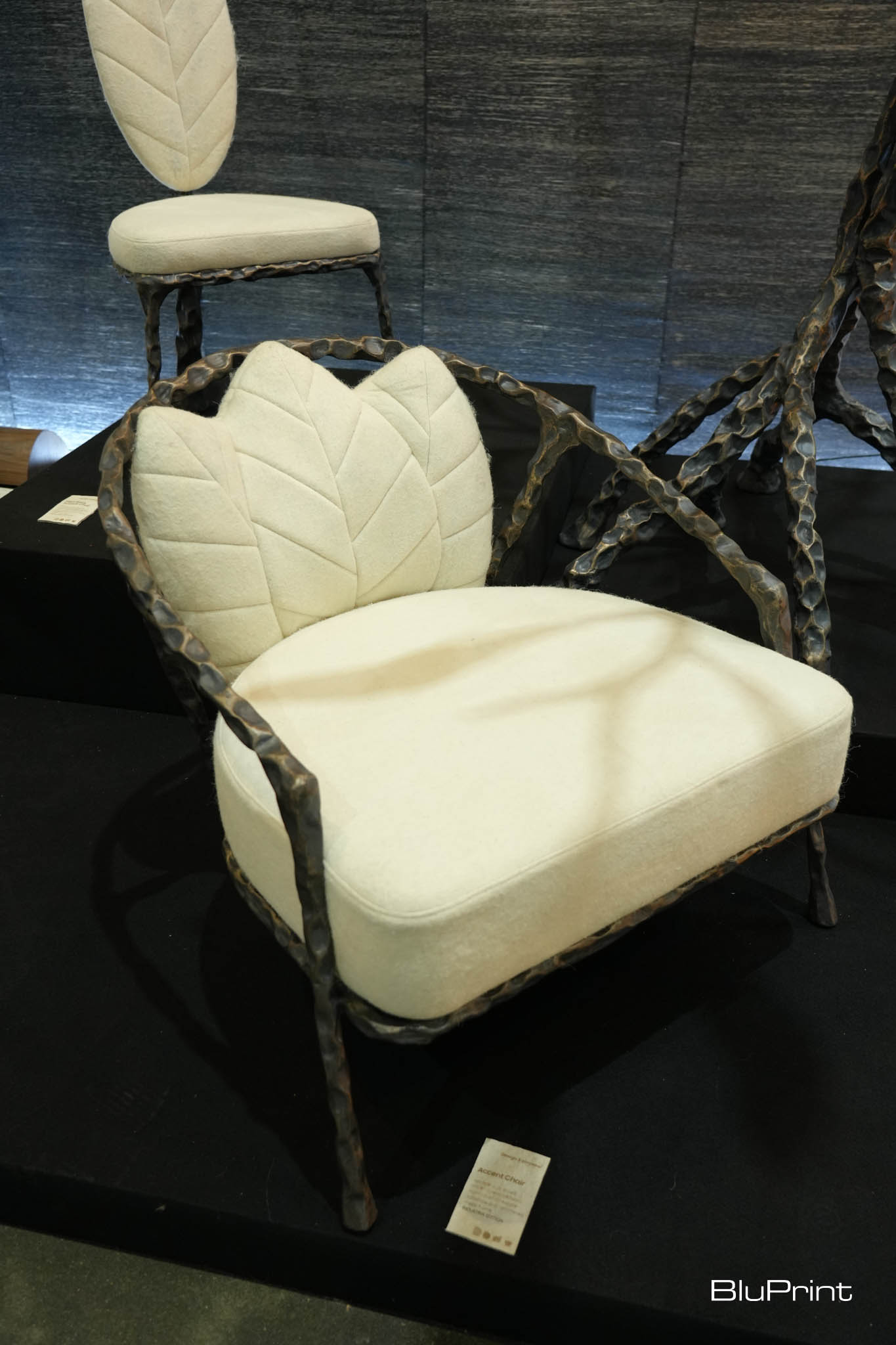
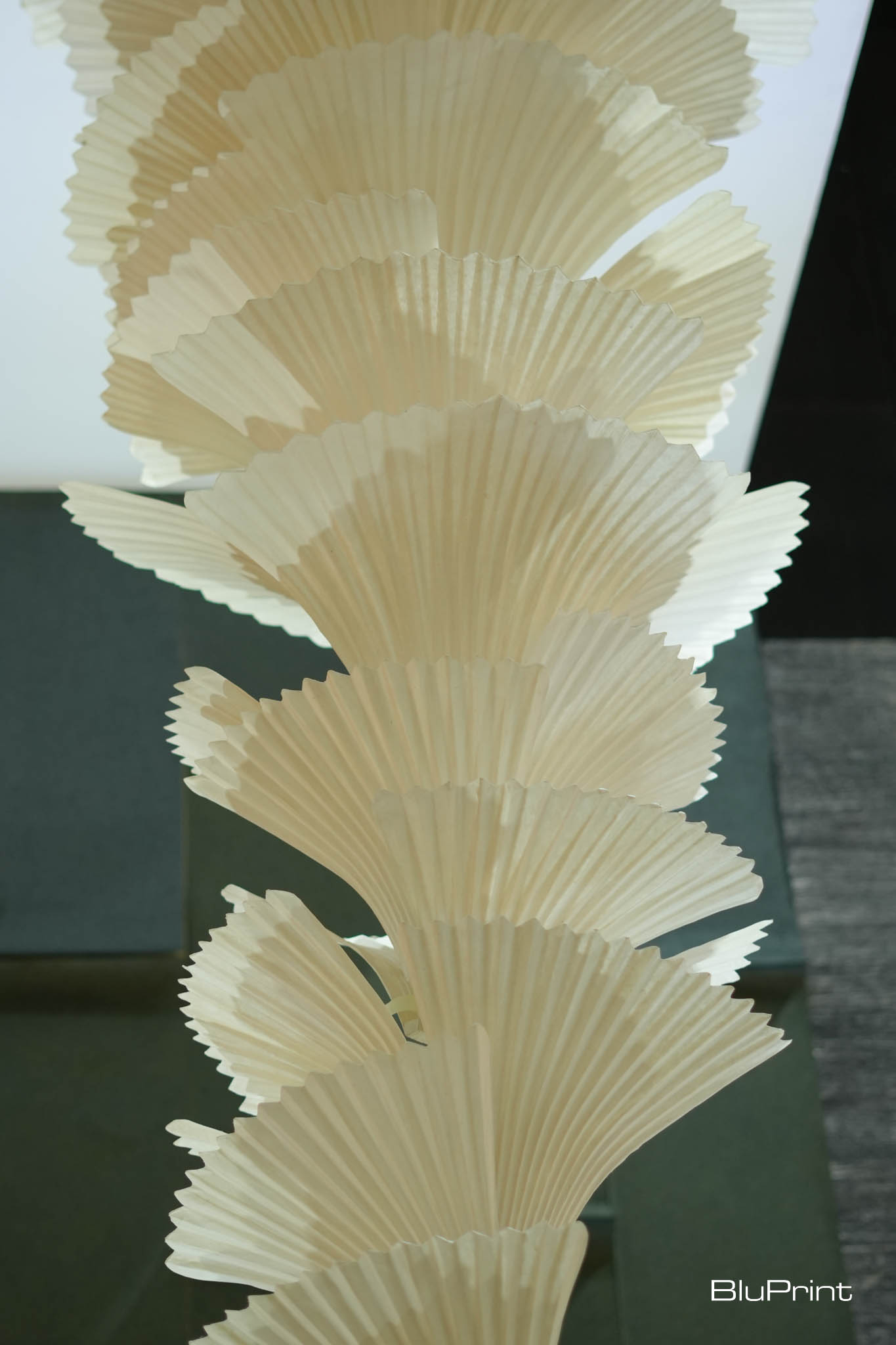
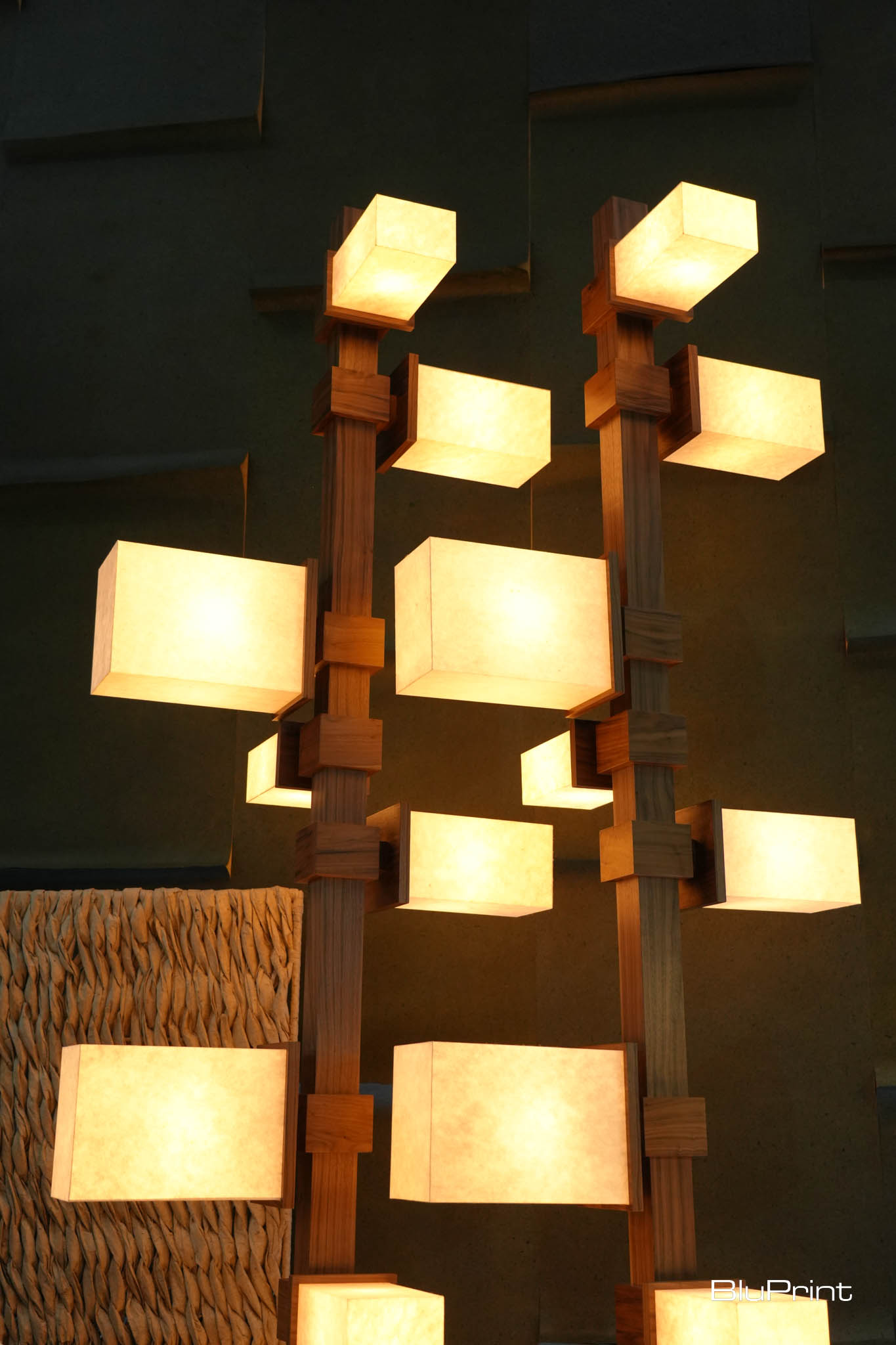
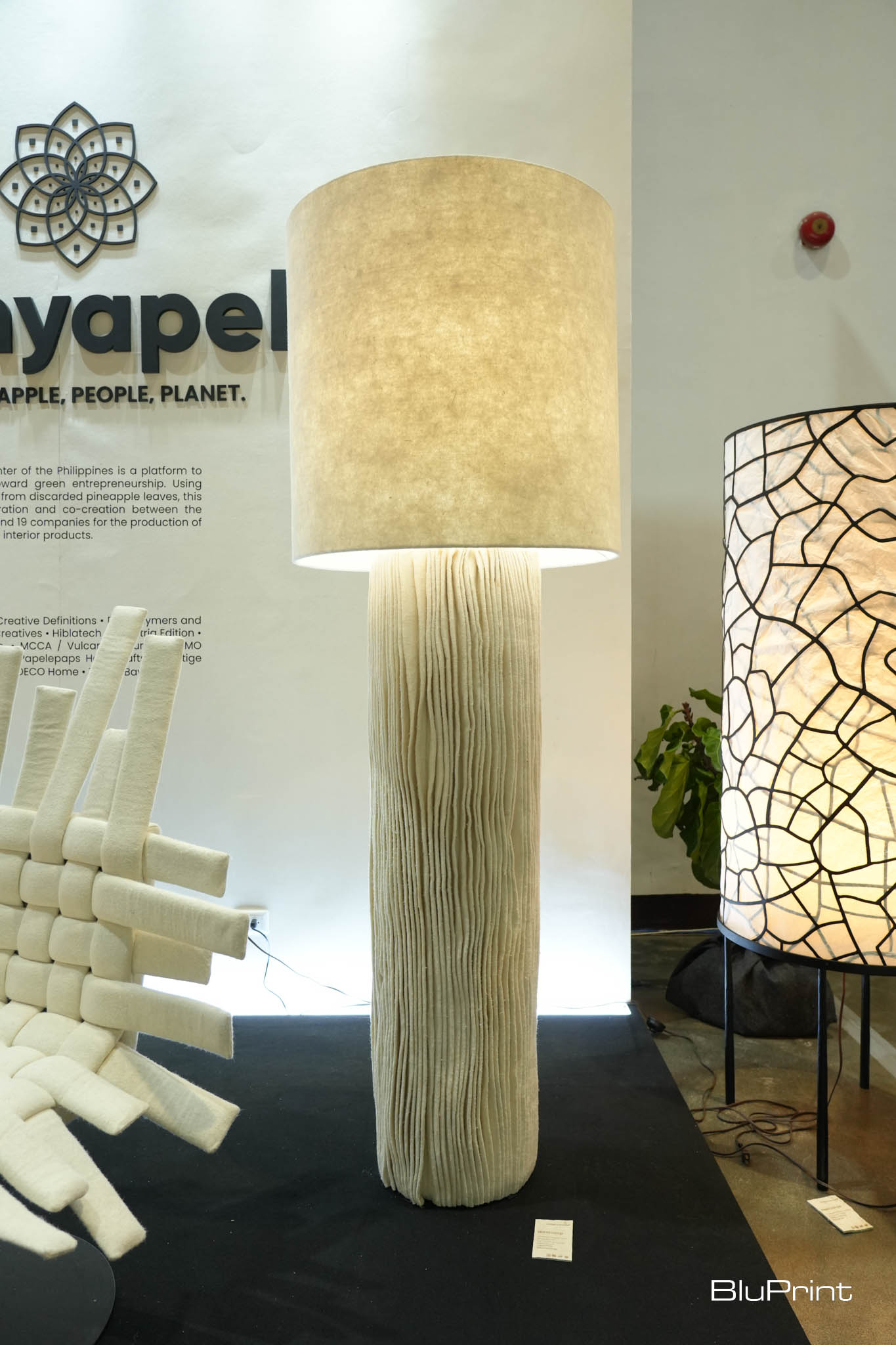
Design Services Division Chief Carla Leonor said that the Design x Pinyapel exhibit brings the material to a broader audience, giving other designers and craftspeople a better idea of how to integrate sustainable materials into their works.
“It’s not just about learning what it is, but knowing how to translate it into products, even systems that they can use to build and grow their businesses,” Leonor said.
Advertisement
Milo Naval and Recyclable Materials
With that in mind, Design Center brought in Milo Naval to curate an exhibit that displays its capabilities. Naval and his company OMO Furniture are forerunners of utilizing sustainable materials in their own designs and products.
“I started showing furniture that uses recycled furniture a long time ago. And I, up to this time, I feel it has come a long way already. That was like 20 years ago or more that we were already showing that we can do more. You know, help in restoring [and] helping in the climate change thing,” he said.
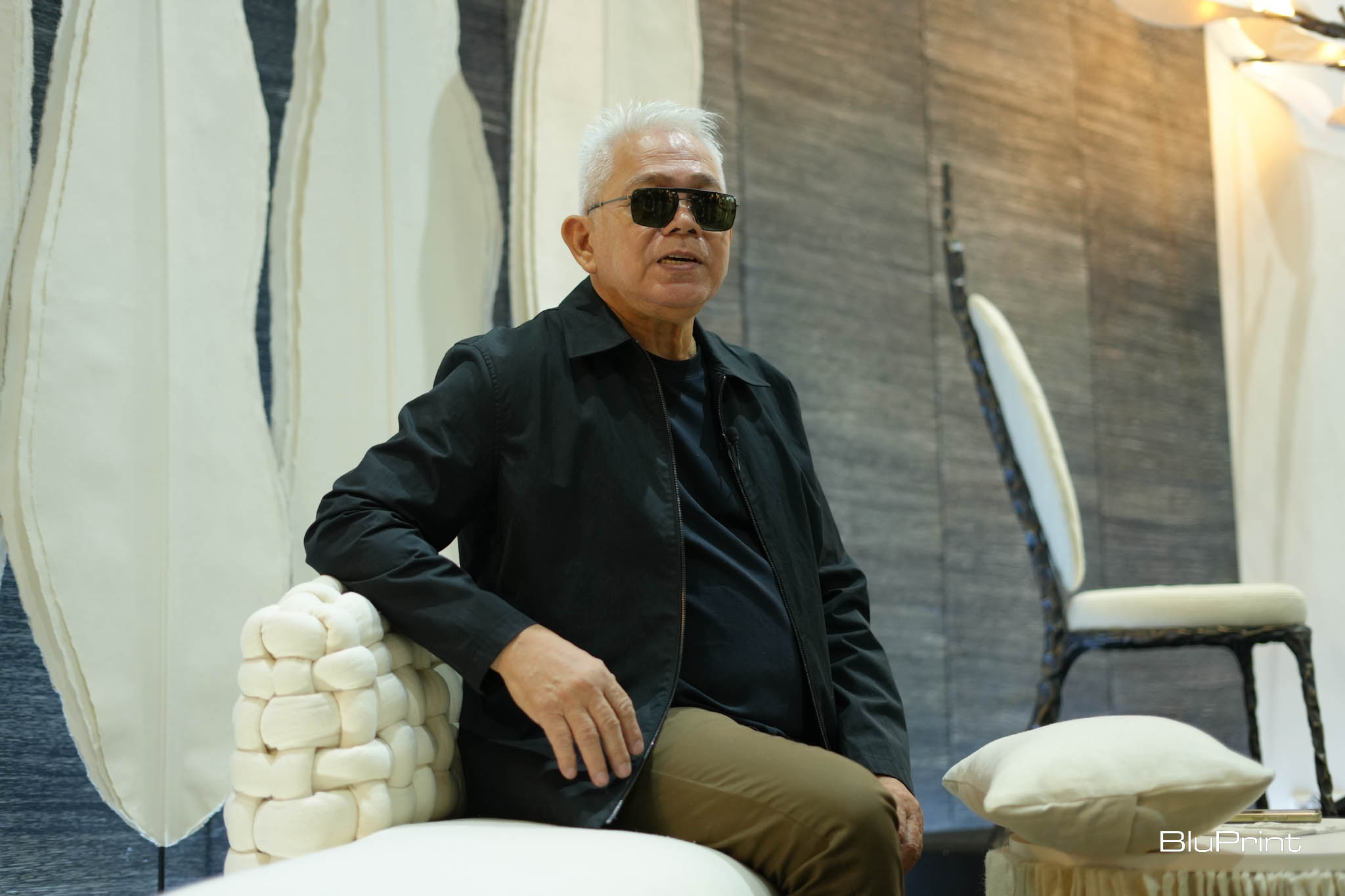
That history makes Milo Naval the perfect fit to introduce Pinyapel to the general public.
Advertisement
“It is one of the advocacies of the Design Center to come up with a project that would use sustainable materials using pineapple. So, initially, the Design Center tried to use pineapple materials from paper cups and other uses, no? This time, we wanted to show that we can also use it for houseware and furniture. That’s why I was asked [and] tasked to do the project with other companies who produce furniture.”
Design x Pinyapel
He came into the project with the objective of portraying the material as expansive, a creative tool flexible enough to serve the designer’s needs. He simplified the presentation to have the material as raw and white as possible, for example, as a way of giving designers their own ideas for where to push the product forward.
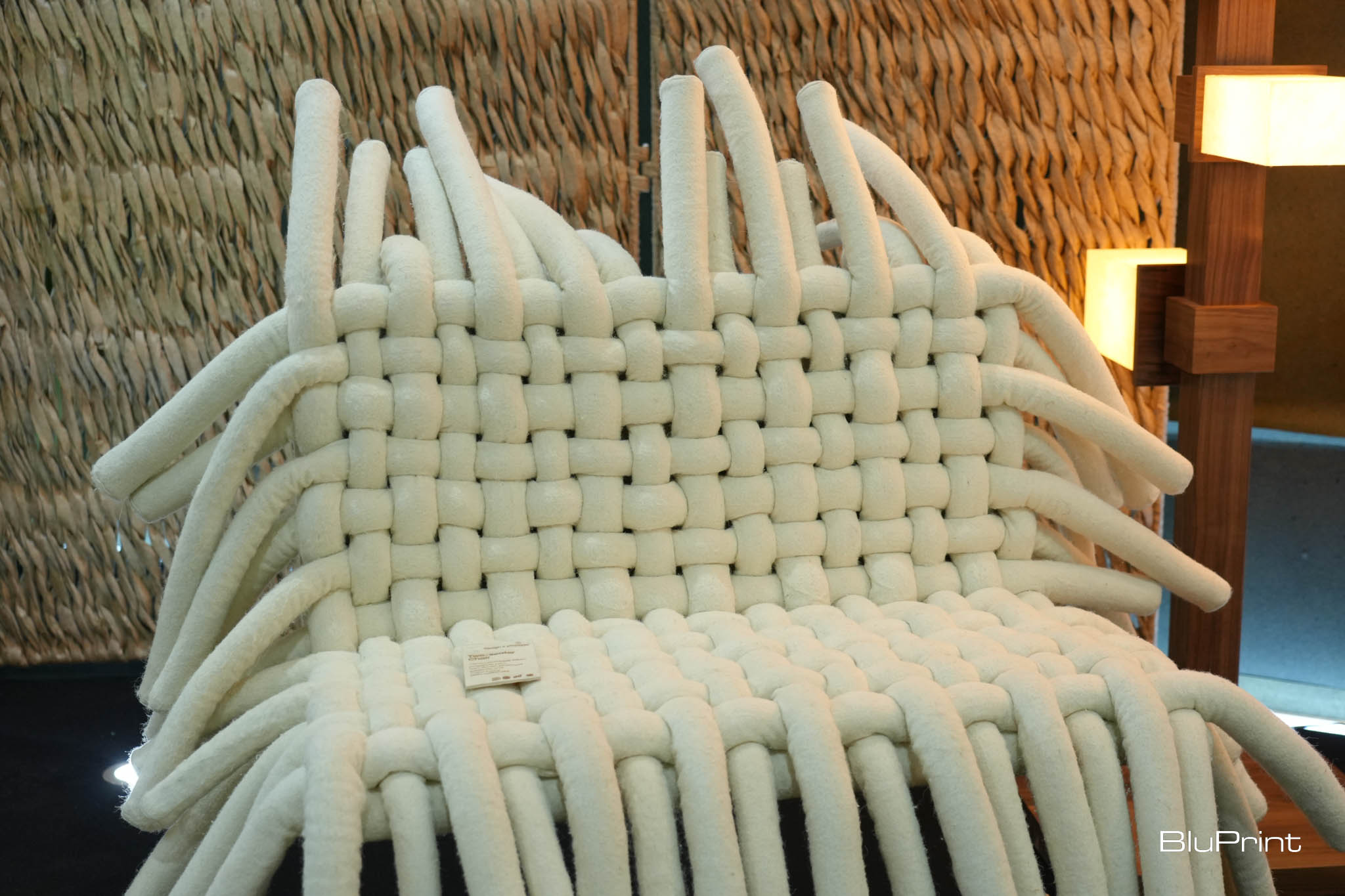
“I wanted to present it as an experimental project,” he said. “You know, I tried to use it in a way that they will view it as an experience for them. I want to introduce the use of this material in a very simple way. I wanted people to think [about] how they can use it.”
Advertisement
Beyond his own company, OMO Furniture, brands like Triboa Bay, Calfurn, SouthSea Veneer, TADECO Home, and others participated in crafting a variety of designs with the material.
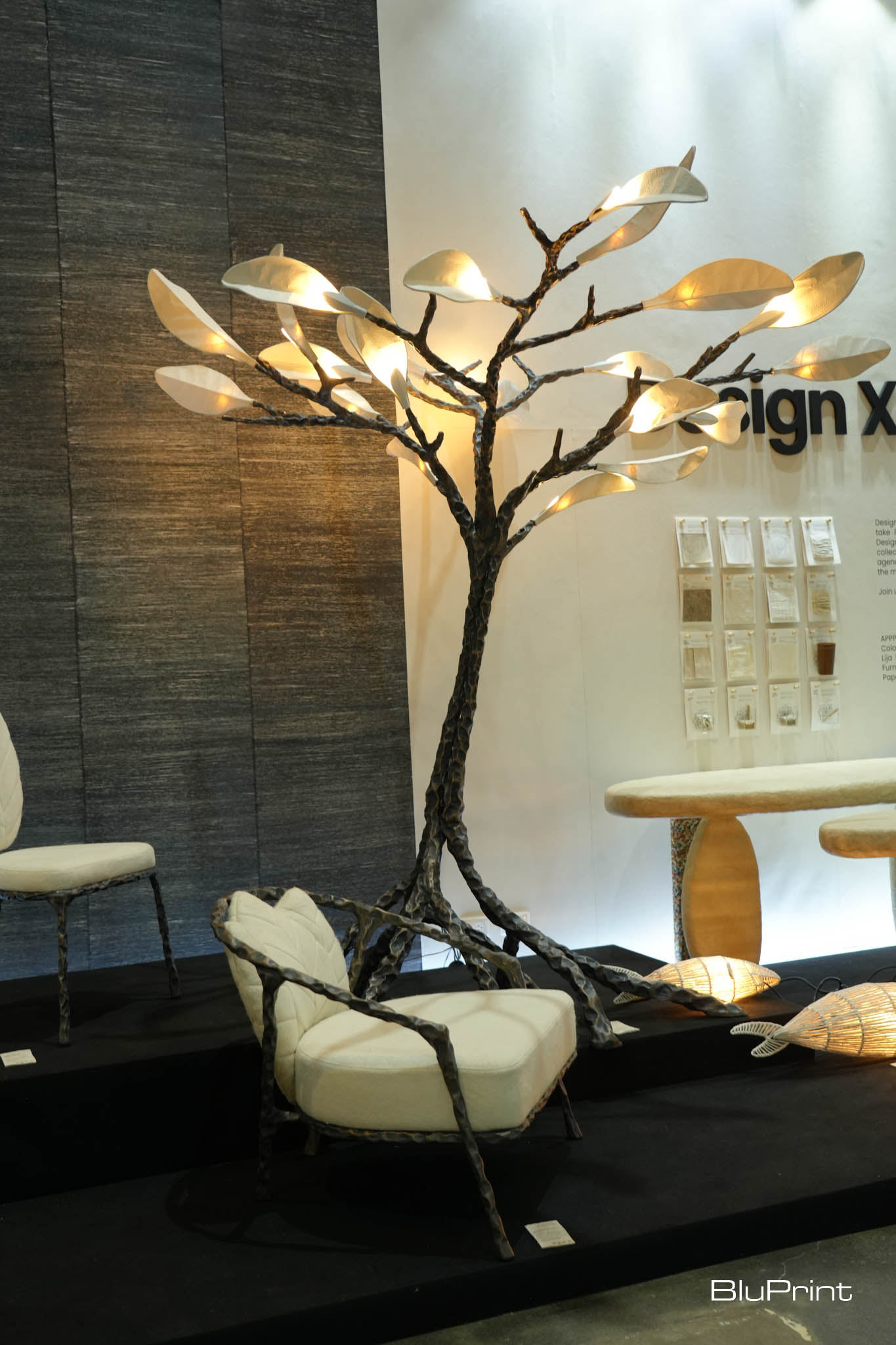
Some interesting design ideas include fish pendant lamps made of roped Pinyapel designed by Lija by That One Piece. South Sea Veneer also contributed a Stonehenge-inspired table design called the Paperhenge Console Table. Triboa Bay created floor lamps, and ORO Handmade Innovations conceived of sconces from the material.
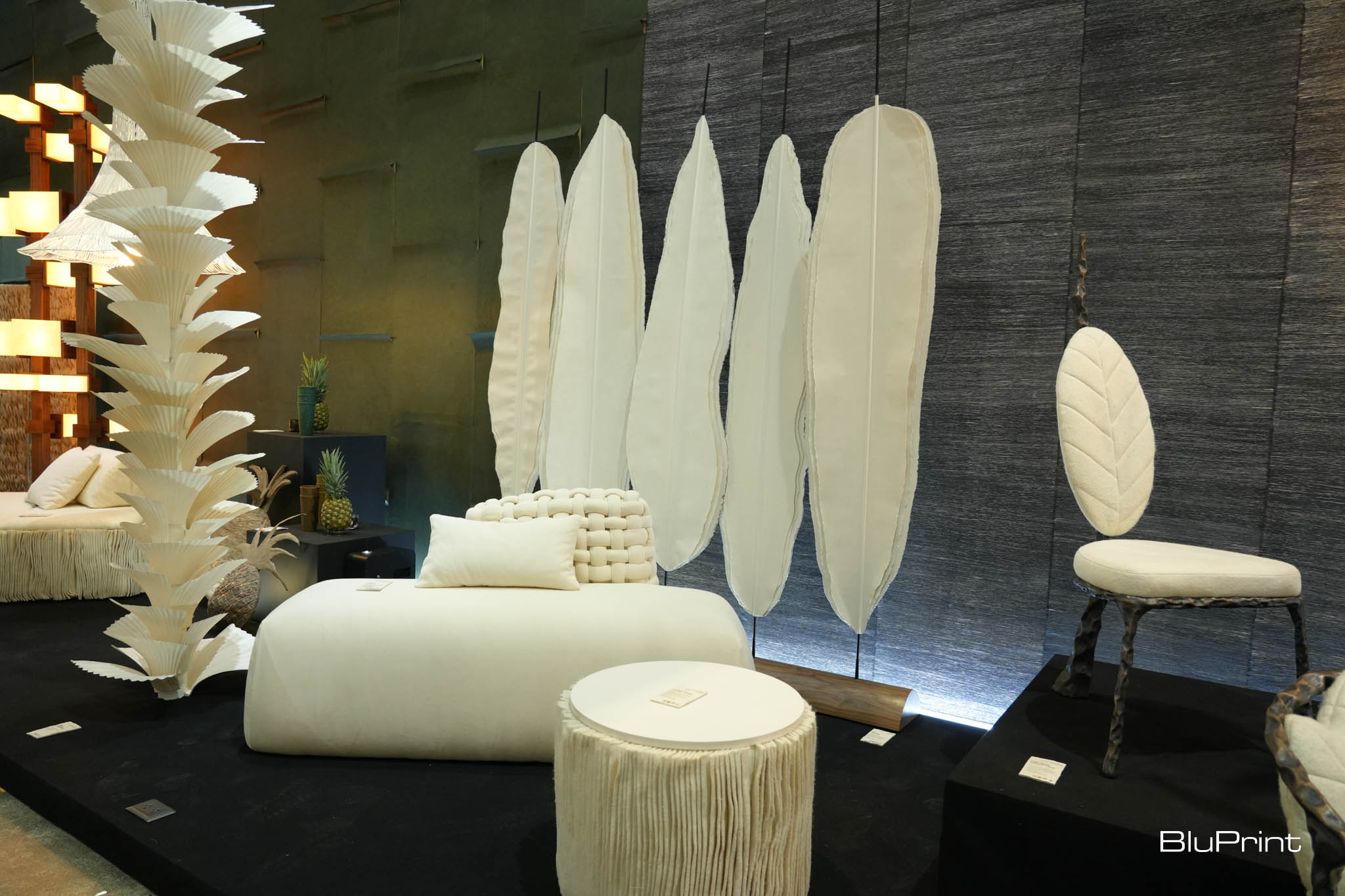
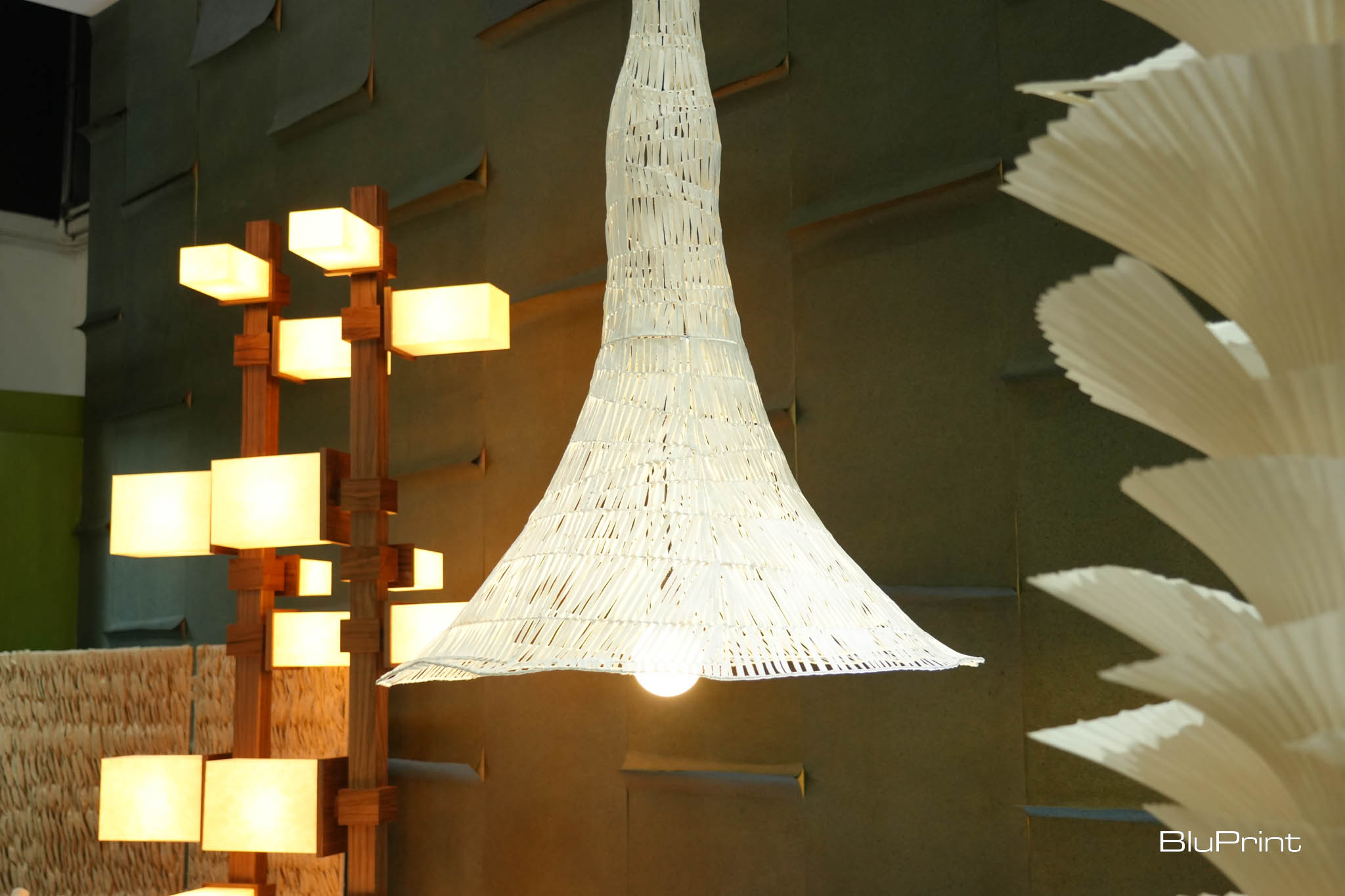
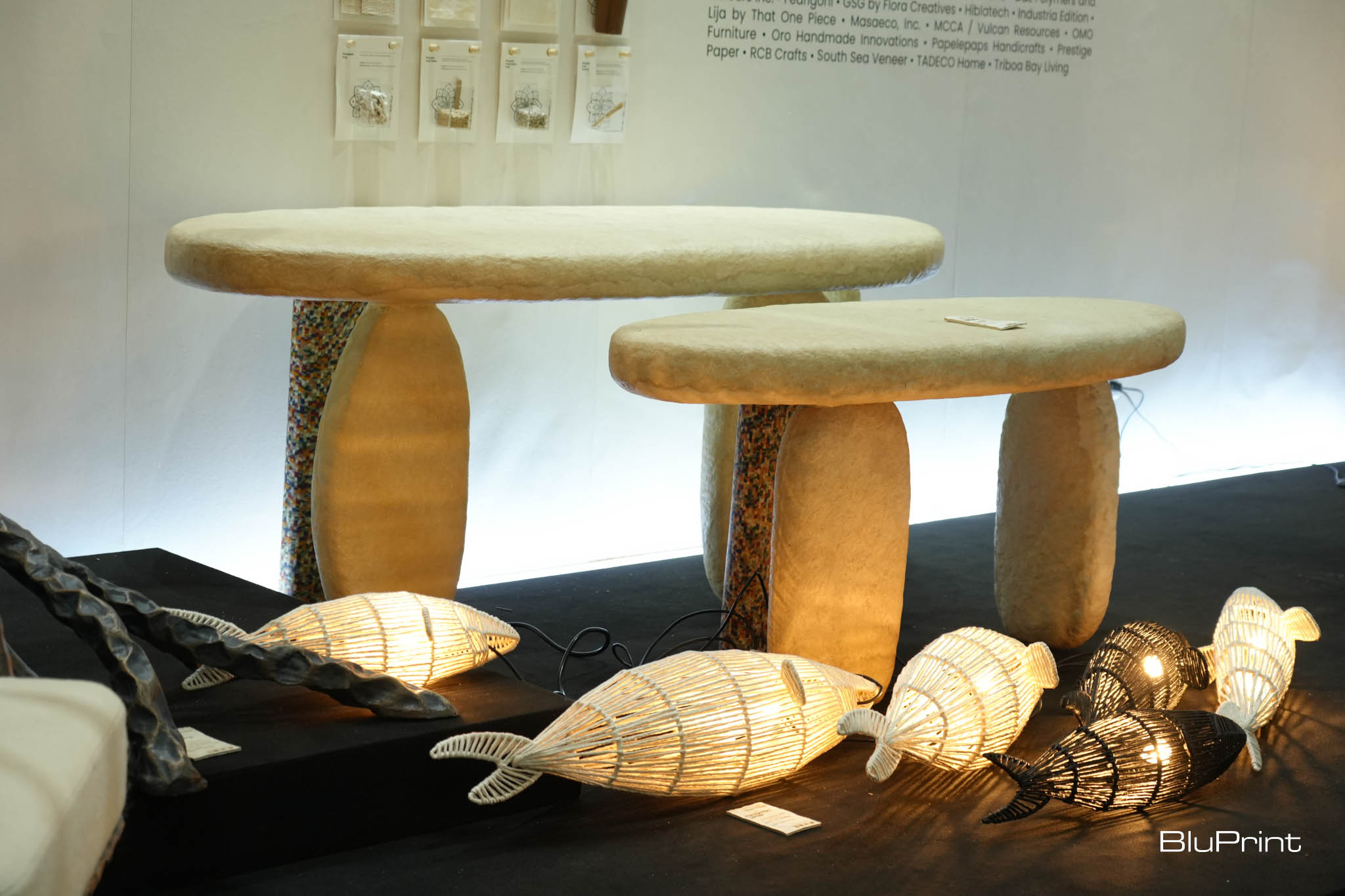
Leonor said that it showcases just how versatile the use of Pinyapel is for different purposes. Depending on its thickness, it can be combined with other materials like metal and wood to create something unique.
Advertisement
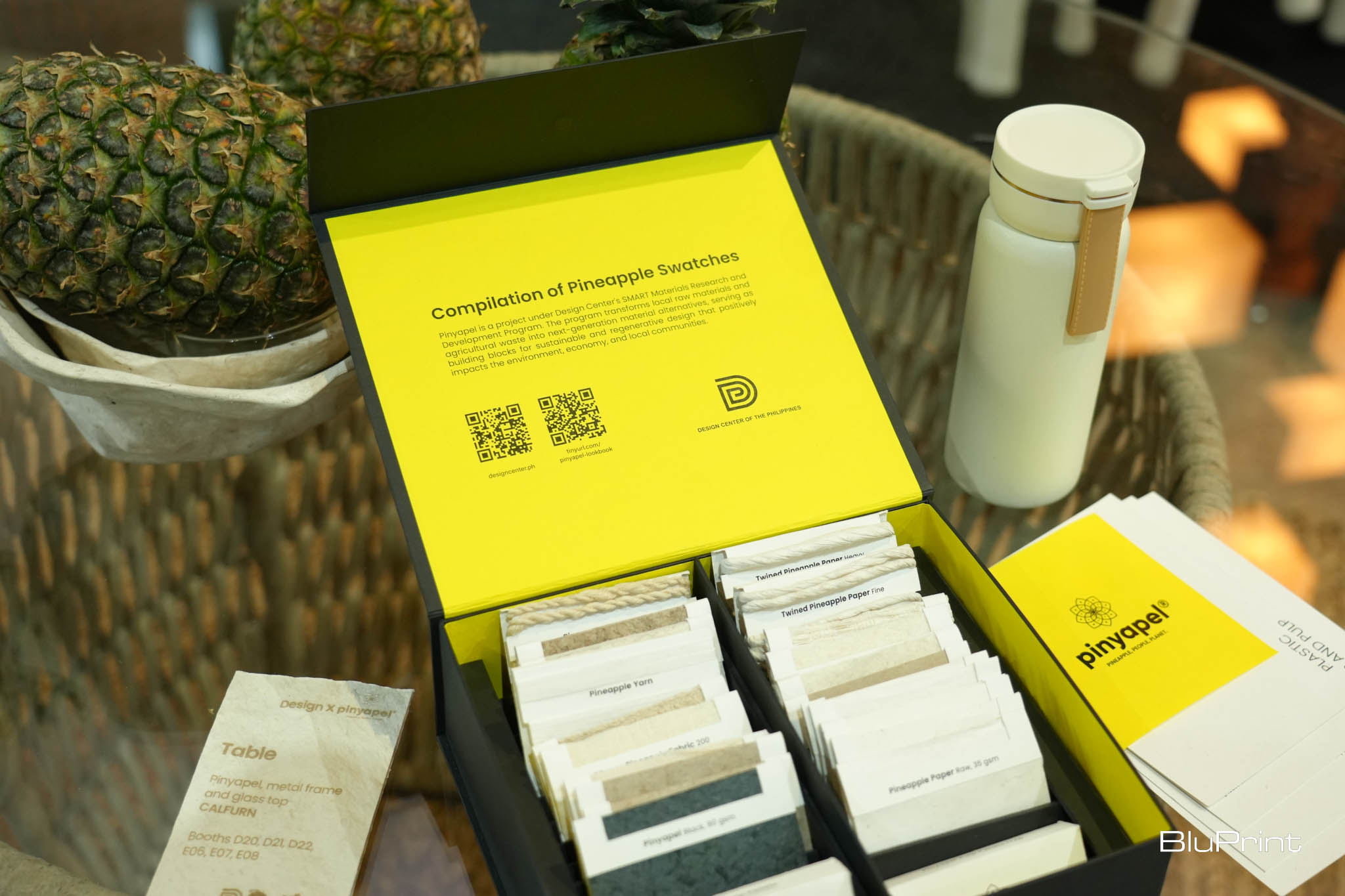
“Here you’ll notice there’s paper, pineapple-based paper. There’s pulp, there’s non-woven textile, there’s woven textile. There’s even rope, and we even have combined it with polypropylene para maging hard extruded material siya,” she said.
Sustainability, Circularity, and the Future of Design
Naval believes that sustainability is a necessary part of the future of design and manufacturing. In the context of Pinyapel and of his own past designs, he said that a sense of circularity allows designers to use everything of the material, leaving no waste behind as an afterproduct. That concept is what attracted him to Pinyapel in the first place.
“Sustainability also relates to circularity,” he said. “When you design something, you want to use something that, say, from the fruit to its waste down to using it again. That is circularity. So, we wanted something like that. The whole idea of it being sustainable from the plant down to using it again in furniture and other things.”
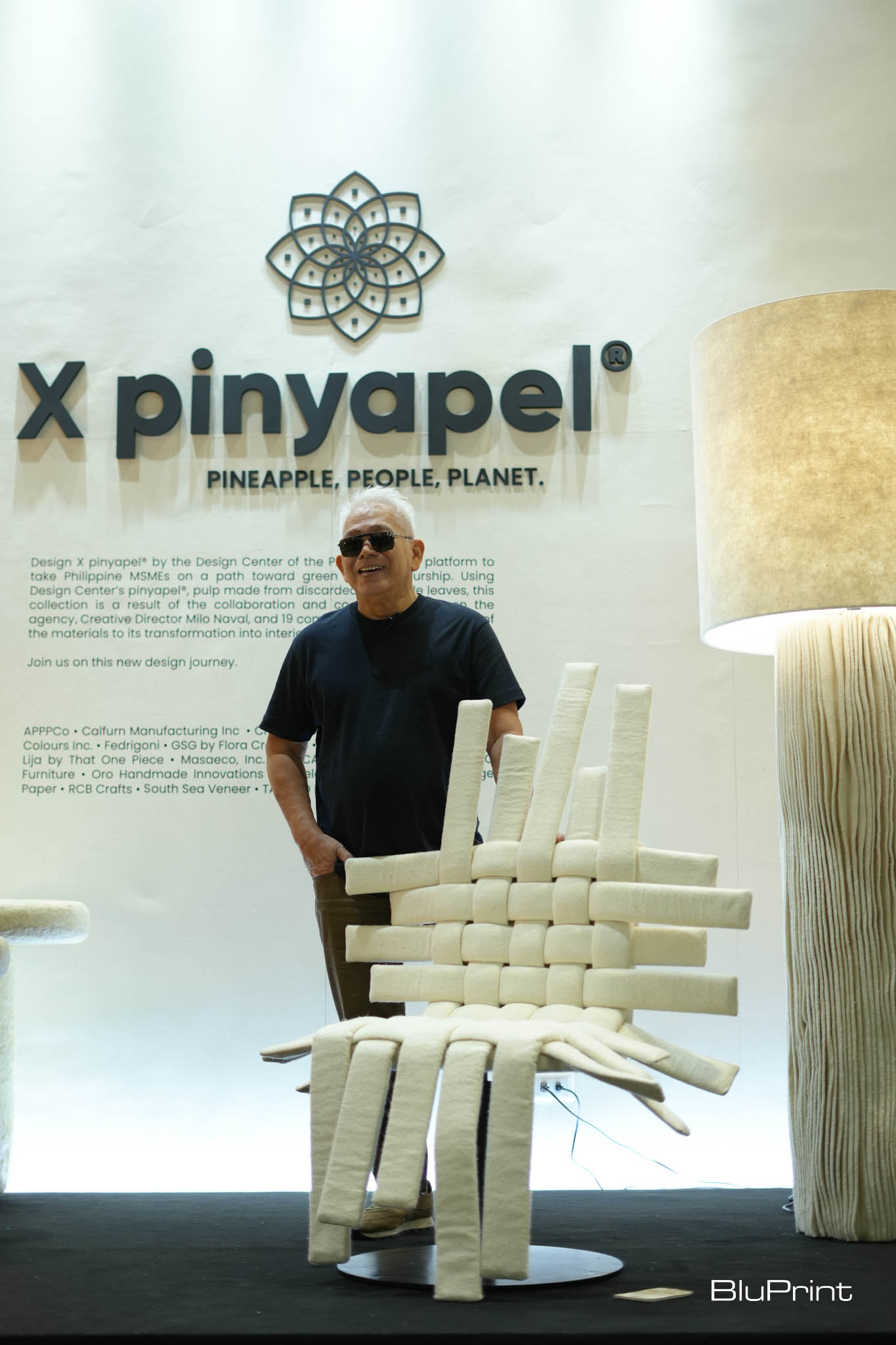
“The idea was to show something that you can still expand,” he said. “Now, people can think about expanding it.”
Advertisement
Leonor agreed with that assessment. She revealed that the Design Center is also working on other potential sustainable materials made from the bakong plant, seaweed, and other materials, though many of them are still in the studies phase to see their viability. It’s part of why they’re pushing Pinyapel: the Design Center believes it’s passed its tests and is ready for broader use.
“Pinyapel is ready to the market, kasi nasa staging siya ng industrialization,” Leonor said. “Meaning, they’re already looking for investors to be able to establish the production facilities. If you widen that capability, that also means… companies will be able to get the raw material at a lower price.”
Adapting to a Climate-Friendly Future
With Design x Pinyapel lighting the torch for the future, it allows us to envision the Philippines as a leader in sustainable product development and design. More than any other country, the Philippines shows the potential for adapting to a changing, climate-friendly world.
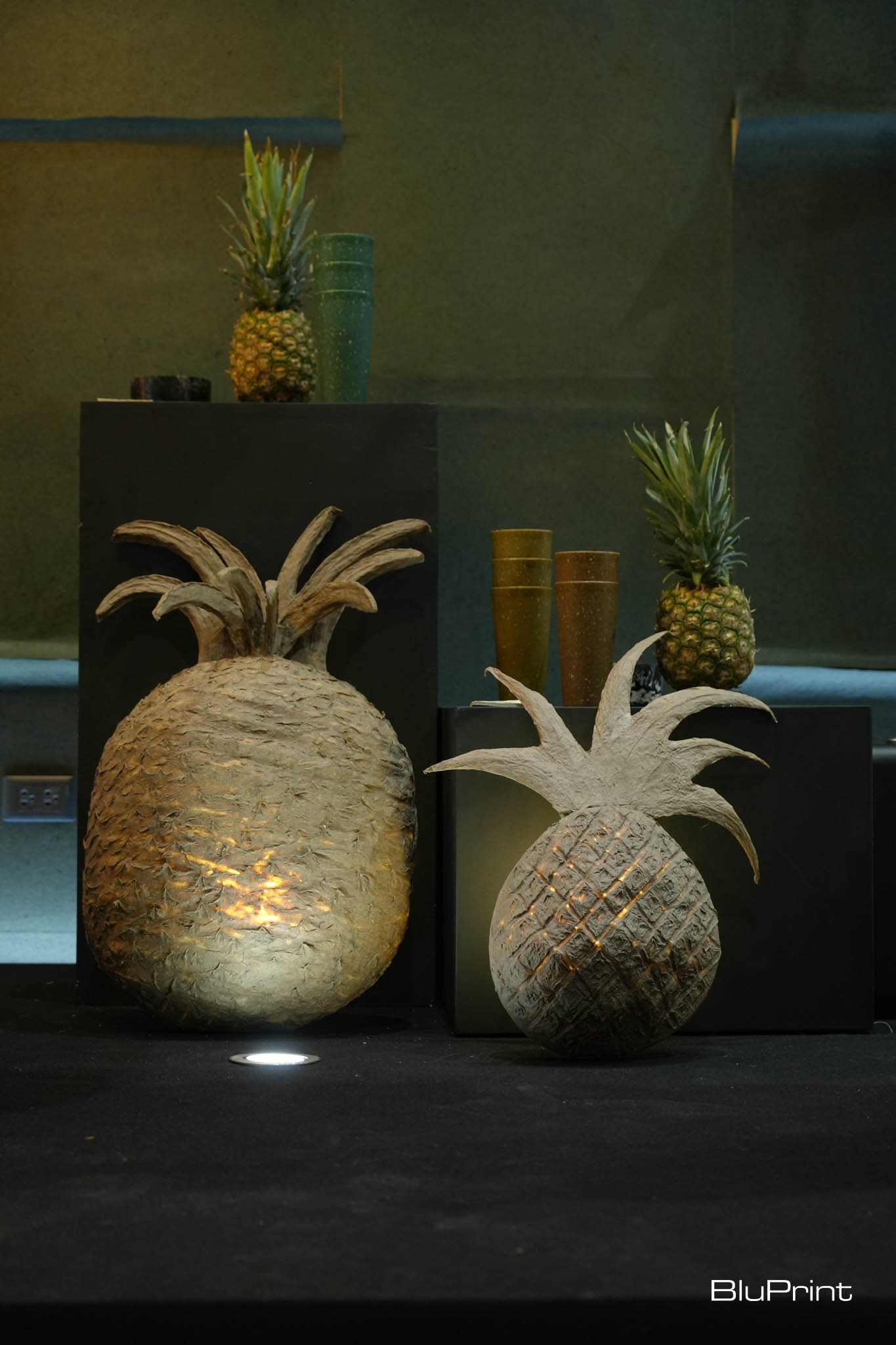
“There’s a lot of potential for the Philippines to become a good player in the green economy,” Leonor said. “[That’s because] there’s a lot of demand globally for sustainable products.”
Advertisement
“Remember, we are an agri-based country,” she continued. “That means [we have many] sources of these waste materials na doesn’t have that value [when you] look at it. But what we’re doing when we use it for furniture, we’re bringing it to high-value pieces. So, that really elevates everything that we’re doing and how we’re different across the world.”
Photos by Kieran Punay.
Related reading: Filipino Design: The Past, Present, and Future of Sustainability
Advertisement
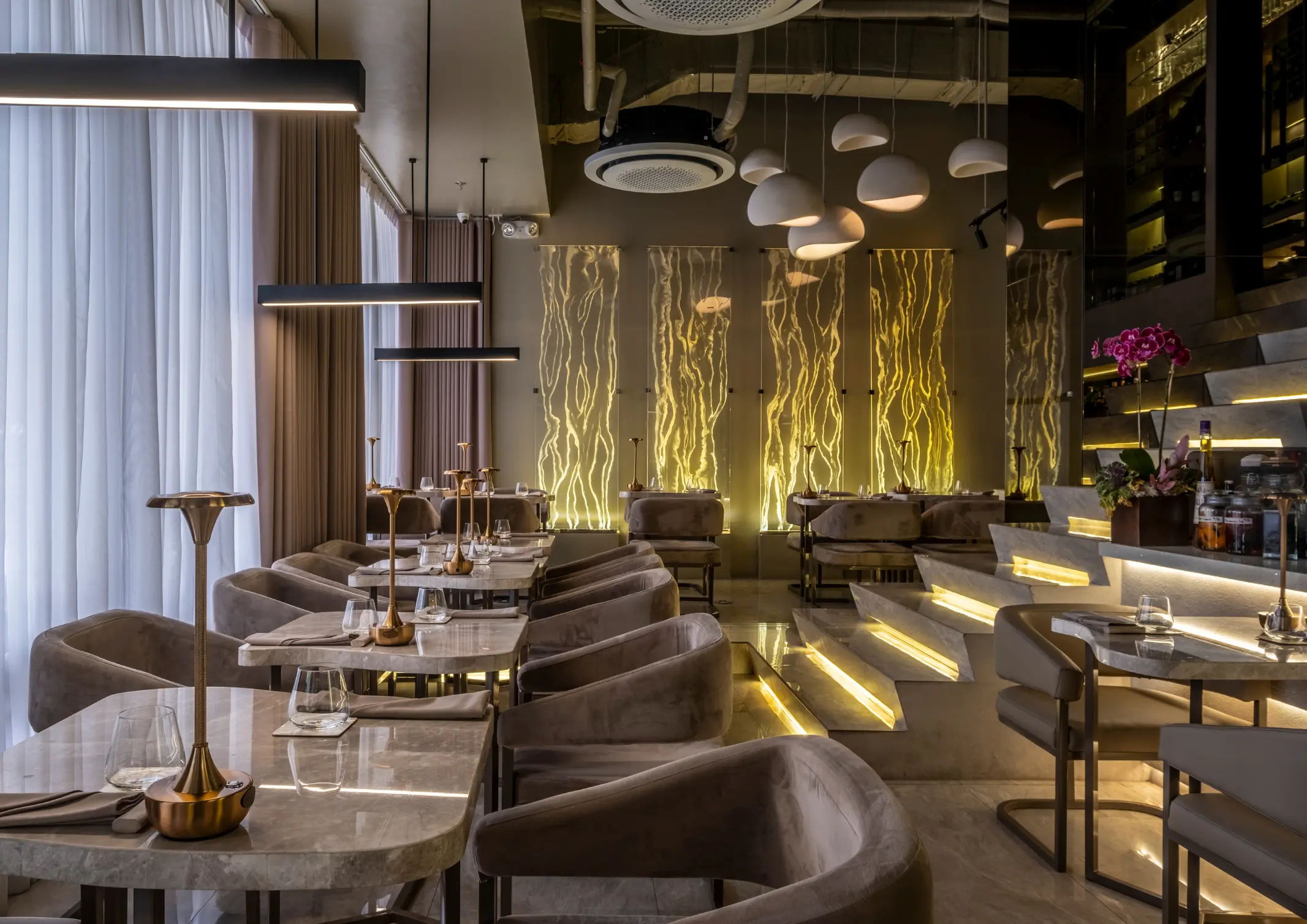
From the moment a diner steps through the door, each detail shapes how a meal is experienced. Restaurant design has evolved, with architects and culinary professionals collaborating to create built spaces that are as intentional as the menu itself. The spatial atmosphere acts as an additional ingredient that can define the culinary experience. Taupe and […]
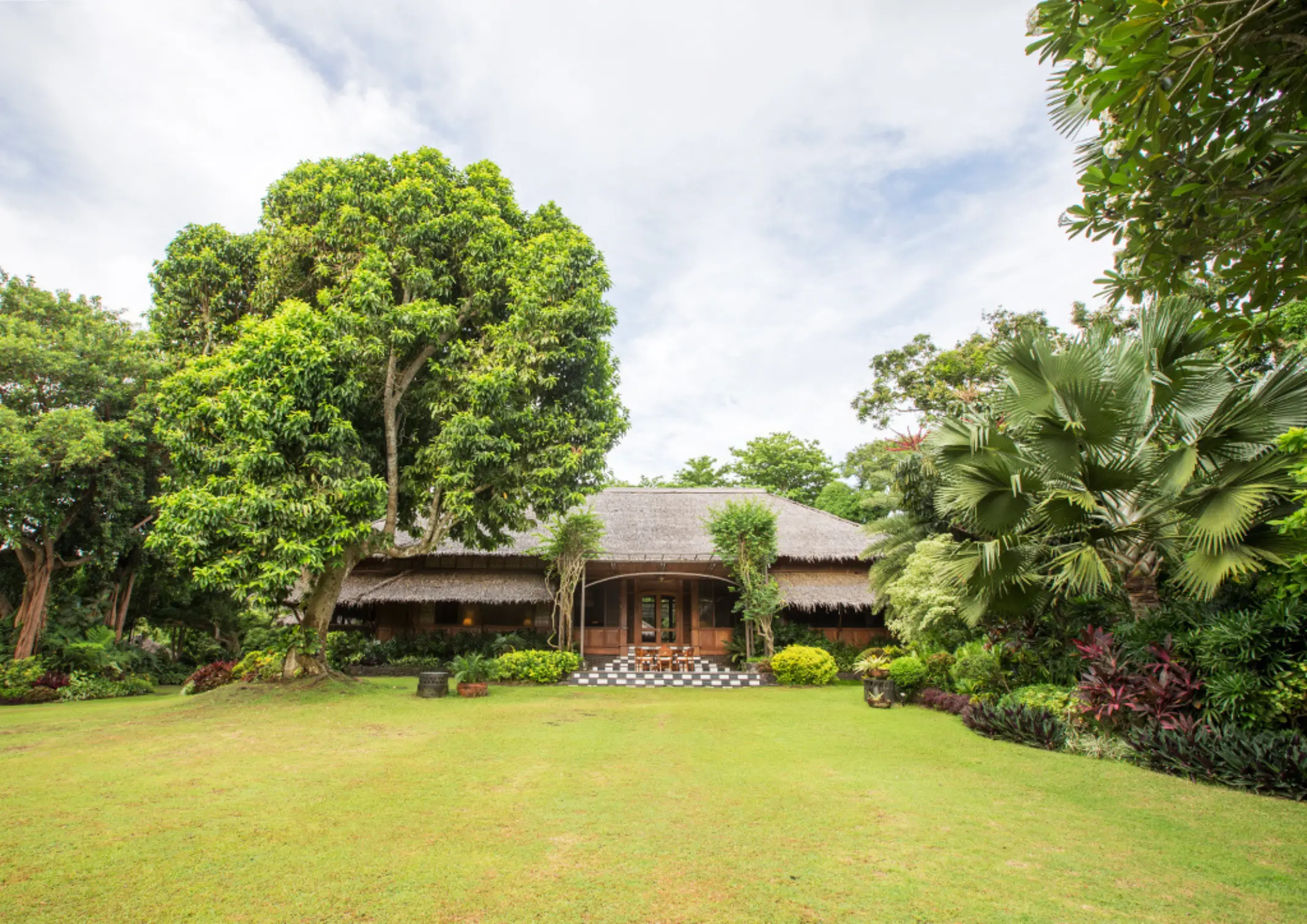
With climate change and global warming, the Philippine climate is in constant evolution. Consequently, it is important for Filipinos to have living spaces that respond to the local environment. In this article, BluPrint lists down Filipino architects who are reimagining the tropical house, aligning the built and natural environment. BAAD Studio Principal architects Benjee Mendoza […]
Advertisement
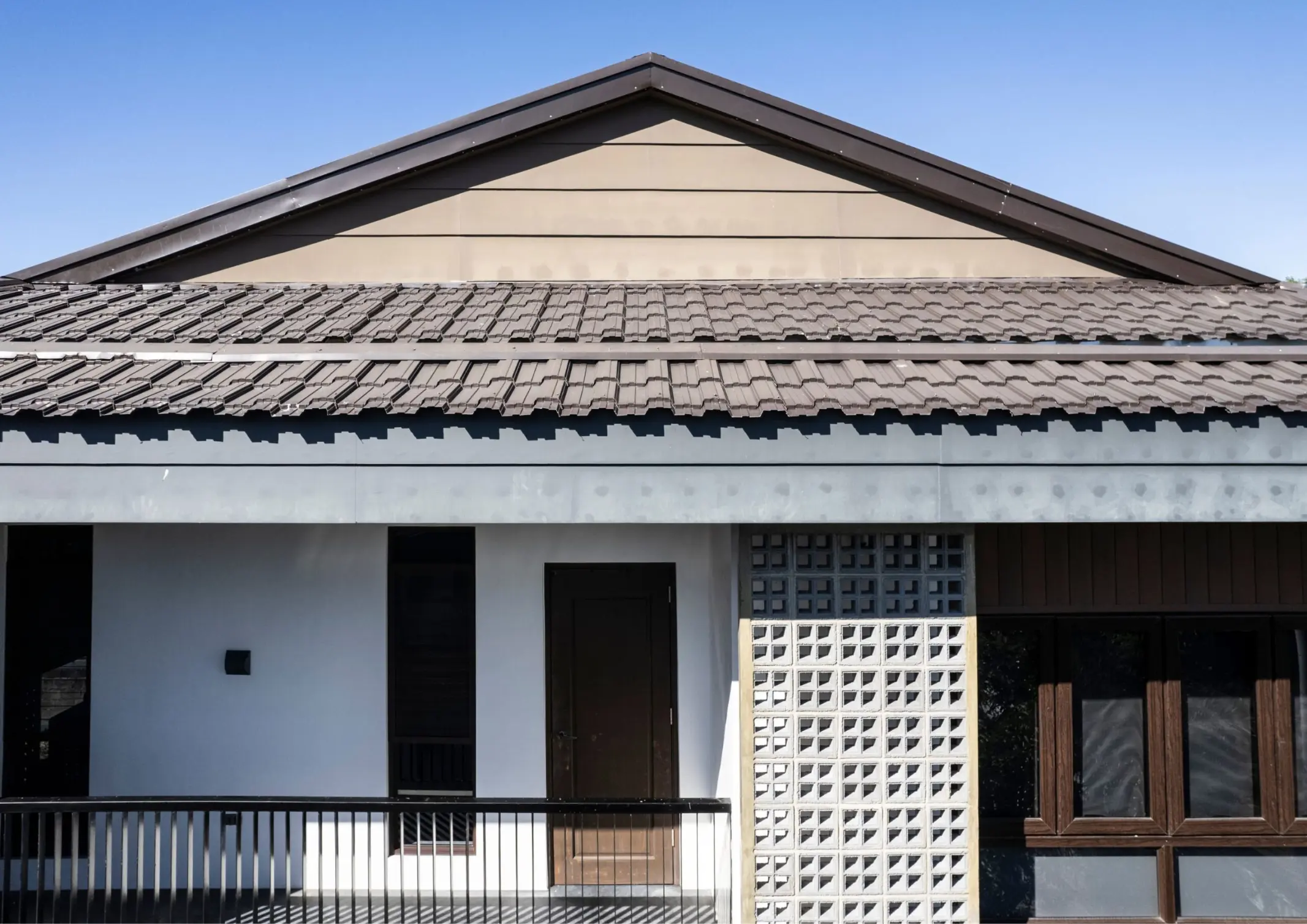
Ventilation involves the introduction of outdoor air into a room, providing occupants with their needs. Proper ventilation allows for the moderation of internal temperatures, the creation of better airflow, the dilution of carbon dioxide to acceptable levels, and the removal of contaminants. This addresses health risks associated with indoor air pollution, such as respiratory problems […]
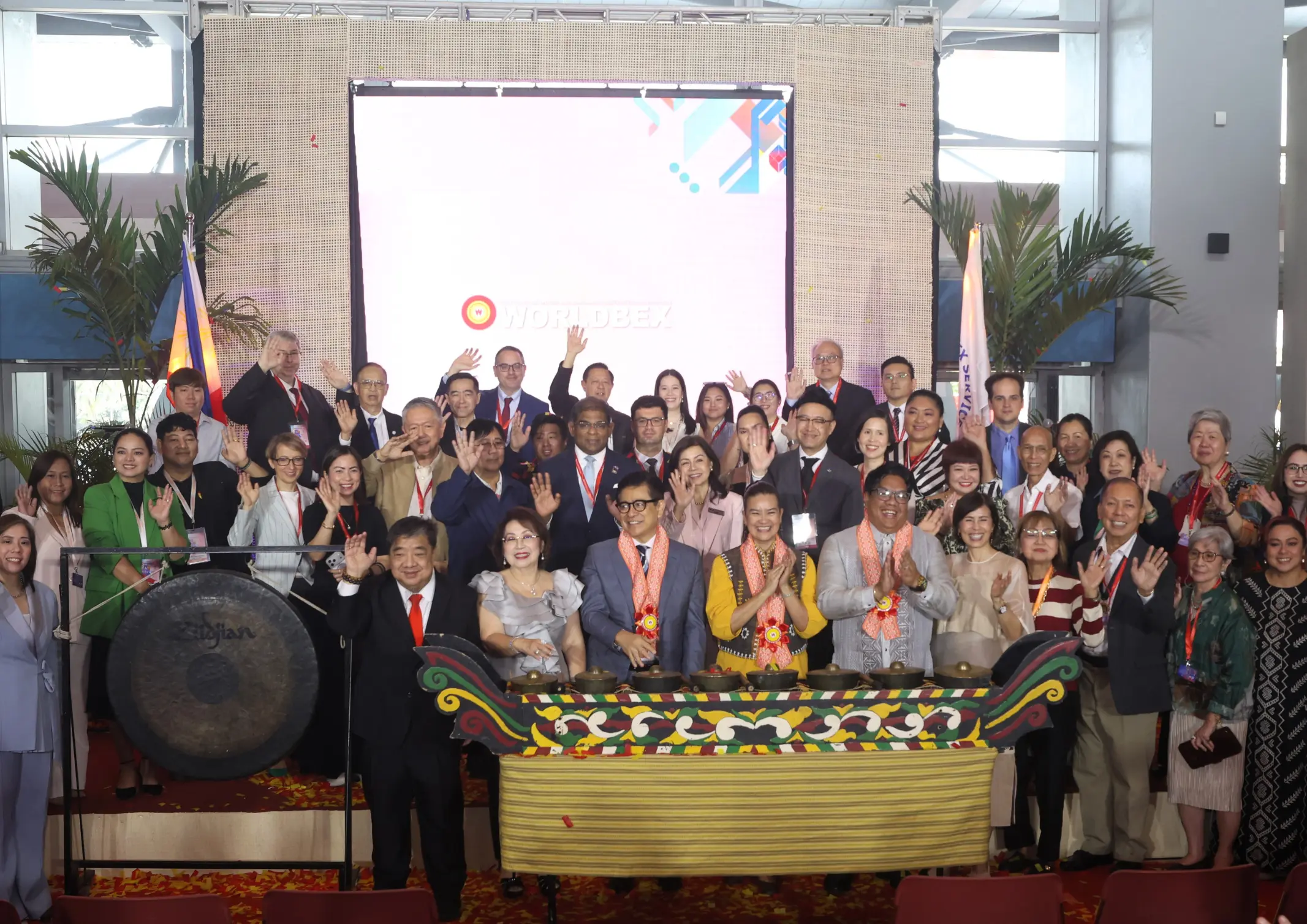
WORLDBEX 2026, running from March 12 to 15, 2026, proves itself as the Philippines’ leading construction and design expo as it wrapped its 29th edition. It drew together 1,000 local and international exhibitors under one theme, “Building Opportunities: Sustaining Lives.” Organized by Worldbex Services International (WSI), in support of the ABS-CBN Foundation Inc., the event […]
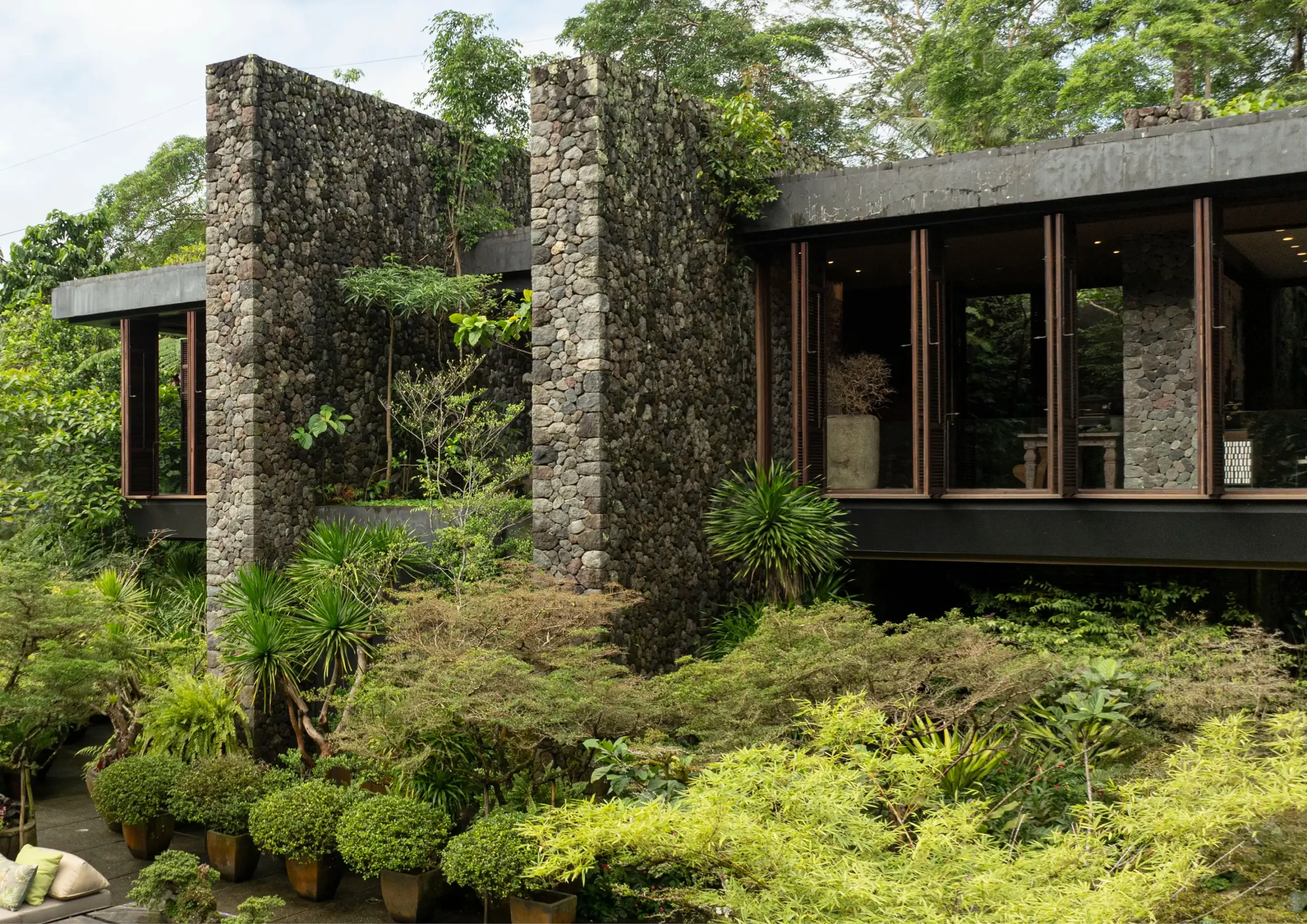
Located near the equator, factors such as heat and humidity are the norm in the Philippines. This tropical climate has shaped the development of architecture in the country. As Leandro V. Locsin stated: “The first consideration of the Filipino builder and certainly the most evident in his architecture, which is after all an outgrowth of […]
Advertisement

Download this month's BLUPRINT magazine digital copy from:



Subscribe via [email protected]