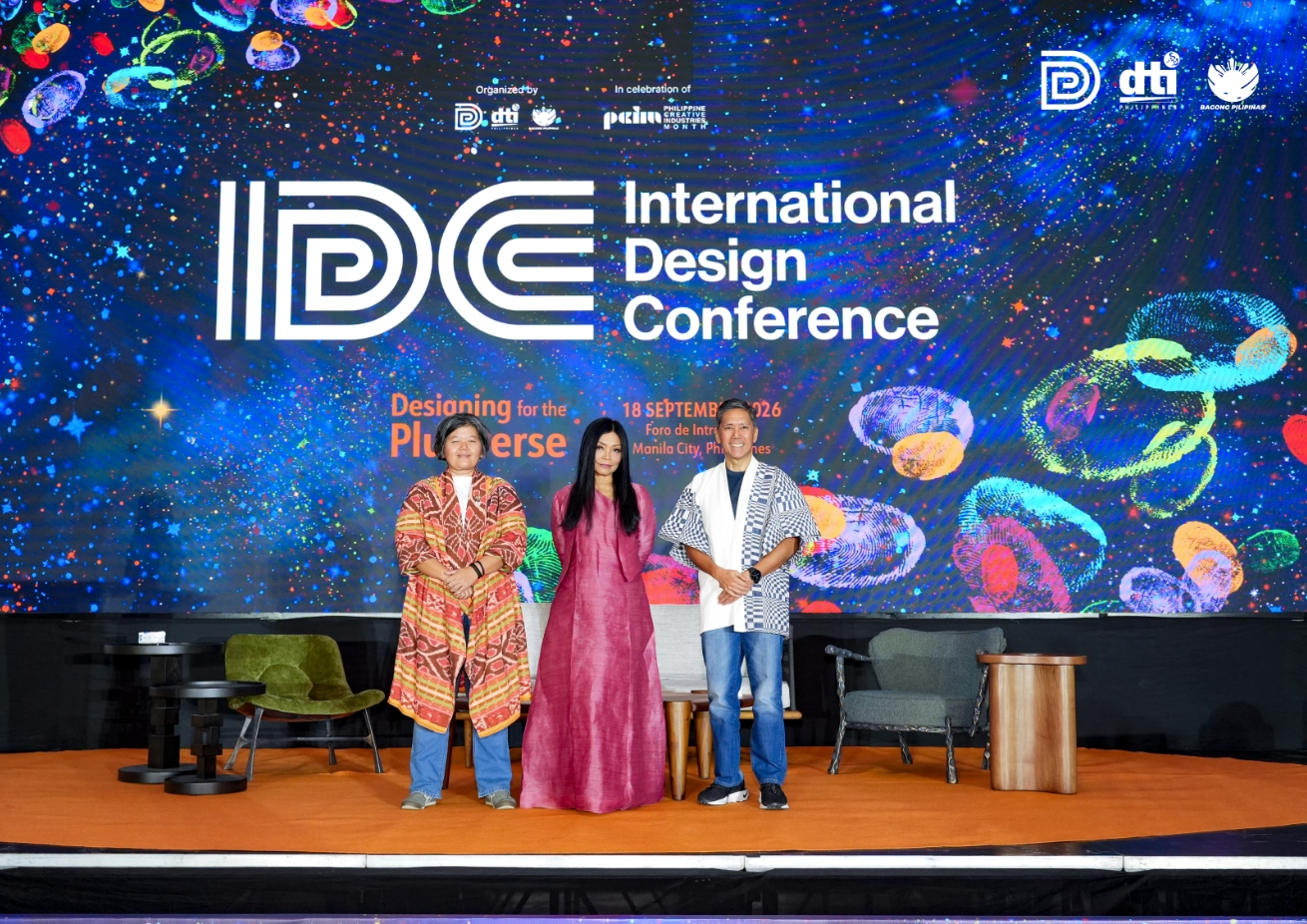
Culture in design does not always announce itself through a recognizable motif, material, or symbol. It can also be embedded in the relationships designers build, the knowledge they listen to, the materials they choose, and the decisions they make in response to communities and their environments. This distinction emerged throughout the 2026 International Design Conference […]
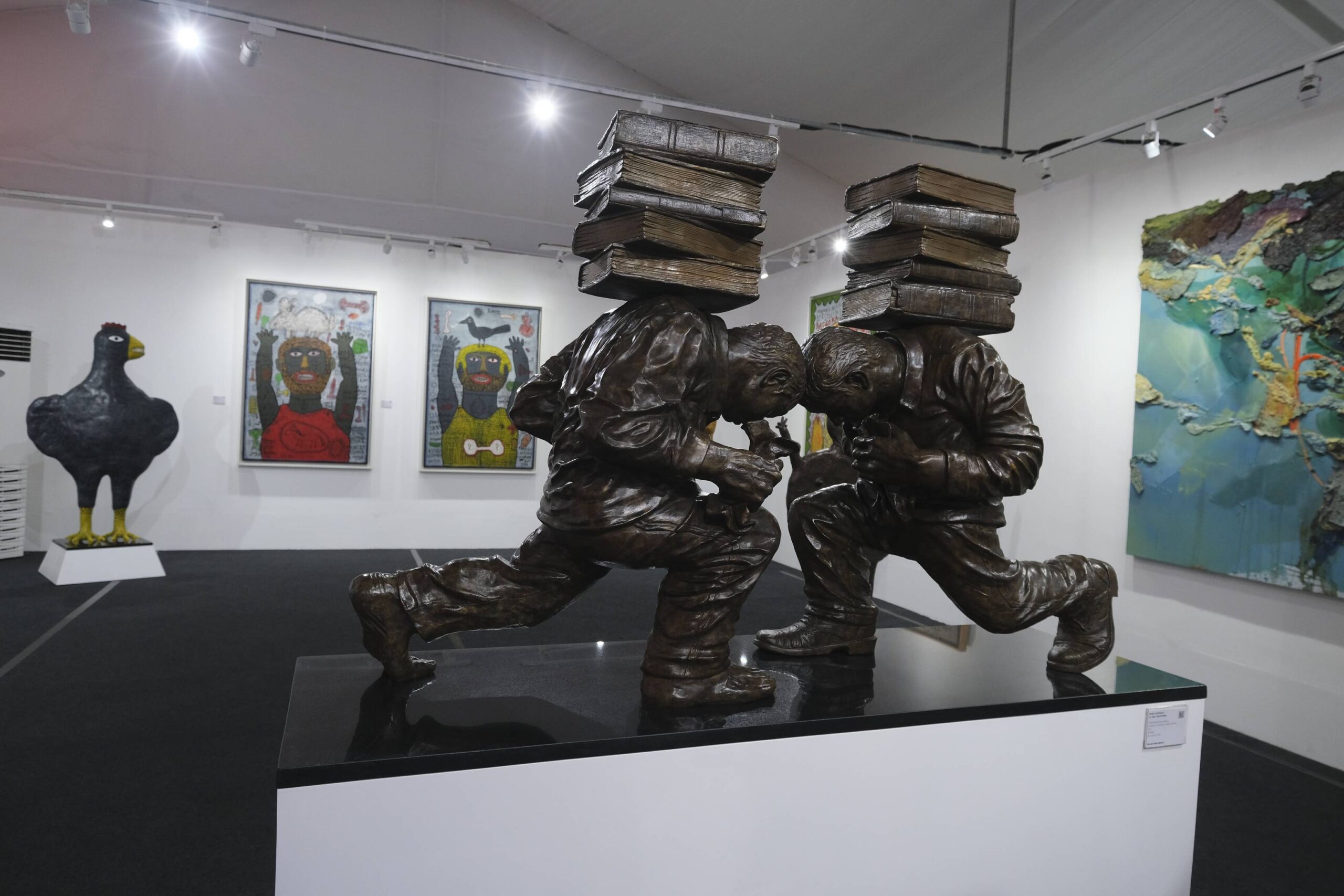
Highlighting Sculpture Efforts and Exhibits for the Year: BluPrint Year-End 2025



The first thing people usually think of when they think about art is “paintings.” The brush, the palette of colors, the canvas: all come together to form what people stereotypically see as “art.” But a deeply important medium within the large umbrella of “art” is sculpture.
Sculpture is an essential part of our conceptualization of artistry, especially because, unlike many paintings, sculptors work in a three-dimensional medium, seeing angles and ideas that painters may not consider.
For our year-end roundup this 2025, we give a salute to the sculptors and ceramicists of our era, as we see the ways the art form has evolved in 2025, and what that hints for its future within our local art scene.
The Orlinas and Glass Sculpture
The Orlinas—patriarch Ramon Orlina, and his children and protégés Anna and Michael—have had a very active year in the Philippine art scene. Michael Orlina, for example, had his debut solo exhibition in Galerie Stephanie this year, while Anna Orlina ventured into fashion during the Lamina Lifestyle Fair.
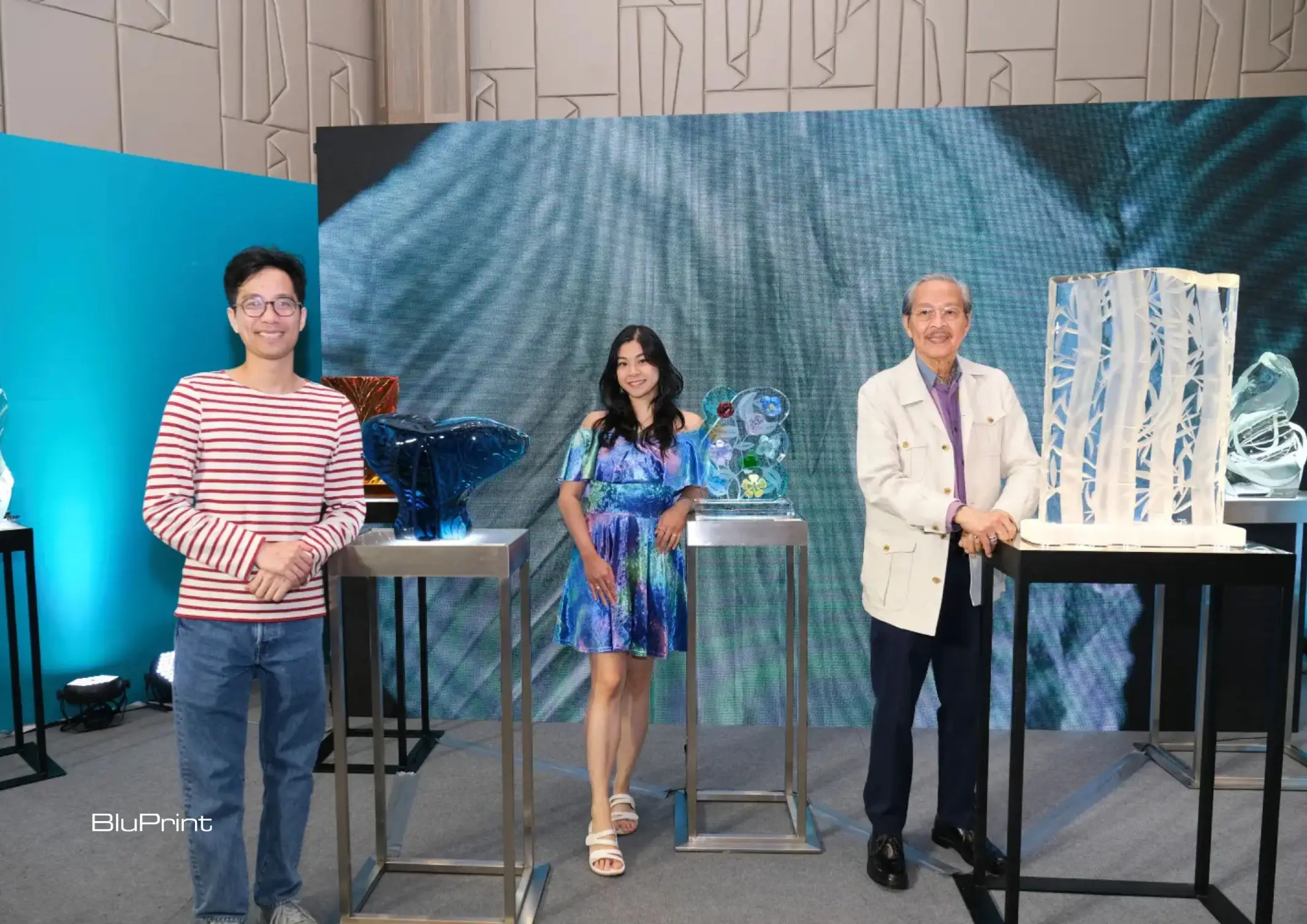
Ramon Orlina is one of the signature figures of glass sculpture in the Philippines; indeed, he may be the signature figure, especially as he is still active in today’s art scene. Orlina’s children have taken up the mantle of glass sculpture, and they bring with them newer techniques they learned abroad to push the boundaries of local glass sculpture to new heights.
And as all three continue to be active in the sculpture scene, whether directly or by exhibiting up-and-coming sculptors in Museo Orlina, they bring with them the hope for a Philippines to be truly at the cutting edge of the art world.
Read more: ‘RAM: Nature’s Abundance’ is the Orlina Family’s Collaborative MoCAF Exhibit
The Pettyjohns and Moving Philippine Ceramics Forward
On the other side of the sculpture divide is Jon and Tessy Pettyjohn, pioneers in Philippine pottery and ceramics. Jon himself was in the spotlight this year for his collaborative exhibition with his daughter Hanna, and the exhibition highlighted the differing styles of the two and how they found a way to bridge them together for the exhibition.
Jon mixes the modernity of the craft today with the traditions of the past; at times, he has expressed his gratitude for being able to witness and learn indigenous ways of making ceramics in the country. The ability to merge the two, to find a harmonious balance between the past and the future, is what makes him such a significant presence in the art world today.
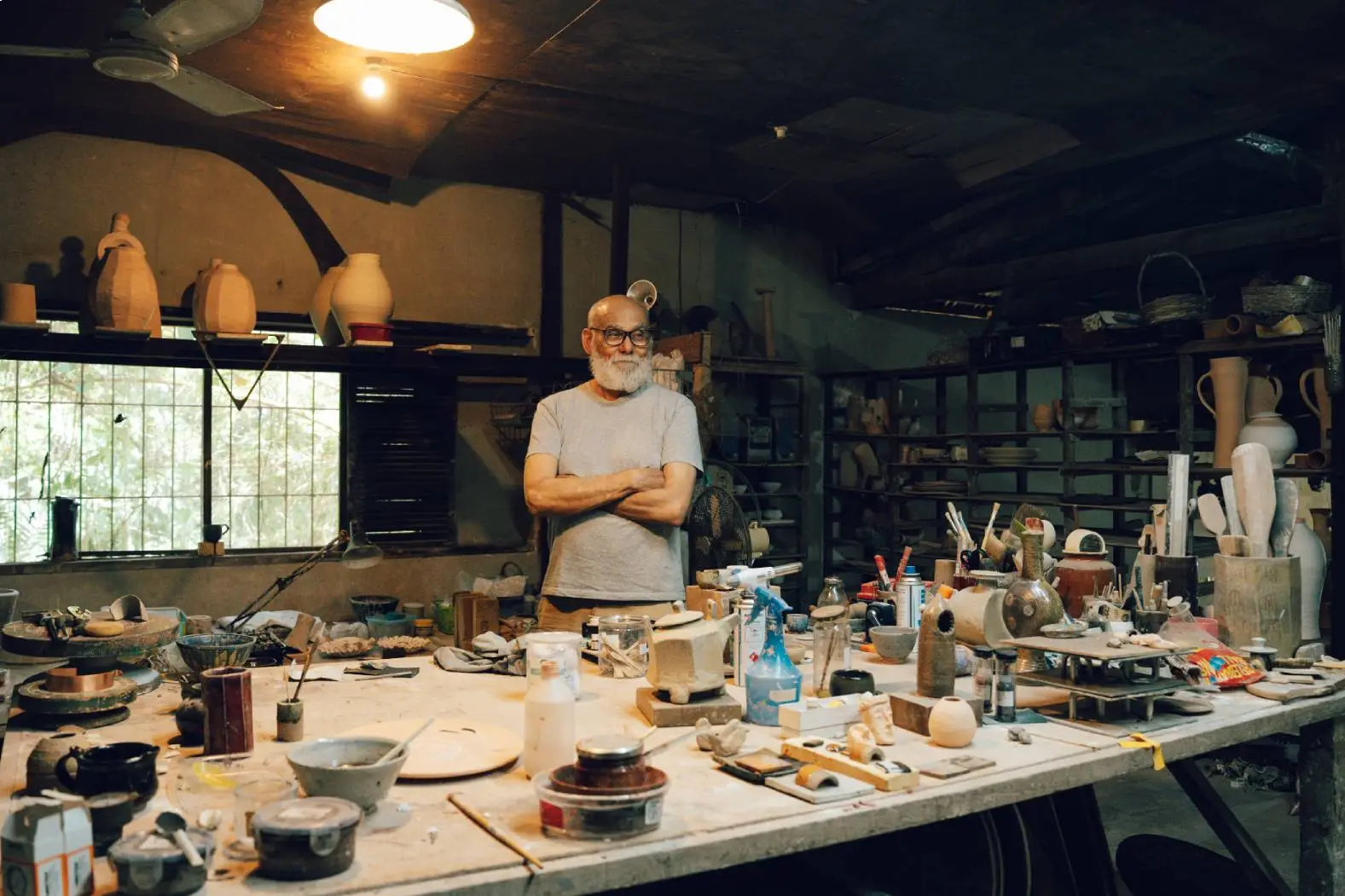
“The history of crafts always continually absorbs what’s [the] new available techniques and materials,” he said. “That’s important. If you try to keep anything [the same], anytime you talk about purity, or keeping something, the traditional art, like, pure, that’s a very deadly thing because then it dies. If it cannot evolve, it’s finished.”
Read more: Jon and Hanna Pettyjohn: Bridging the Multigenerational Spirit of Artistry
Ciane Xavier and Porcelain Sculpture
For more unique uses of sculpture within the art scene, Ciane Xavier’s February exhibition at Galerie Stephanie, Breaking to Mend, utilizes porcelain statues, plates, and figures to depict a slew of scenarios and emotions inherent to the human condition.
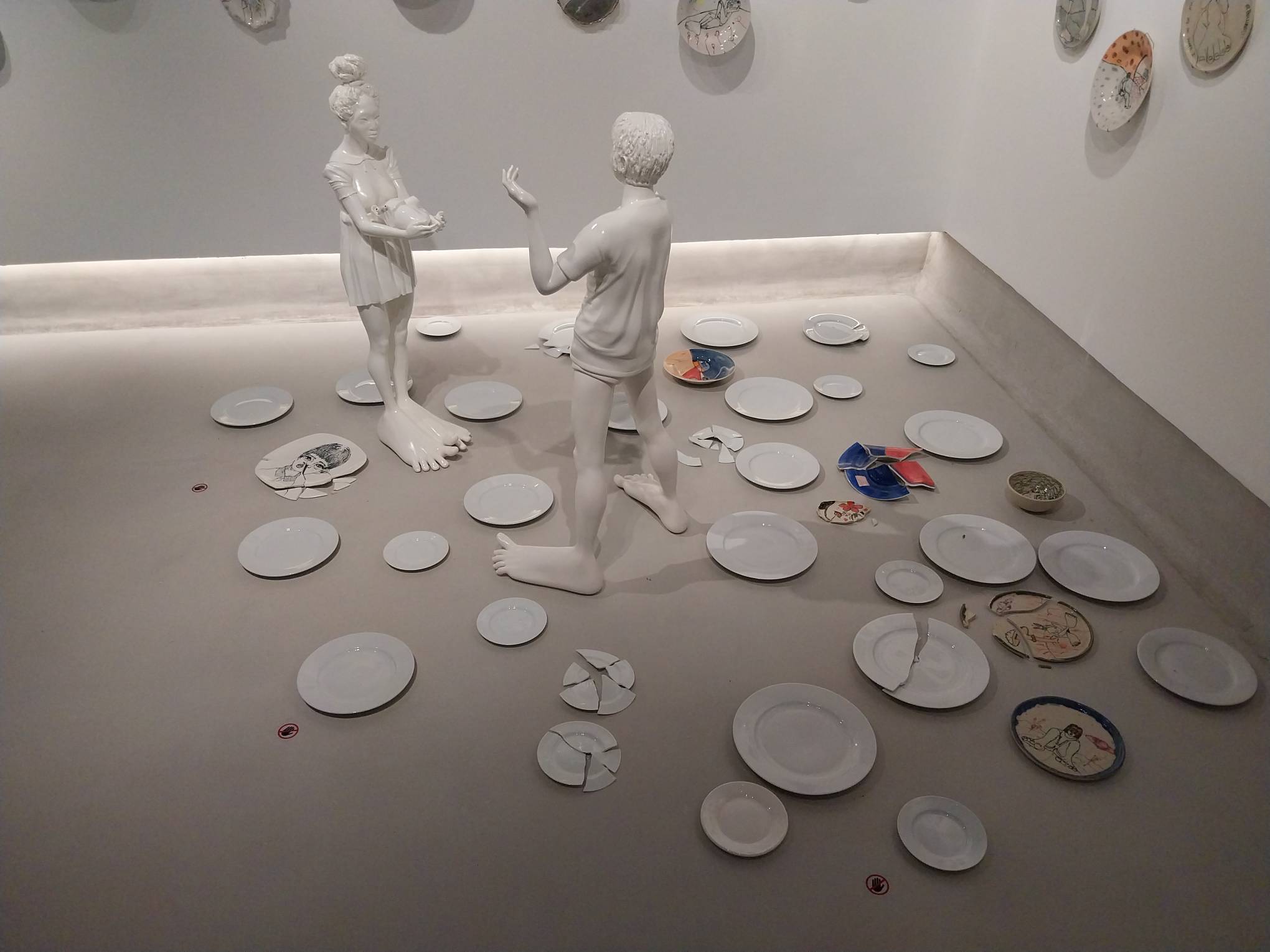
In there, the discussion centers on the portrayal of the fragility of human emotions, especially with its central sculptures of two people in the midst of an argument, whilst surrounded by broken plates. It is a very evocative exhibition, and one that shows a way for sculpture to meld the figurative language of art to the literal materiality of sculpture.
“In its fragility, this delicate material is strengthened by stories that are glazed by the human emotions and the relationships that bind one to another,” the exhibit write-up said. “This exhibition is an invitation to engage in the metaphorical mending of ‘moments we cherish and the moments we fear.’”
Read more: ‘Breaking to Mend’: Ciane Xavier Illustrates the Fragility of Human Emotions
Sam Feleo and Unconventional Sculpture
Finally, in this list, we have Sam Feleo, whose artwork experiments with form and structure, creating pottery and sculpture with a one-of-a-kind organic look to their forms. Feleo does this look by avoiding common pottery techniques like glazing, only doing bisque firing for the works, and hand-painting each creation itself.
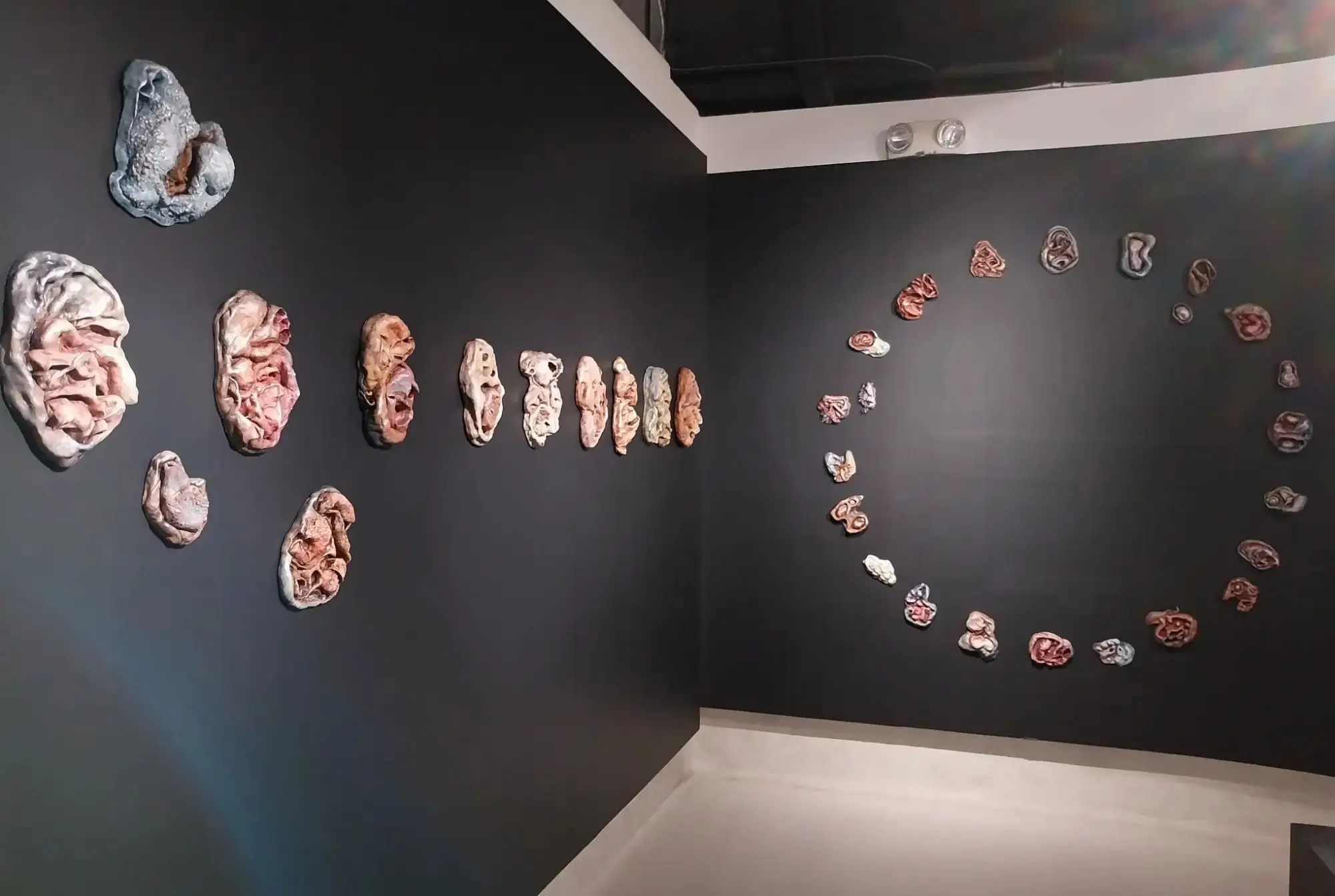
It ends up looking strange and fleshy, folded in ways that ceramics tend to avoid, and at times with crystals clutching to the structure after being buried in water for a period of time. The works look fluid and flowing, embodying the “embryonic state” that she wanted to showcase in her exhibitions.
“Kaya siya embryonic forms kasi gusto ko paglaruan ang idea na ang art, hindi nila kailangan maging static, pwede siyang nag-ta-transform, nag-pupulsate,” she said. “I wanted to capture that softness, the organicness in these works.”
Read more: Sam Feleo Presents a Fleshy New Sculptural Vision with ‘Grip/Pulse’
Boundless Exploration
These four examples illustrate sculptors’ appetite for innovation in the field of sculpture. Whether it’s merging the past and the present, or coming up with new methods that go against the grain of society, Philippine sculpture refuses to be stagnant—only growing more and more interesting as time goes by.
Photos by Elle Yap, Ed Simon, and Kim Santos.
Related reading: ‘Nerikomi’: Winnie Go Explores the Individual Artistry of Functional Pottery
Frequently Asked Questions
While patriarch Ramon Orlina remains the signature figure of glass sculpture (known for the “cold-cutting” method where glass is carved like stone), 2025 marked a significant expansion for his protégés. Michael Orlina debuted his solo exhibition at Galerie Stephanie, while Anna Orlina integrated glass into fashion and lifestyle design. Technically, the younger Orlinas are incorporating contemporary techniques learned abroad to advance the translucency and geometric complexity of the medium, ensuring the Philippines remains at the cutting edge of glass artistry.
Jon Pettyjohn, a pioneer of Philippine pottery, argues that the pursuit of “purity” in traditional art is “deadly.” In his 2025 collaborative exhibit with daughter Hanna, he demonstrated how modern ceramic craft must continually absorb new techniques and materials to survive. Technically, his work bridges the past and future by merging indigenous Filipino pottery methods with high-fire modern glazing and firing techniques, creating a “multigenerational spirit” that evolves rather than stagnates.
In her exhibition Breaking to Mend, Ciane Xavier utilized porcelain—a material traditionally valued for its delicacy—as a metaphor for the human condition. Technically, the exhibition used figurative porcelain statues surrounded by broken plates to illustrate the fragility of emotions and relationships. By glazing these delicate figures, Xavier mends “moments of fear and cherished memories,” proving that the literal materiality of the sculpture can amplify the figurative language of the art.
Sam Feleo rejects traditional ceramic finishes to achieve an “embryonic” and organic look. Her technical process involves:
Avoiding Glazing: She uses only bisque firing (the first firing without a glassy coating) to maintain a raw, porous texture.
Hand-Painting: Each piece is painted manually to emphasize “pulsating” and “soft” forms.
Hydro-Crystallization: She buries some works in water for periods to allow crystals to clutch to the structure, creating a sense that the art is transforming and alive rather than static.
As noted in the BluPrint roundup, sculptors work in a medium that demands a 360-degree consideration of mass, volume, and void. While a painter considers the two-dimensional plane, a sculptor like those featured in 2025 must account for light refraction (in glass), structural tension (in “fleshy” ceramics), and the interaction between the object and the physical environment. This “three-dimensional conceptualization” allows sculptors to capture movement and “embryonic” transformation in ways that a flat canvas cannot.
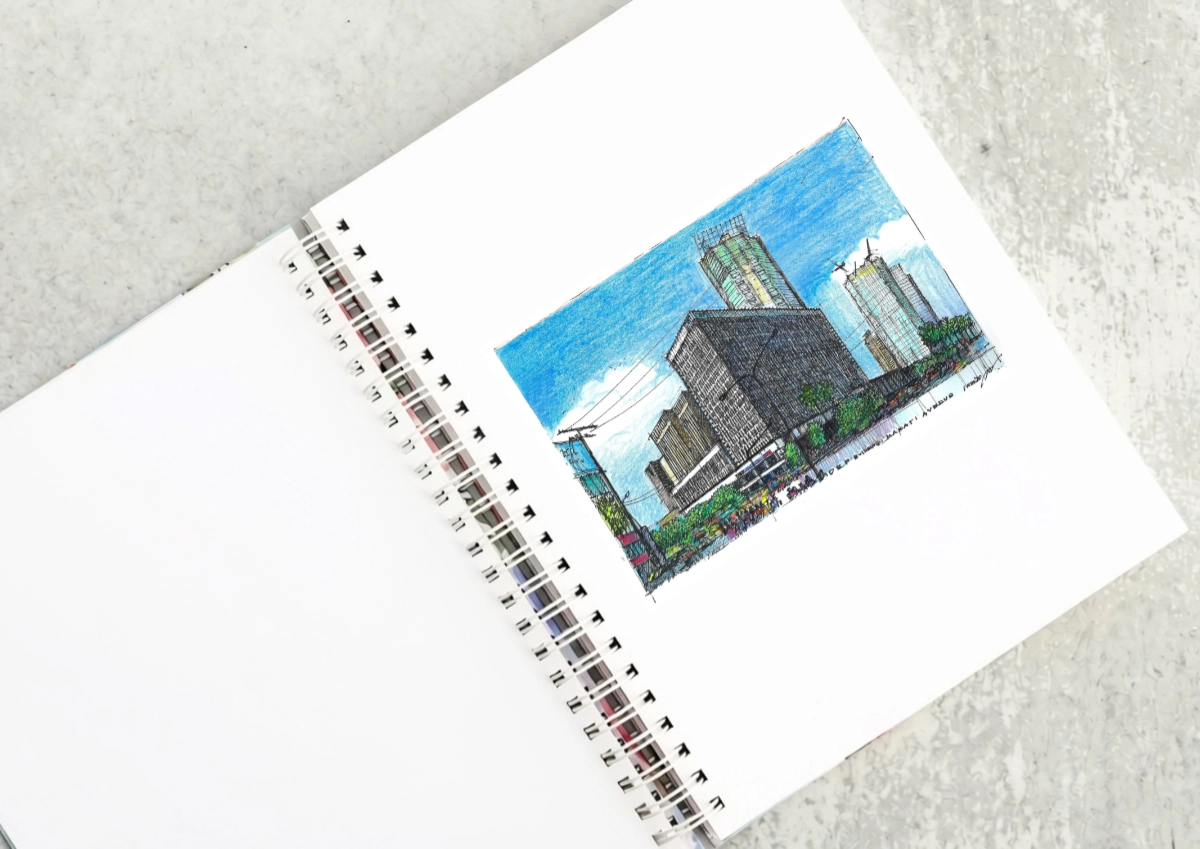
The DBP Building as a Landmark of the International Style At the corner of Sen. Gil Puyat Avenue and Makati Avenue stands a landmark of the Makati Central Business District. It is one of the last still standing that were built in the first wave of construction in district fifty years ago. The Development Bank […]
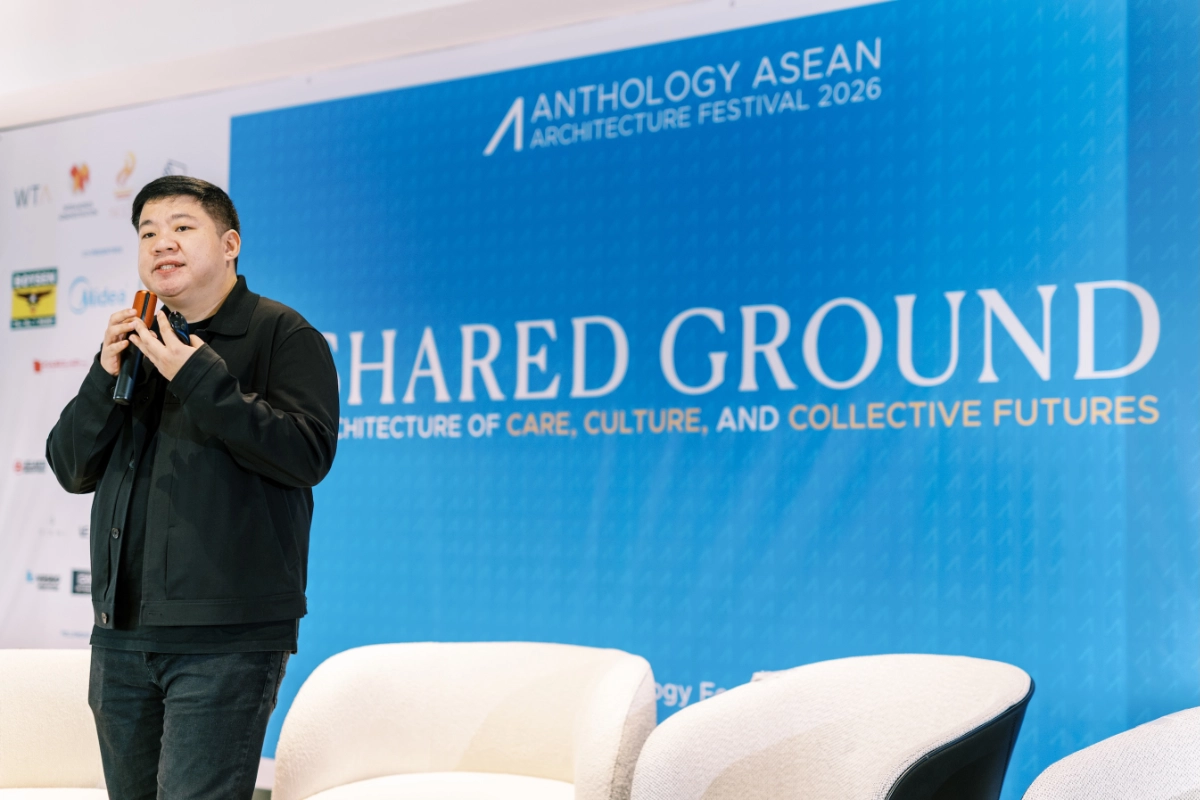
“Buildings only become architectureArchitectureThe art and science of designing and constructing buildings, structures, and spaces that are functional, safe, and aesthetically pleasing. It encompasses the planning, design, materials, and techniques used to createGo to Architecture Glossary when they are shared,” said William Ti Jr., founder of the Anthology Festival and WTA Architecture and Design Studio, […]
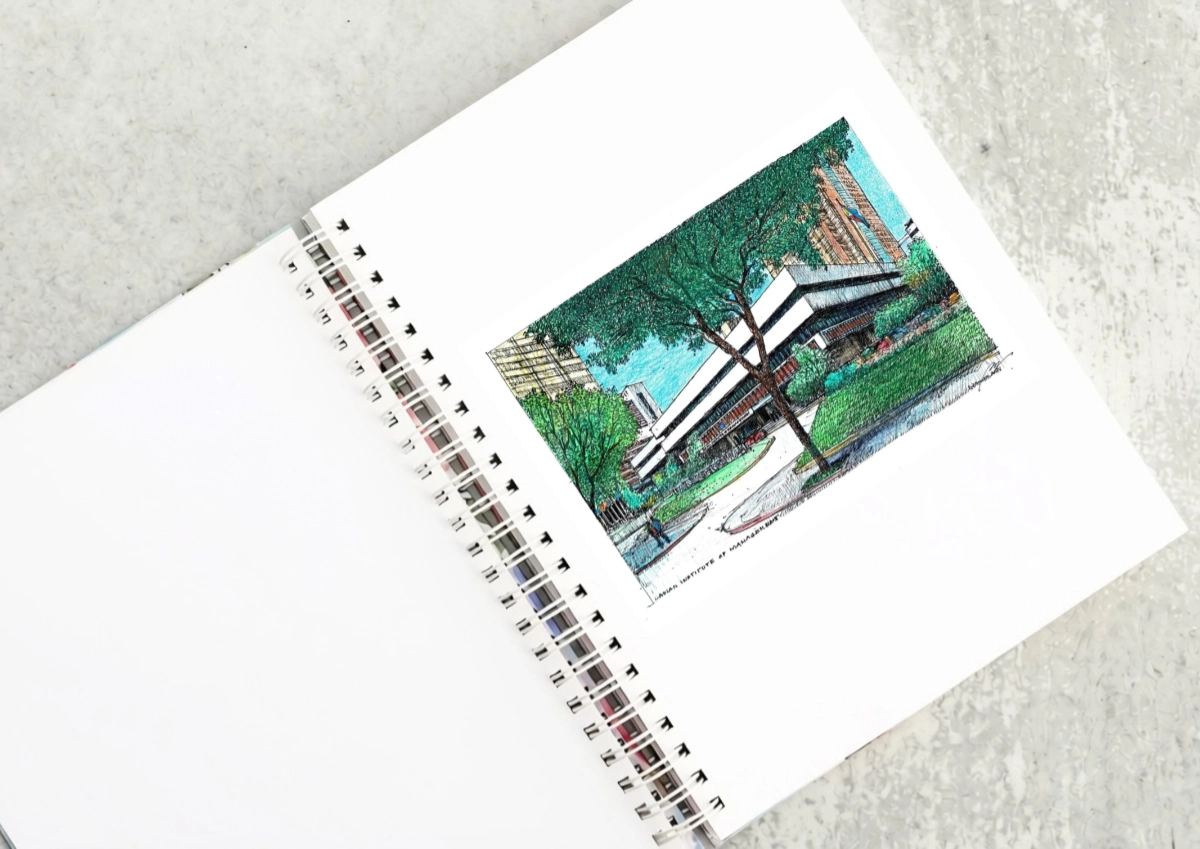
A Filipino Interpretation of Modernist Architecture Unlike the rest of Makati today, the northern end of Paseo de Roxas in Makati is anchored by a low complex rather than a tall skyscraper. This is the elegant Asian Institute of Management, designed by architect Gabriel Formoso and completed in 1971. In my opinion, the building is […]
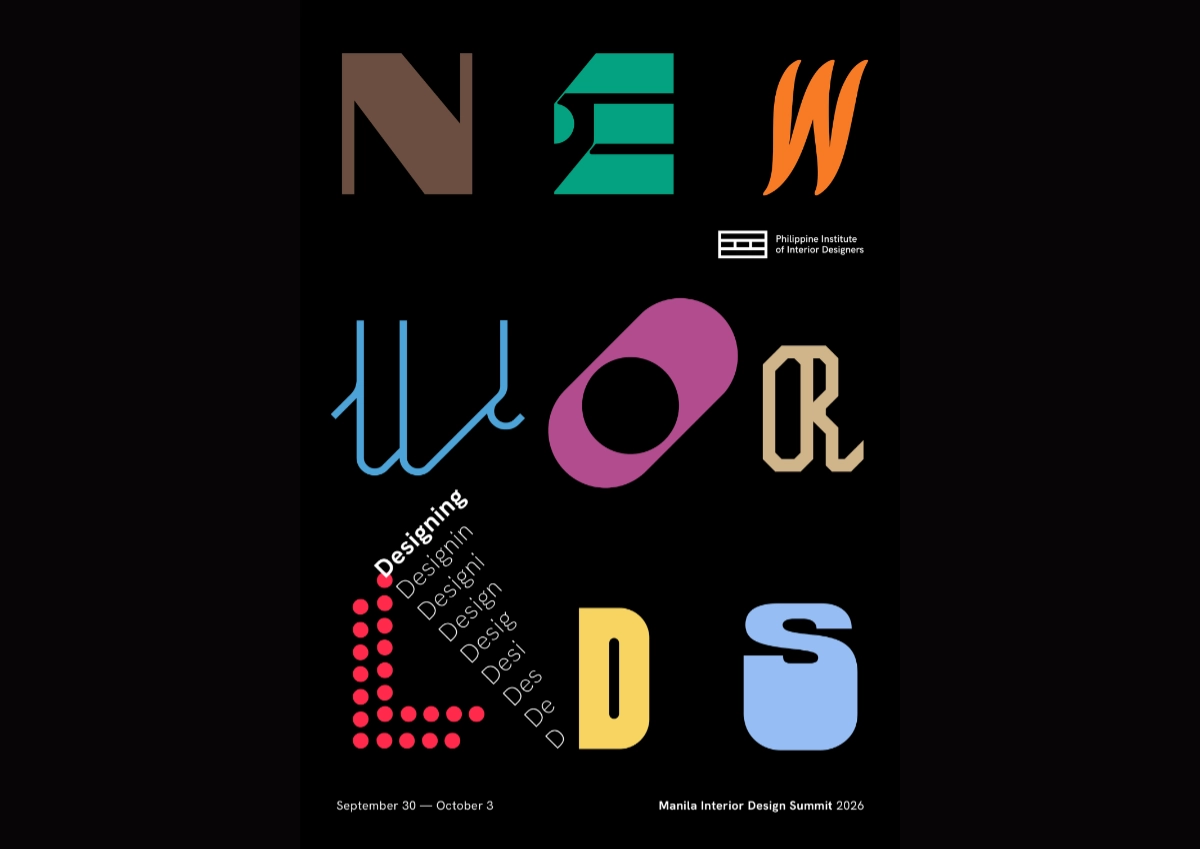
“Thailand has claimed urban creativity and livability. Singapore has institutional design leadership. Indonesia is emerging as a design hub. Vietnam is moving into design innovation. And the Philippines? Its position is not weak. It is simply unclaimed.” For IDr. Cecil Ravelas, National President of the Philippine Institute of Interior Designers (PIID), the challenge is not […]
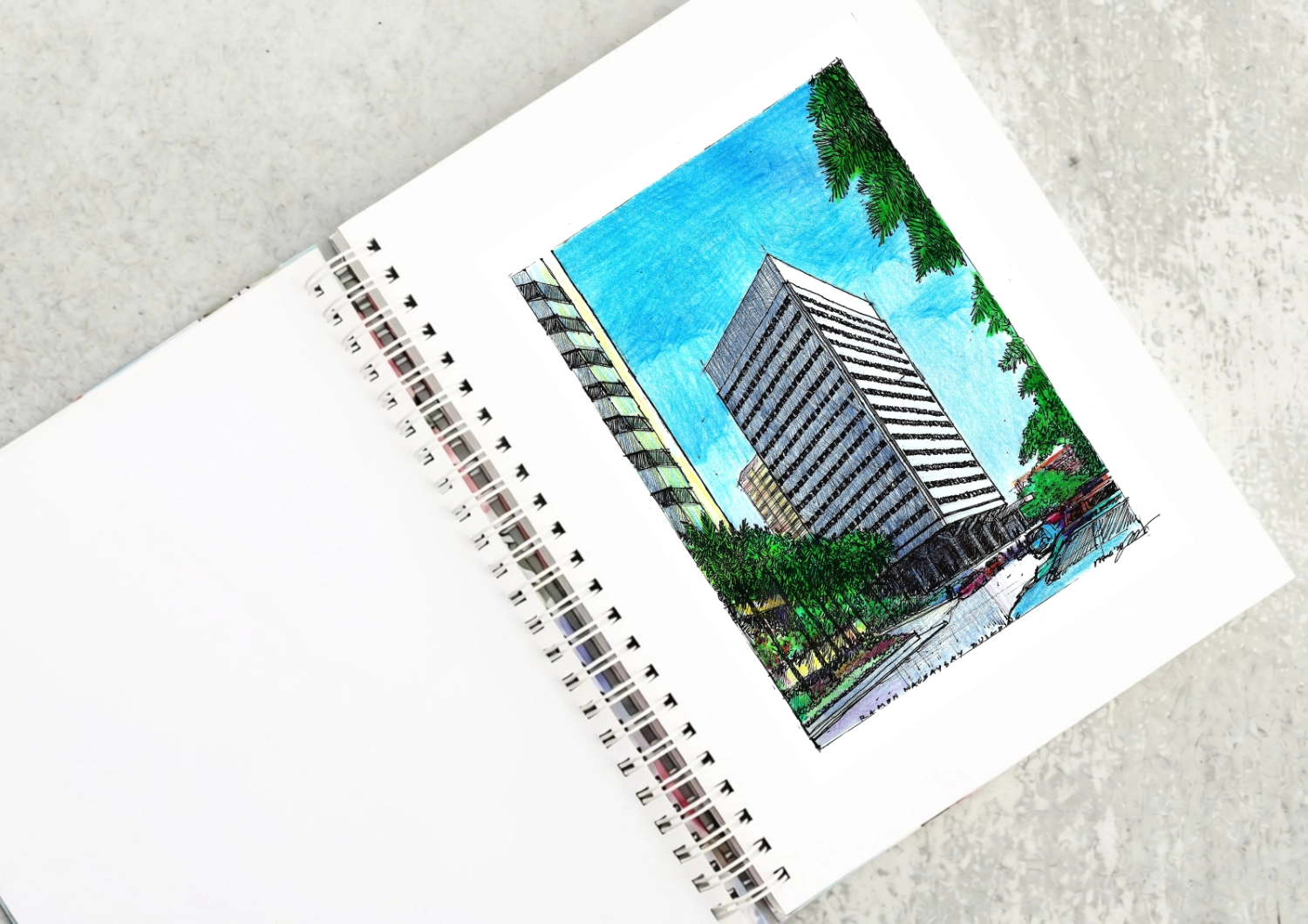
The Ramon Magsaysay Center as a Modernist Landmark Driving down Roxas boulevard from Rizal Park, what will catch your eye is the most elegant modernist structure in the country, the Ramon Magsaysay Center. Most established Filipino architects put it in their top ten lists of favorite buildings. It was designed by Alfredo J. Luz, who […]
Read the issues.

Collect the volumes.

Recommended Video
Tap to Unmute
Unmute
0:00
0:00