In a way, designers are the modern-day soothsayers and prophets. They design for the future, predicting how a room, a house, a building or a whole city will be used by people. They foresee how users will interact with a space, conjure exact shades of colors to elicit specific behavior and arrange furniture to build […]
‘Manila x Bohol’ Showcases Creativity Outside of the Capital



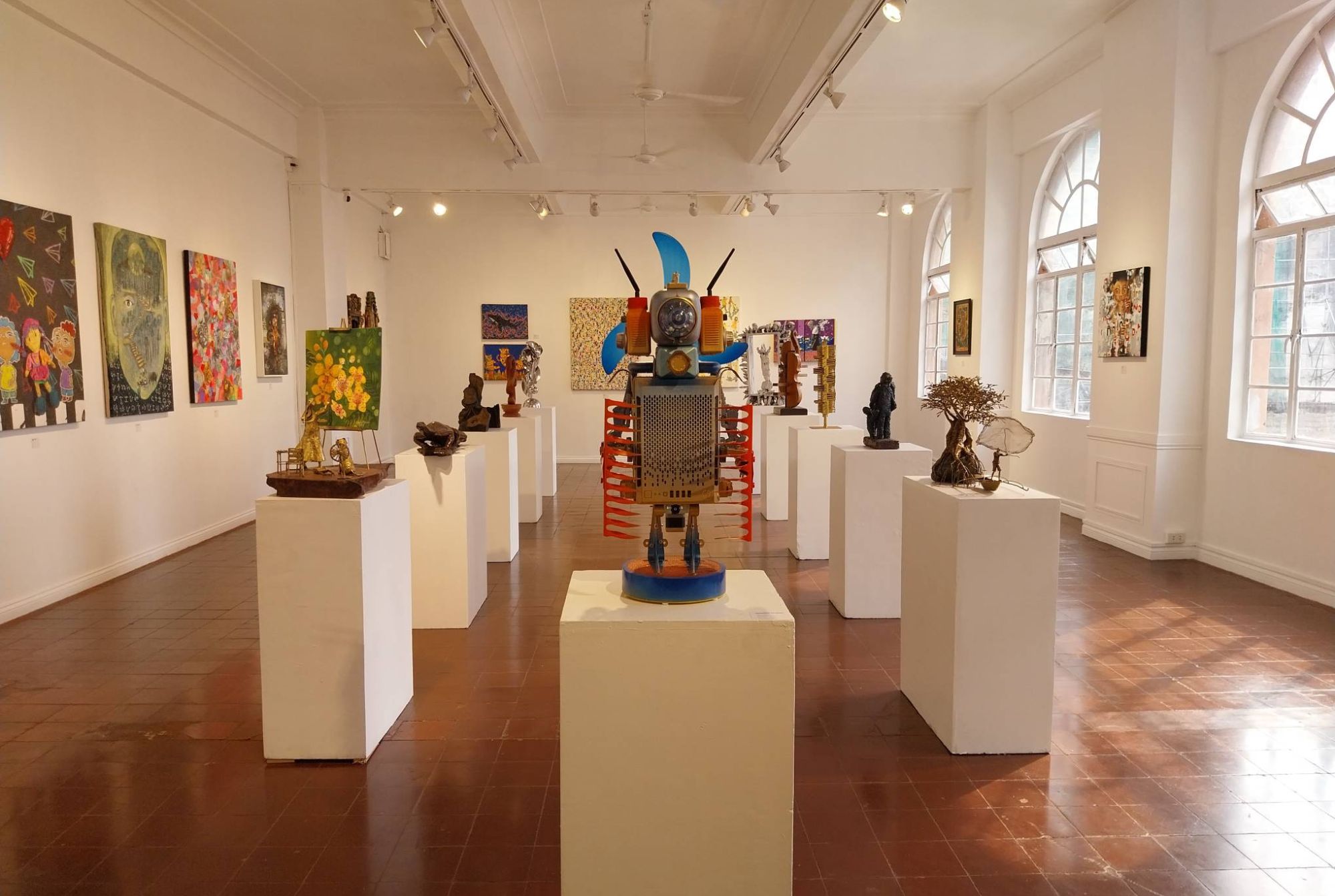
Manila x Bohol brings together a talented roster of Boholano artists for a singular exhibition linking the two regions together. Showing from June 1 to 29 at the Art District Escolta, it contains a mix of paintings, sculptures, and mixed media works from artists representing the island province.
The collection is eclectic in how it represents the uniqueness of Bohol. It depicts religious iconography, different kinds of wildlife, deconstructed abstractions, and portraits of provincial farms and indigenous life. With its goals to “bridge the cultural divide” between Manila and Bohol, such a variety likely is a prudent choice.
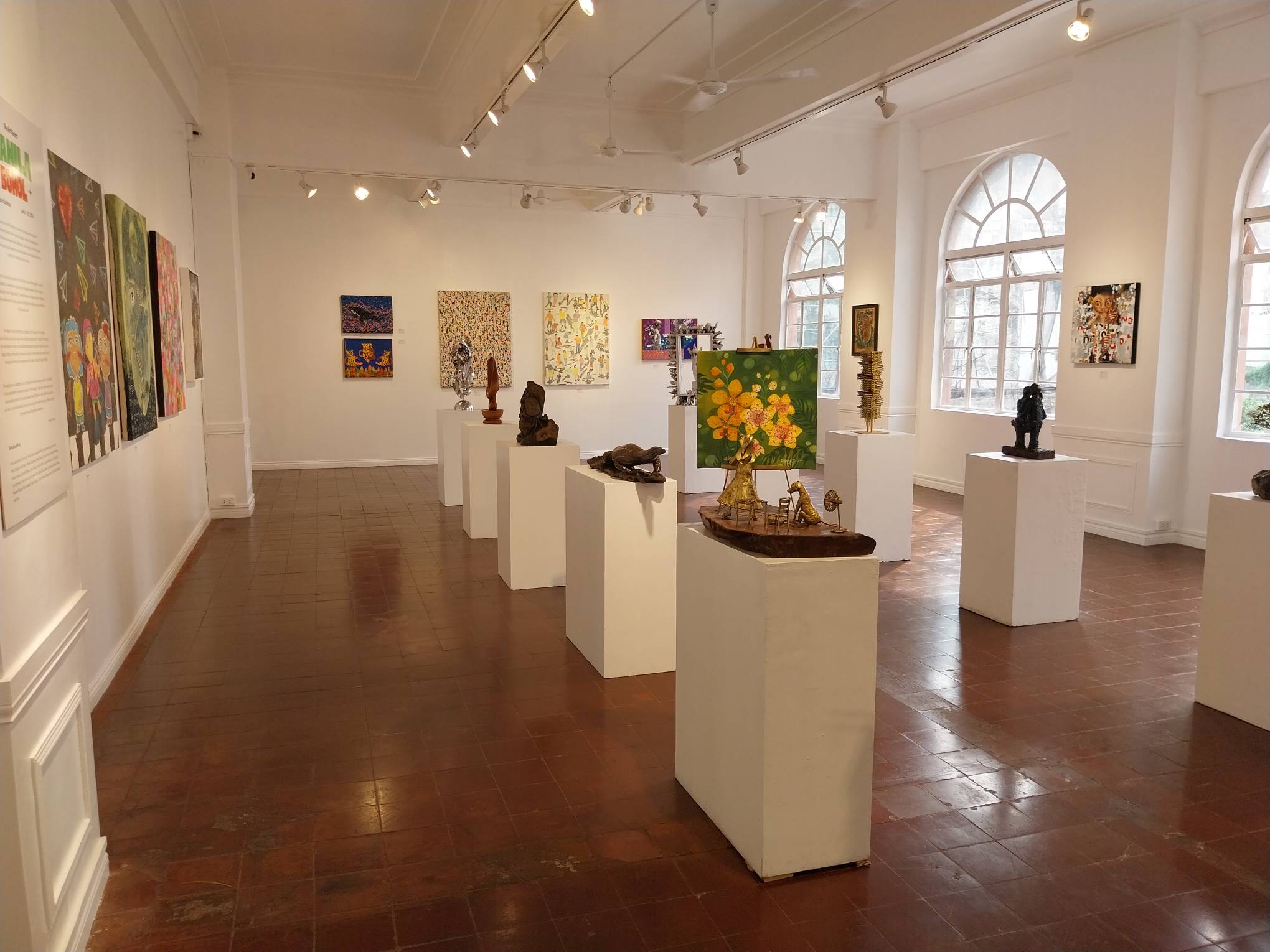
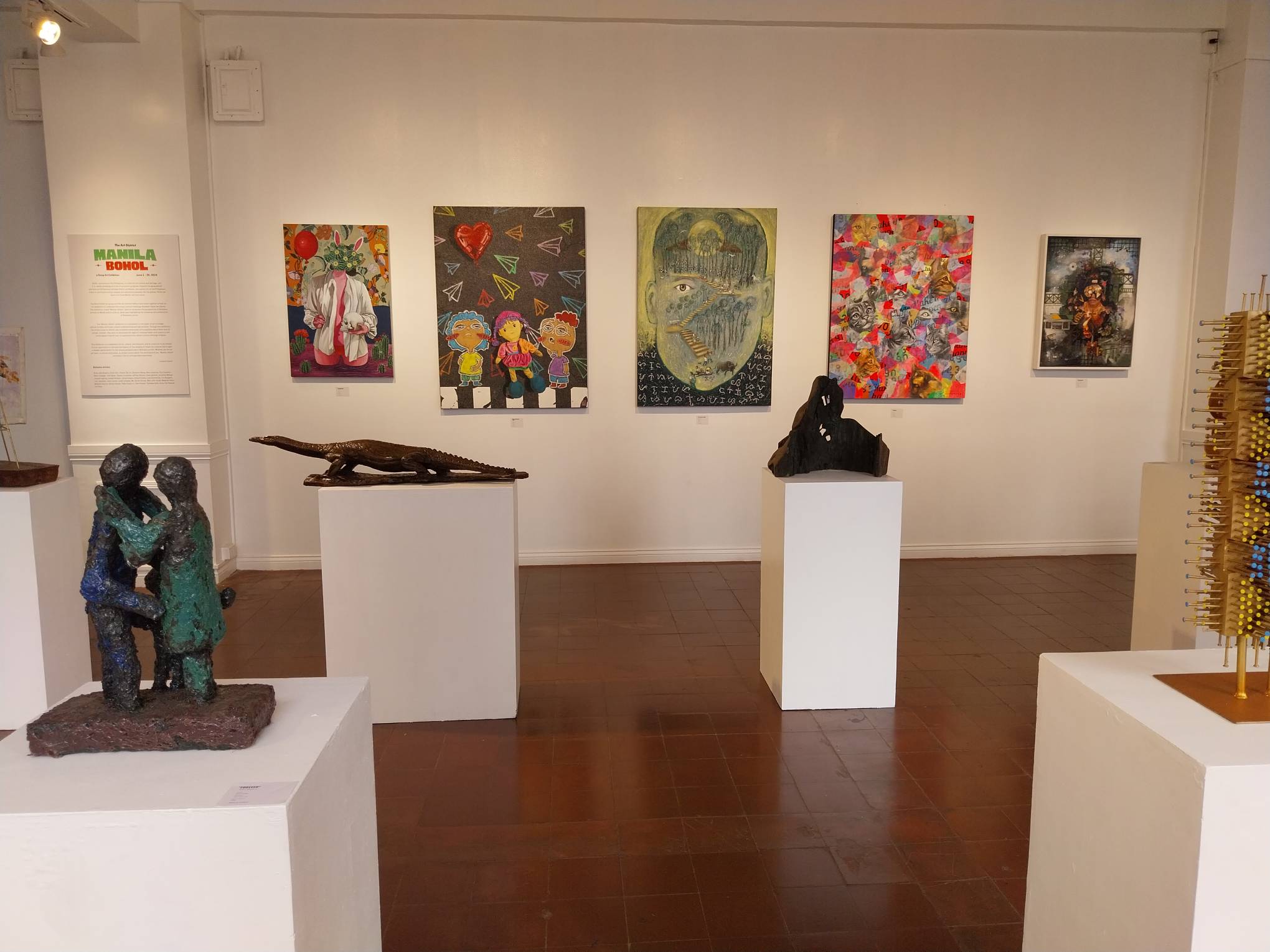
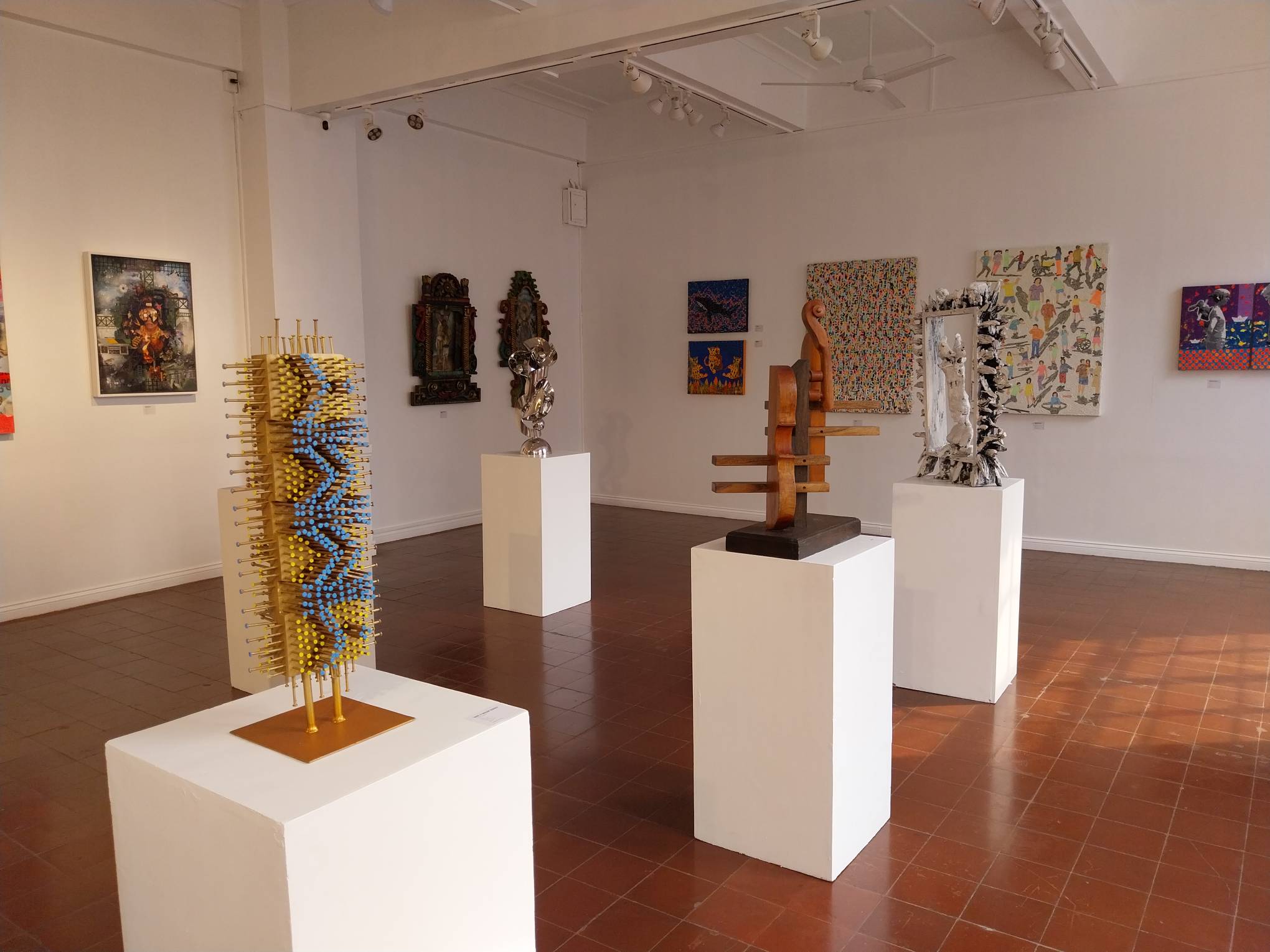
“Through this exhibition, the artists hope to shatter any outdated stereotypes and prejudices about Bohol and its people. Instead, they want to showcase the region’s immense talent and creativity and invite people from all over to experience the vibrant cultural offerings of Bohol,” Jumjum Ouano said in their exhibit write-up.
Unique Iconography
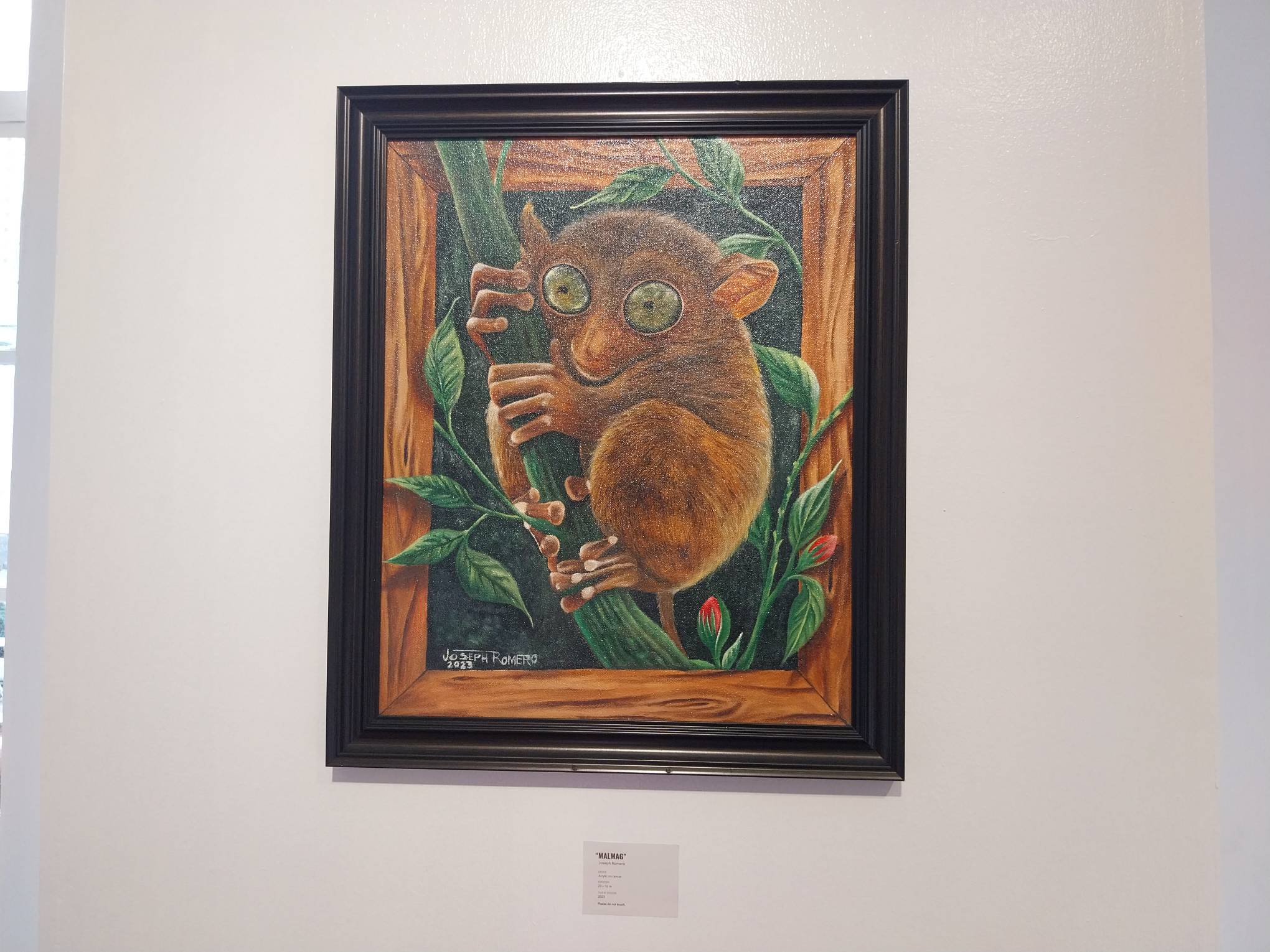
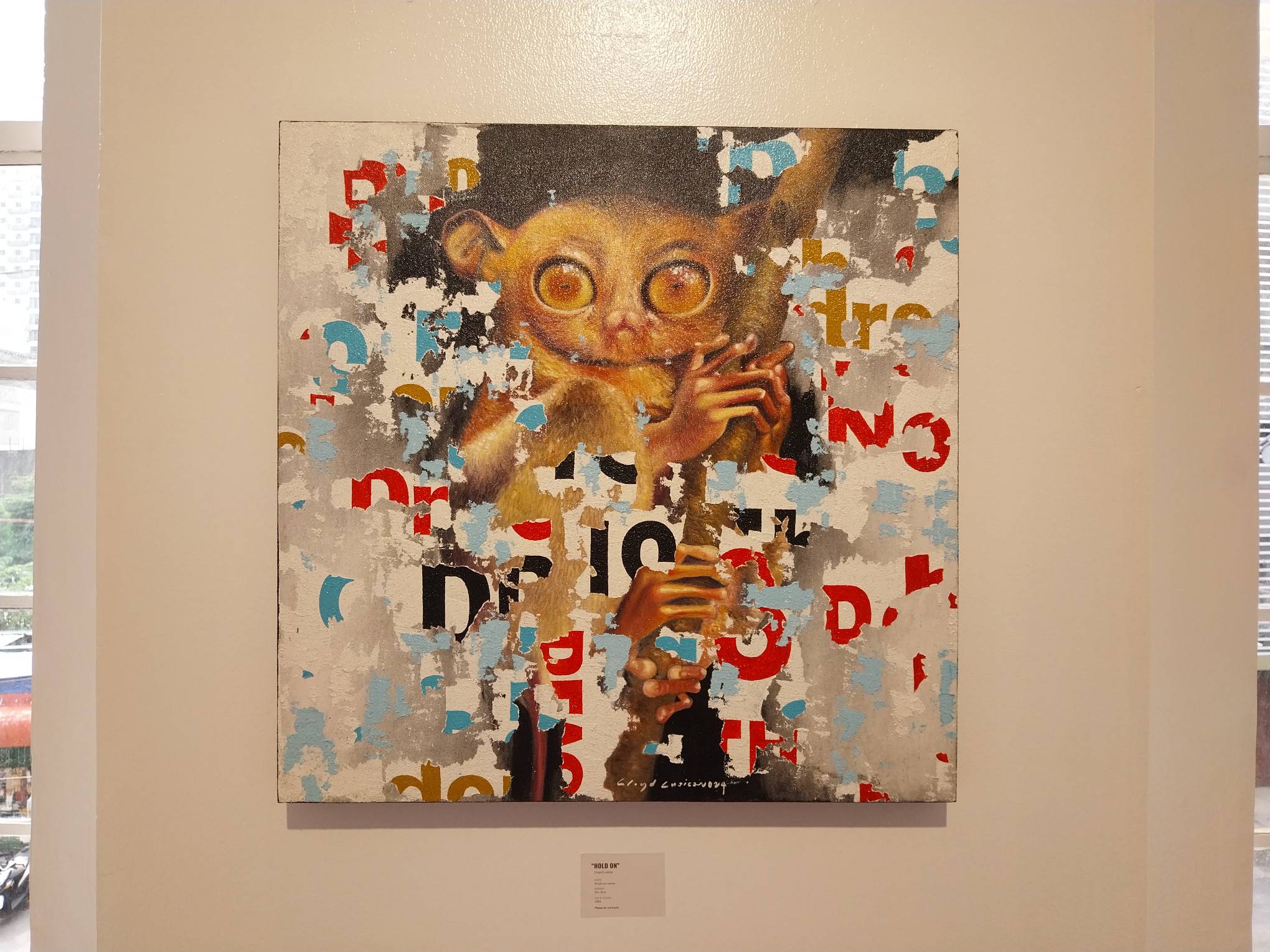
Some of the artists certainly stick with that idea of showcasing the cultural offerings with their work. The iconic tarsier, for example, appears in at least two works. The first one, “Malmag” by Joseph Romero, gives a faithful artistic renderingRenderingA realistic or stylized image that visualizes a proposed design before it is built. Produced with 3D modeling and visualization software, renderings show materials, lighting, furniture, and context, helping architectsGo to Rendering Glossary of the animal. Meanwhile, Lloyd Lusica’s “Hold On” surrounds the animals with torn lettering from a ripped-apart poster.
Portraits of the Past and the Present
These works tend to slide between traditional and modern, abstract and literal, in unexpected ways. The paintings focus on topics like provincial farm life or the onset of modernity in our world. In many ways, despite their geographical differences, Manila and Bohol seem to grapple with the same existential crises.
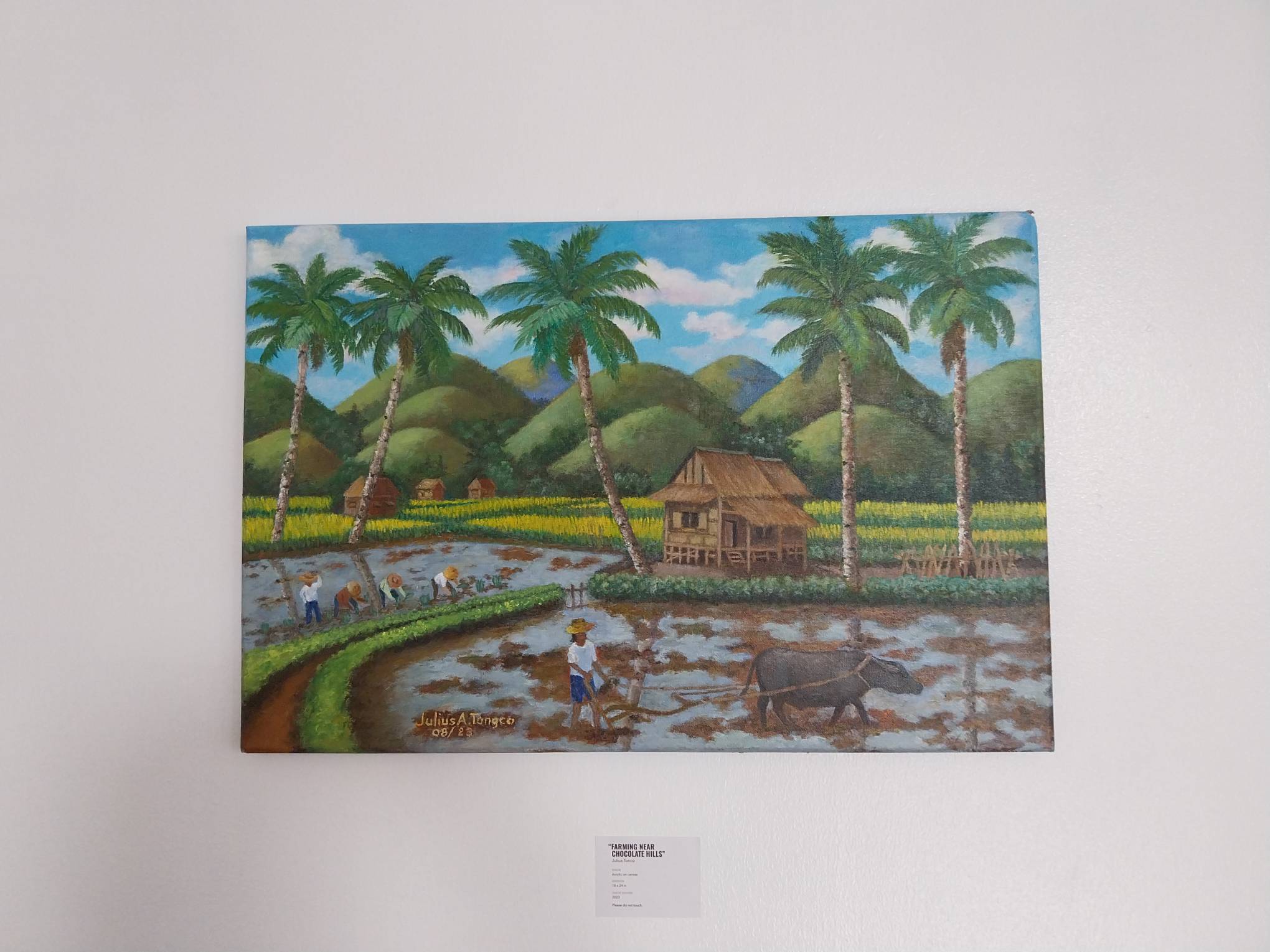
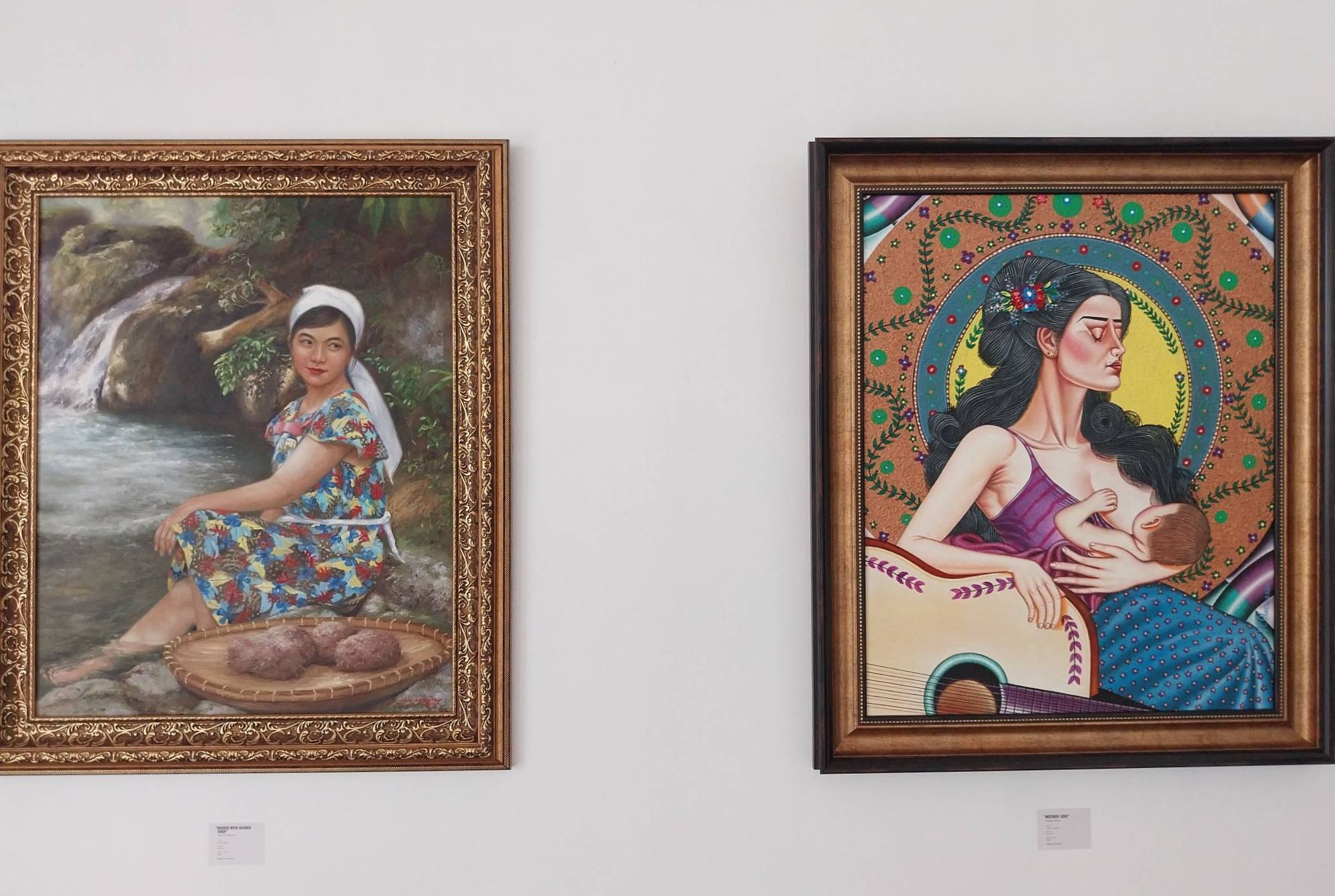
Paintings like Julius Tonggo’s “Farming Near Chocolate Hills” or Victor Naquila’s “Maiden With The Sacred Crop” portray a traditionalist view of provincial life, something that wouldn’t be out of place in a Stevan Javellana novel. Jonathan Manigo’s “Bahit sa Abot” modernizes it slightly with the rice thresher, but the idyllic-ness remains intact.
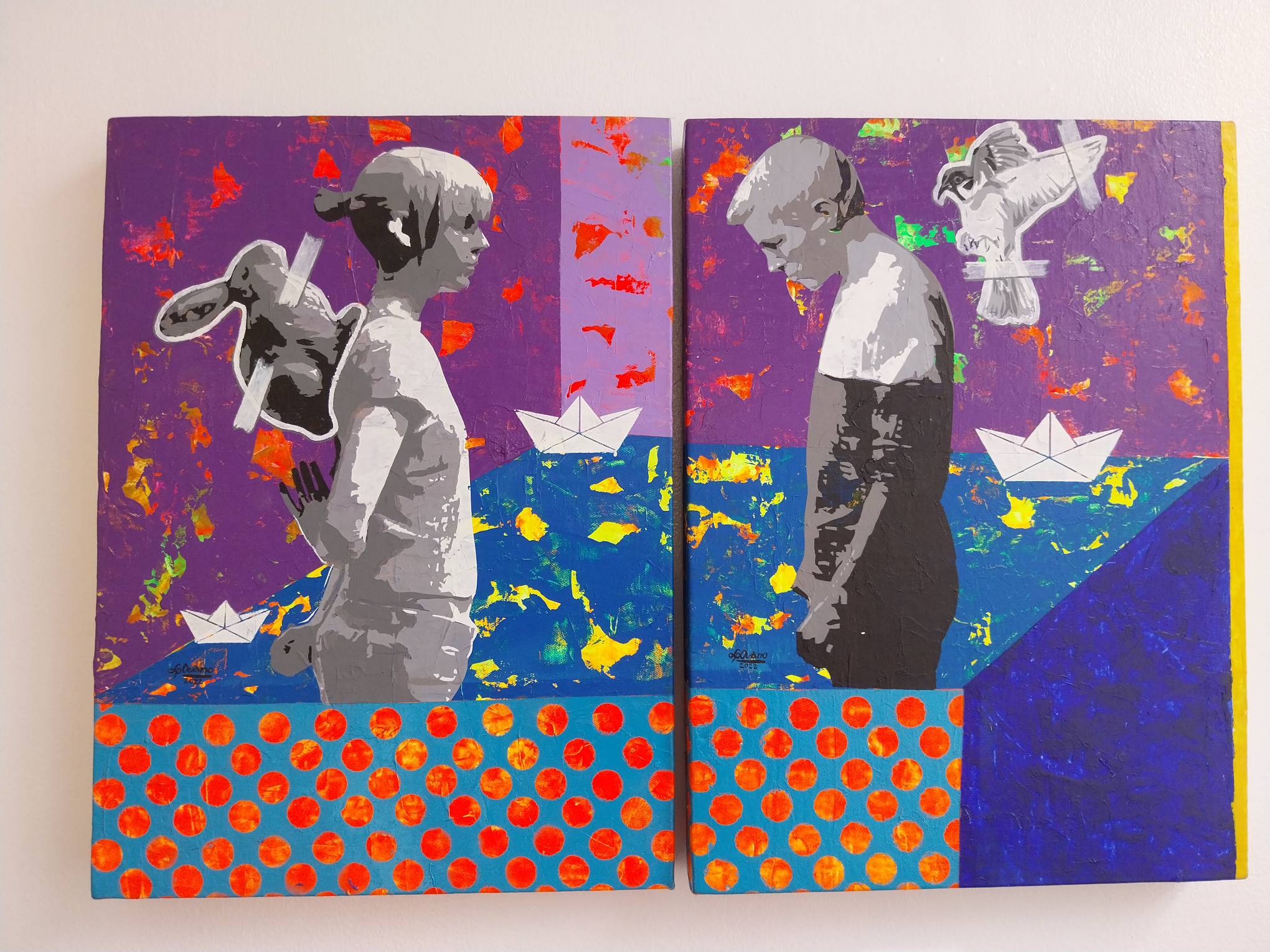
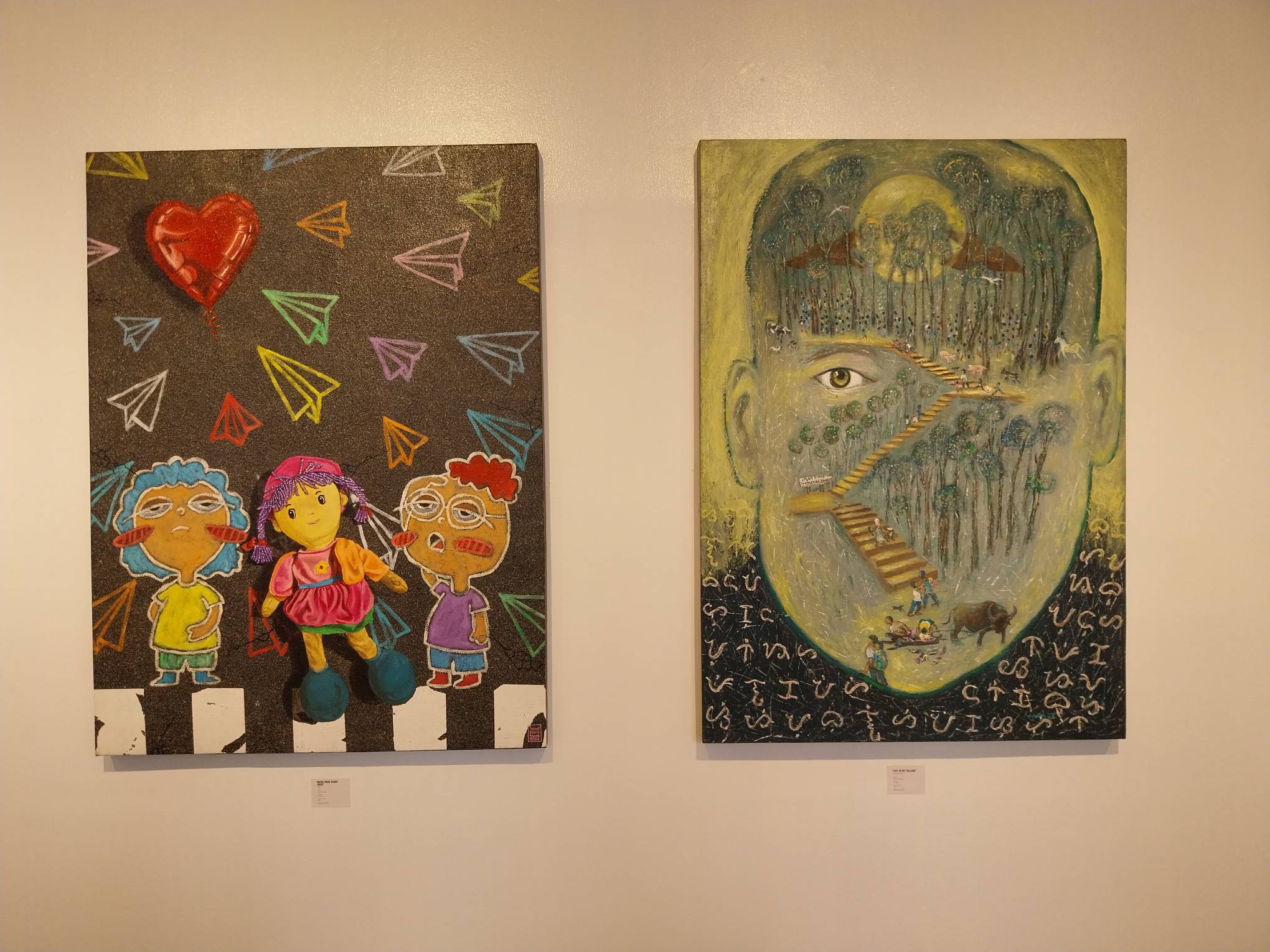
Other works like Henri Cainglet’s “Life in the Village” or Ma Sylvia Gonser’s “The Movie in My Mind” create abstract ruminations of people’s inner worlds and crafting the environment that surrounds them through those ideas. Jumjum Uoano’s “Out of the Water 1-2” portrays the loneliness of growing up in a vivid graffiti-inspired vision. The works, at the very least, are in conversation with the artists in Manila.
Sculpture Abstraction
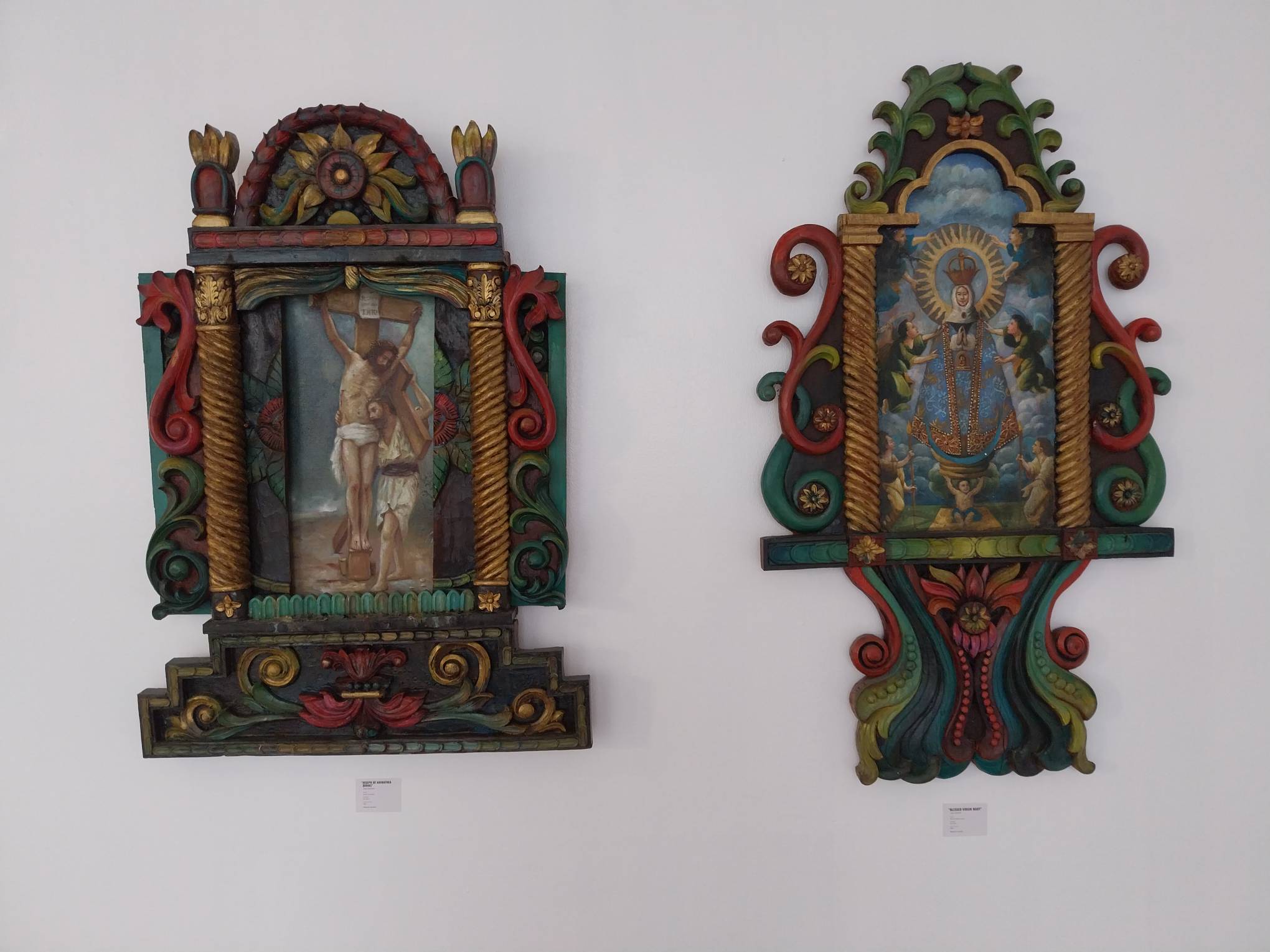
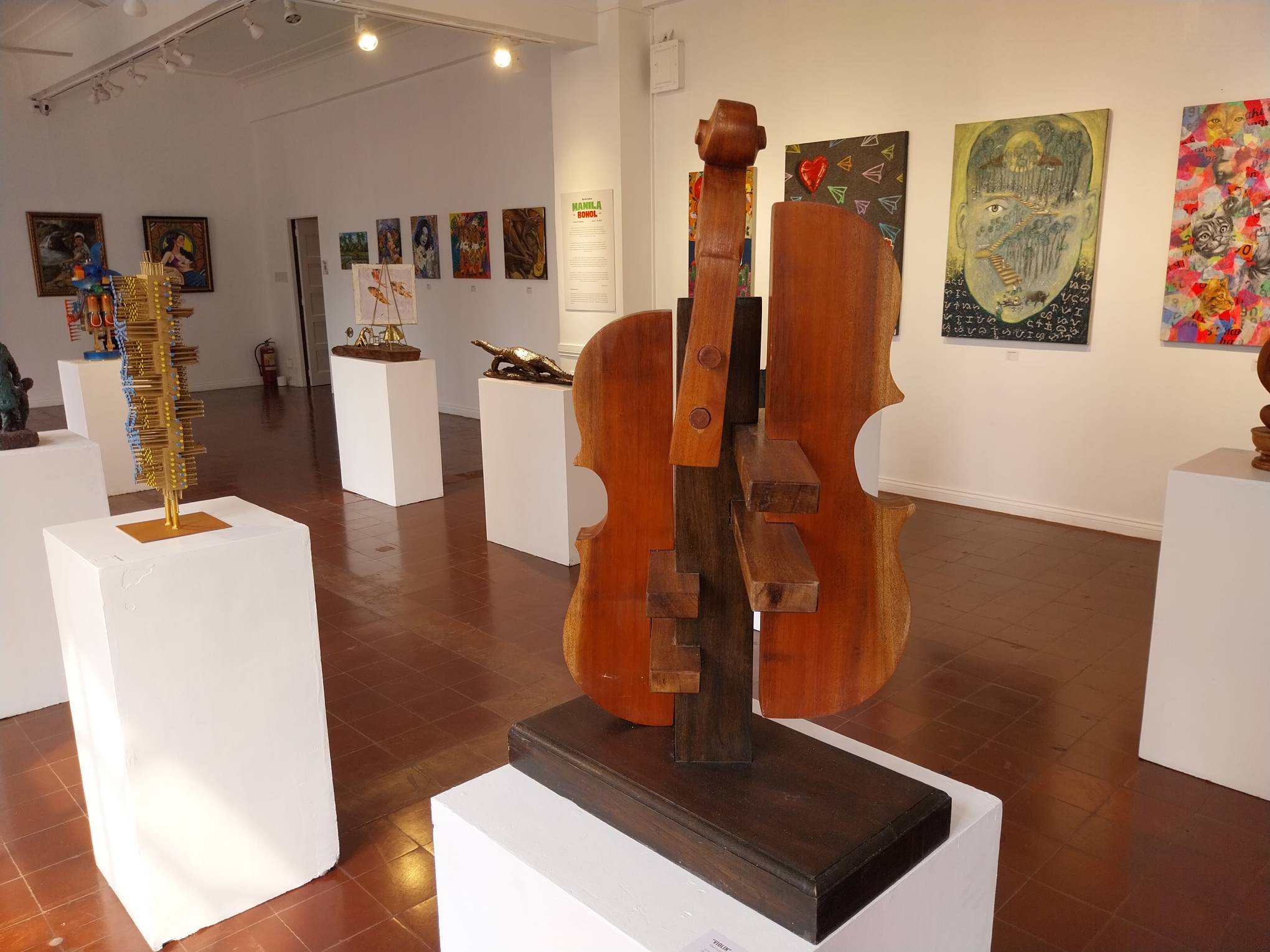
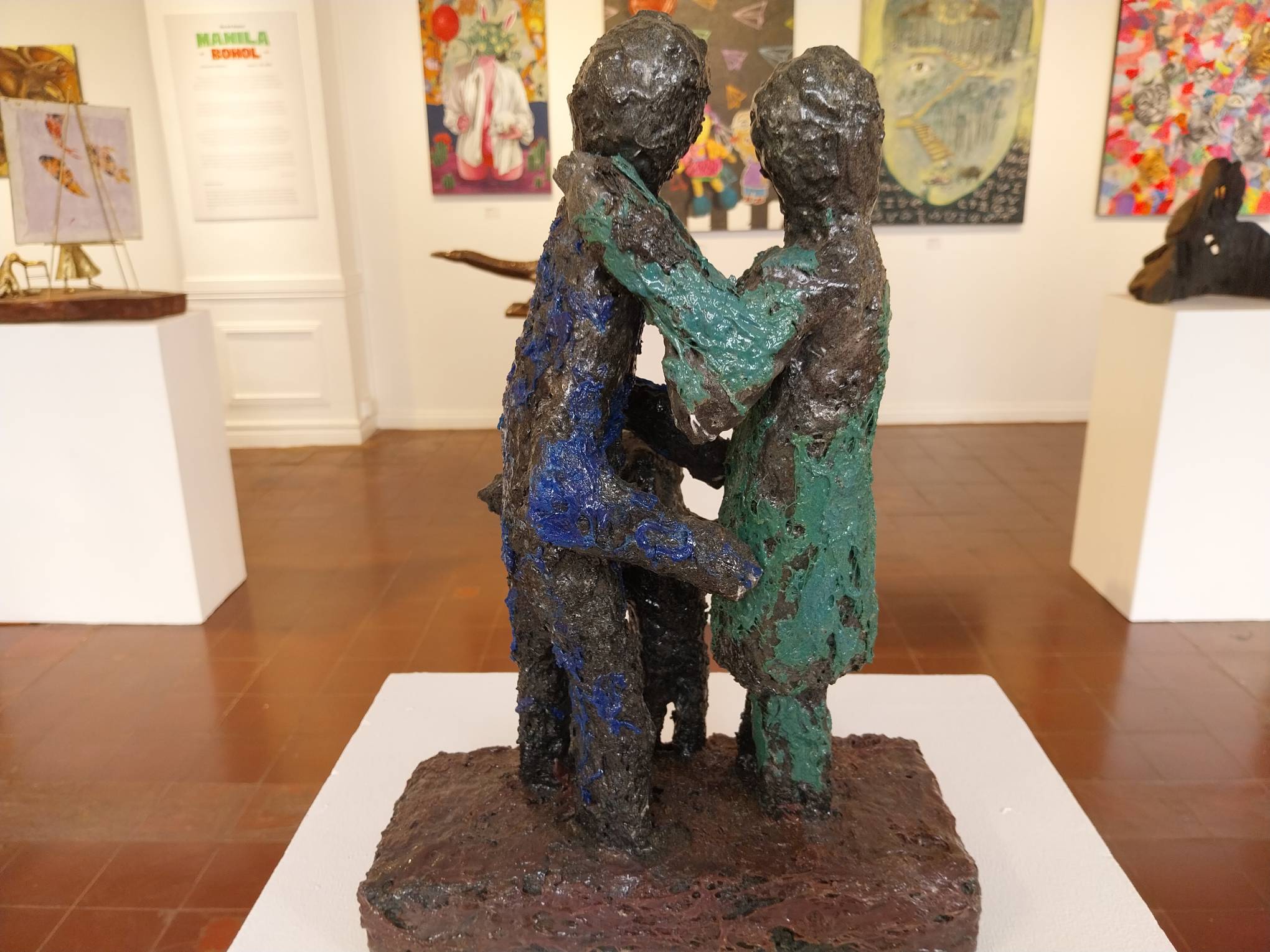
The sculptures pursue a broader artistic purpose with their ability to play with three dimensions. Glen Lumantao’s “Violin,” for example, shows a deconstructed wooden violin that only exists when seen in a certain perspective. Pedro Angco Jr.’s “Forever” portrays a family seemingly preserved in the mud. Two works by Joey Labrador communicate the reverential religious tone that exists in the province.
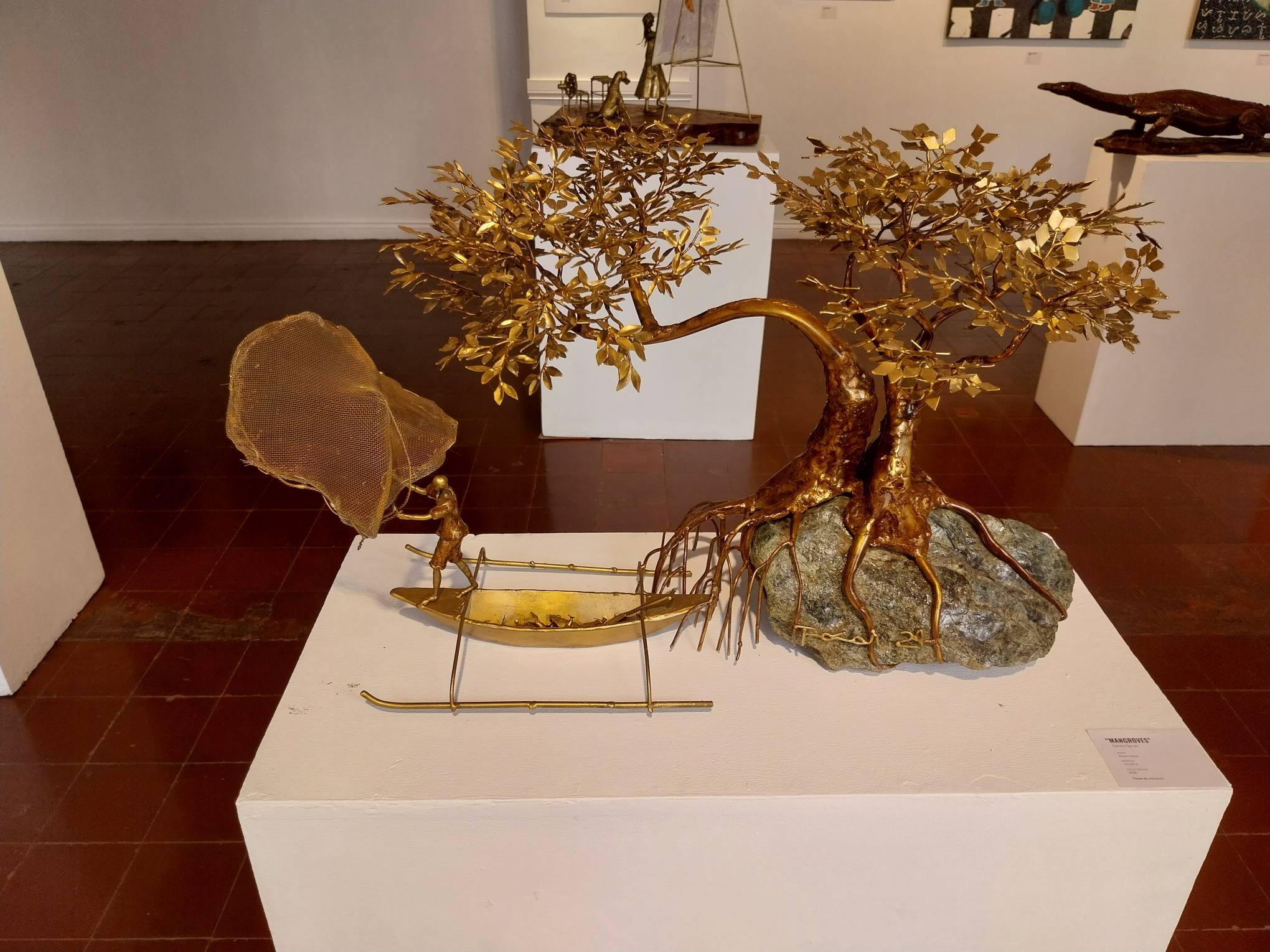
Fermin Tac-an’s “Mangroves” takes its audience to a day fishing for a living. Some of the details of the work look exquisite, especially the careful creation of the fishing net that’s as detailed as the real thing. The way the artist uses gold to reflect the hot sunny day feels inspired.
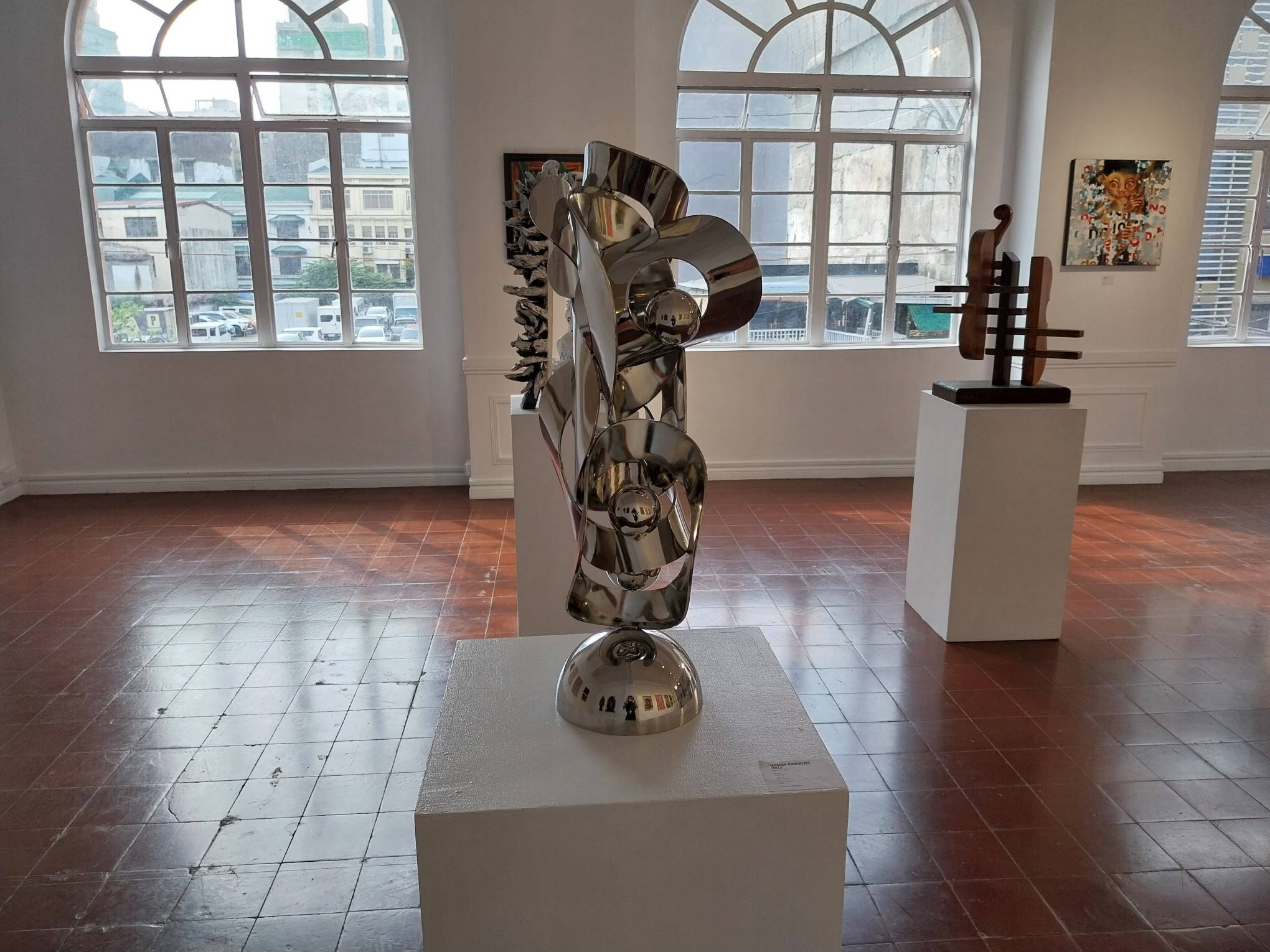
One interesting sculpture shown in the exhibit is “Modern Chocolate Hills” by Sam Penaso. It’s a stainless steel sculpture of twisted balls with conical openings floating underneath it. The sculpture redefines the idea of what hills could mean, putting it instead in a self-contained, spatial environment that doesn’t read as up or down or right or left in any way.
Linking Artistic Pursuits Together
In a way, the works come together as a glowing epic showcase of Boholano creativity. That’s largely due to the disparate art styles and focuses of the artists. Something like Marc John Israel’s “Sigbin I” or Lloyd Lusica’s “Pusakal” don’t feel necessarily Boholano, but they help sketch a broader world defined outside of the big landmarks. These are Boholano, too; they define their interests outside of whatever stereotypical ideas we have.
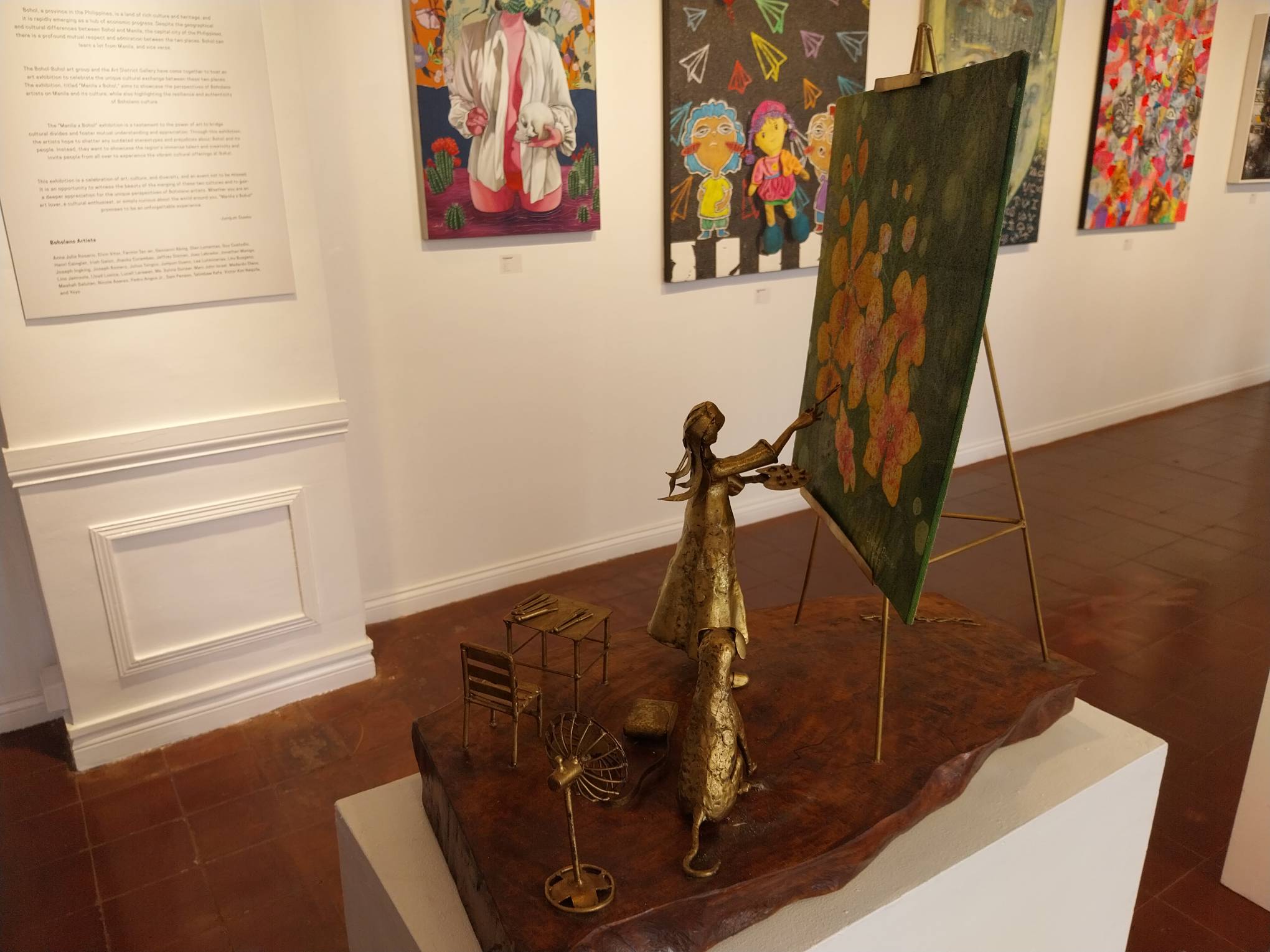
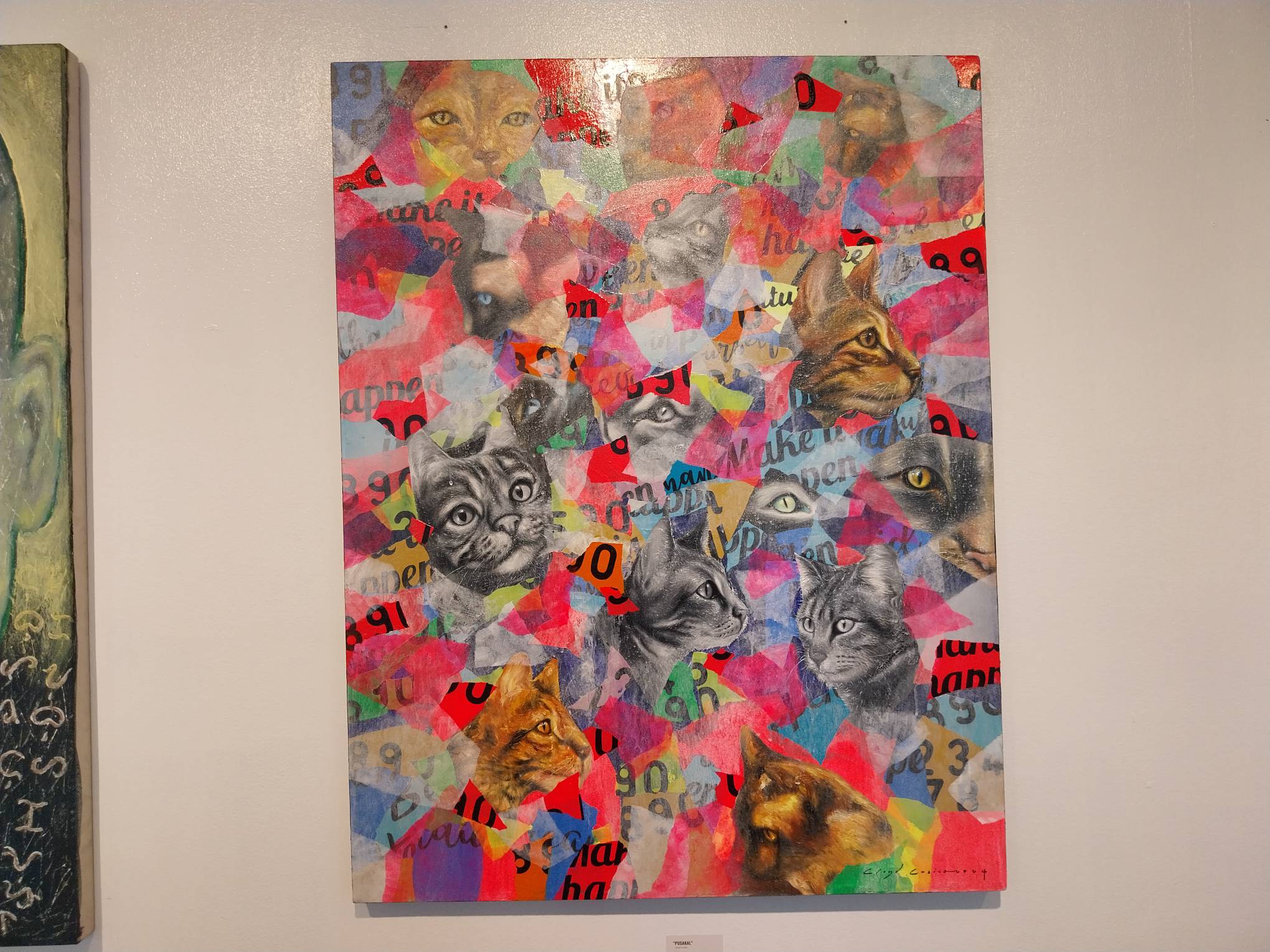
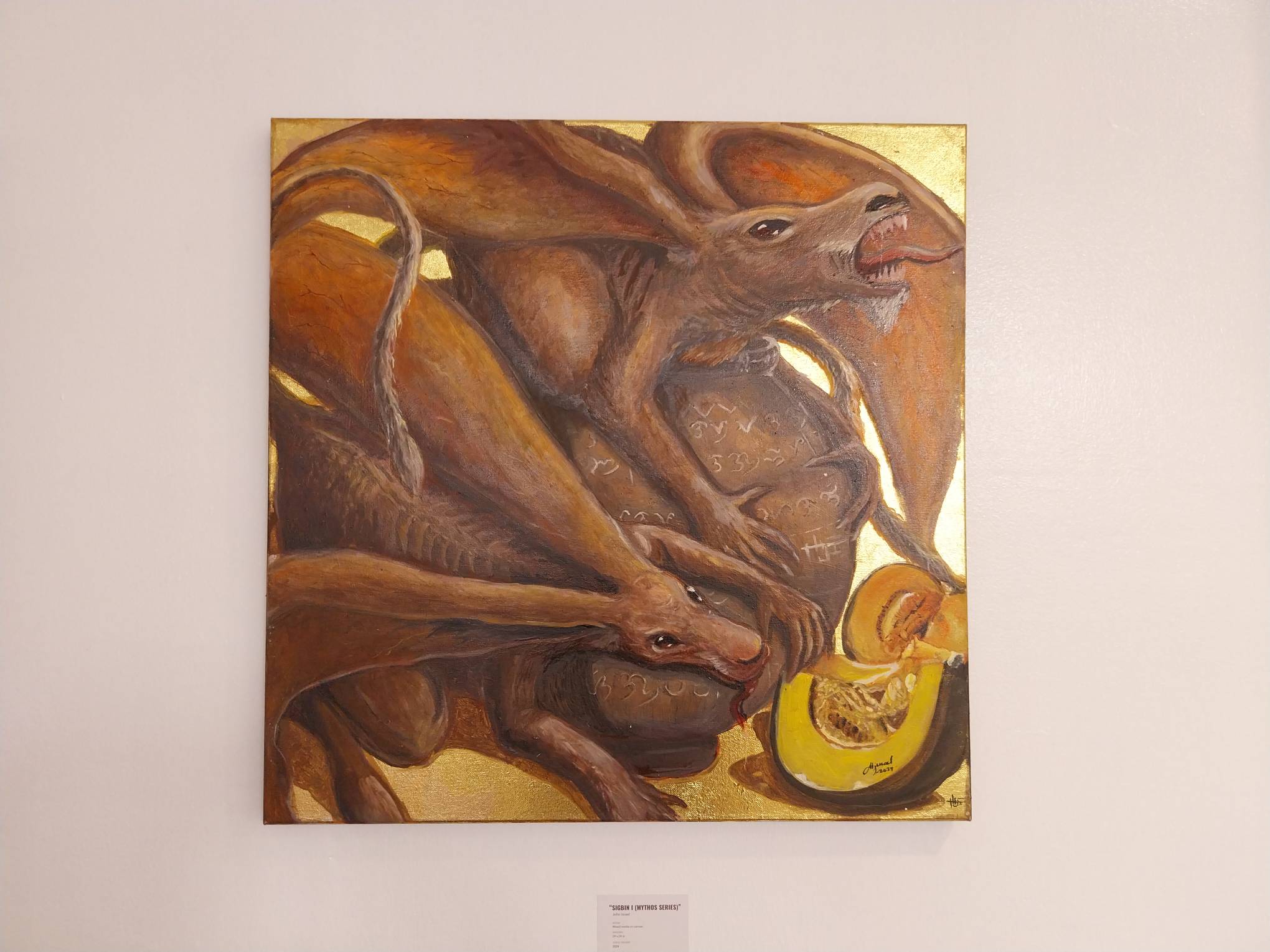
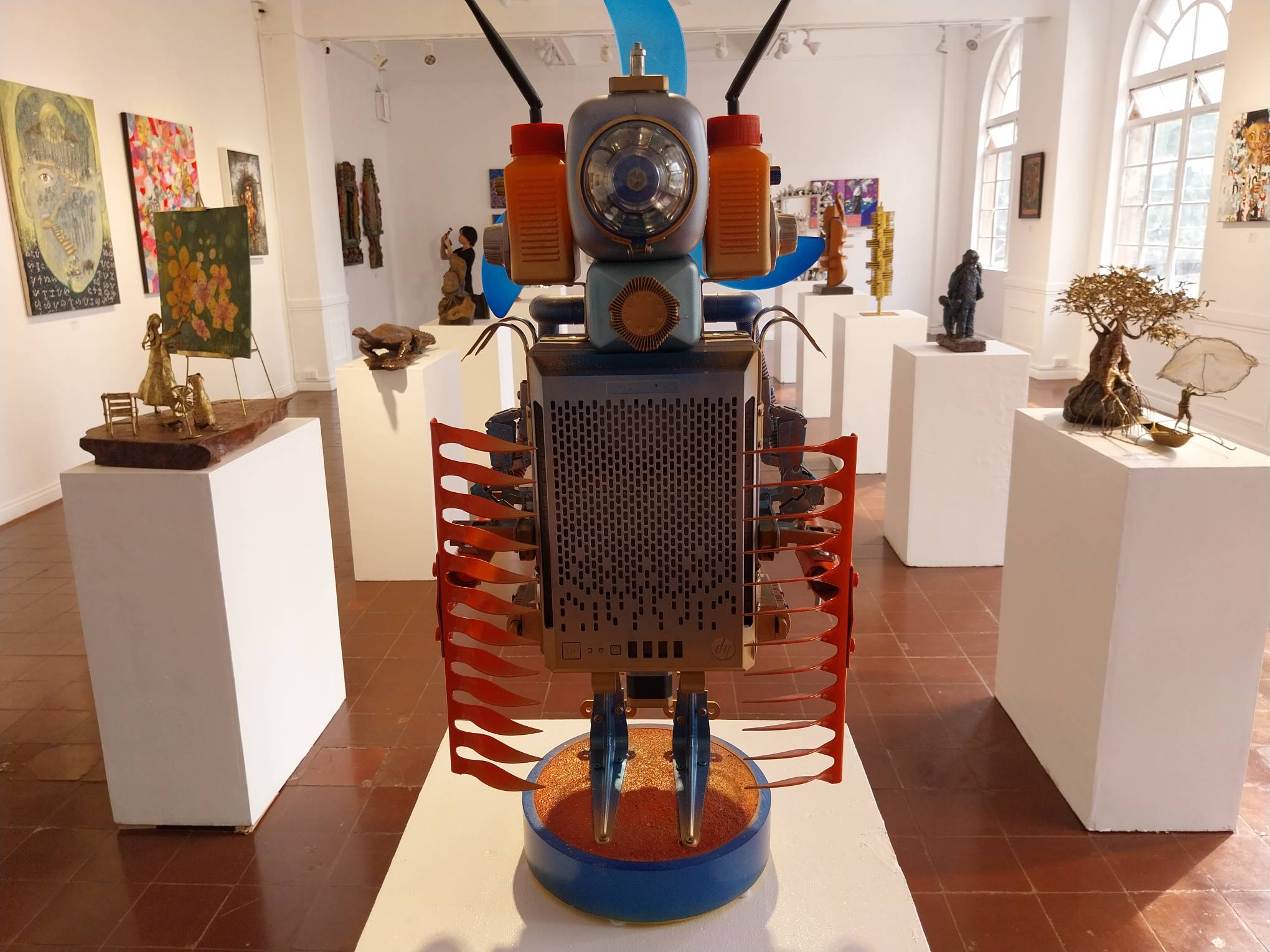
Manila x Bohol succeeds because of its variety. It lets the artist speak, allows them to define Bohol in their own way, no matter how abstract it may seem. Broad or focused, the exhibit shows Bohol as a region with different creative voices. That, more than anything else, is the best way to bridge the cultural divide between the province and Manila.
Related reading: Elvin Vitor on Winning the Leonardo da Vinci International Prize for His Unique Work
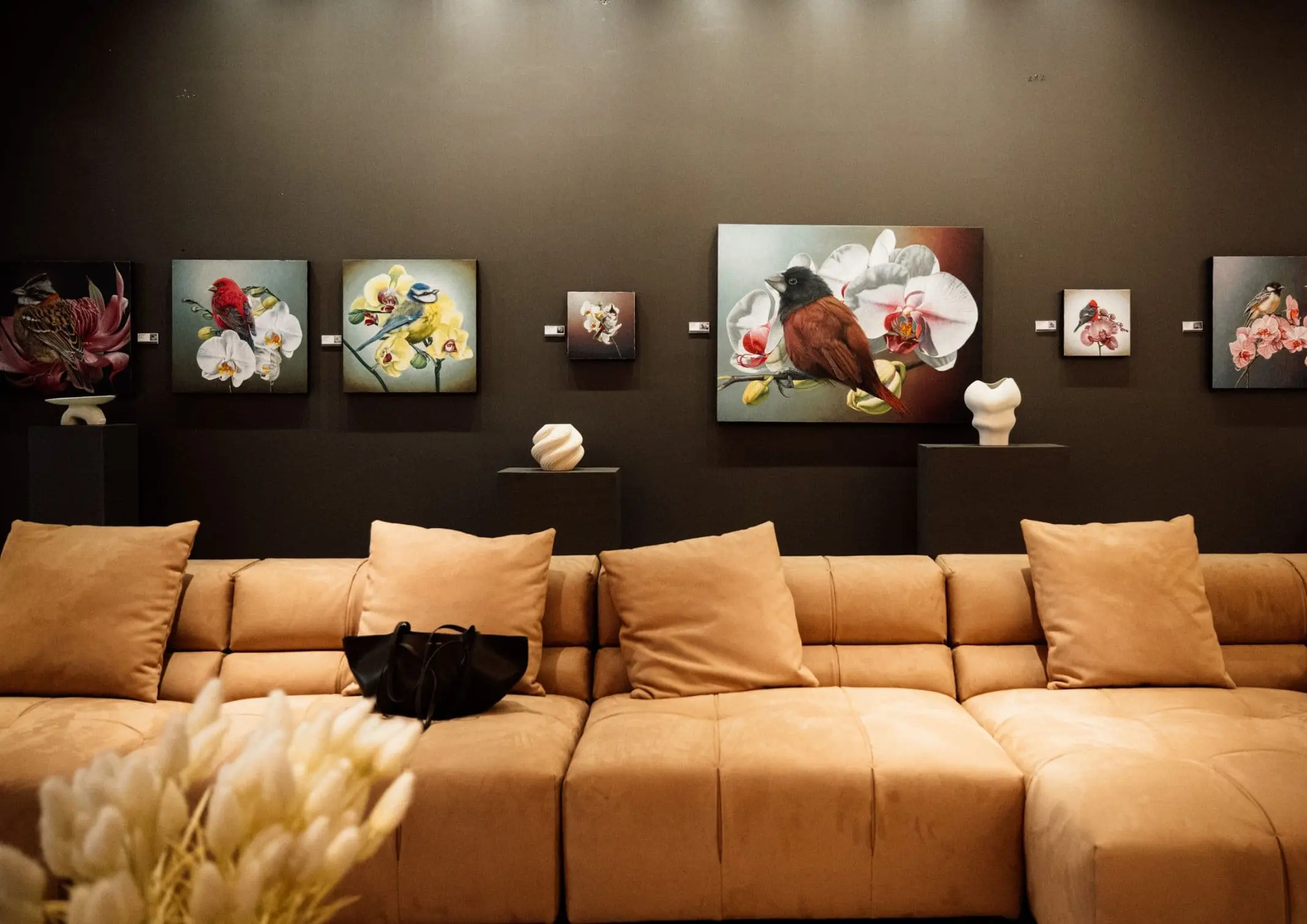
Art and furniture are often selected separately, yet their relationship can shape how a room looks and feels. The collaboration between Hooga and Galerie Joaquin explores how these elements can work together, bringing contemporary artworks into furnished residential settings at Hooga’s showroom in Uptown Mall, Bonifacio Global City. For Hooga, which curates furniture, lighting, and […]
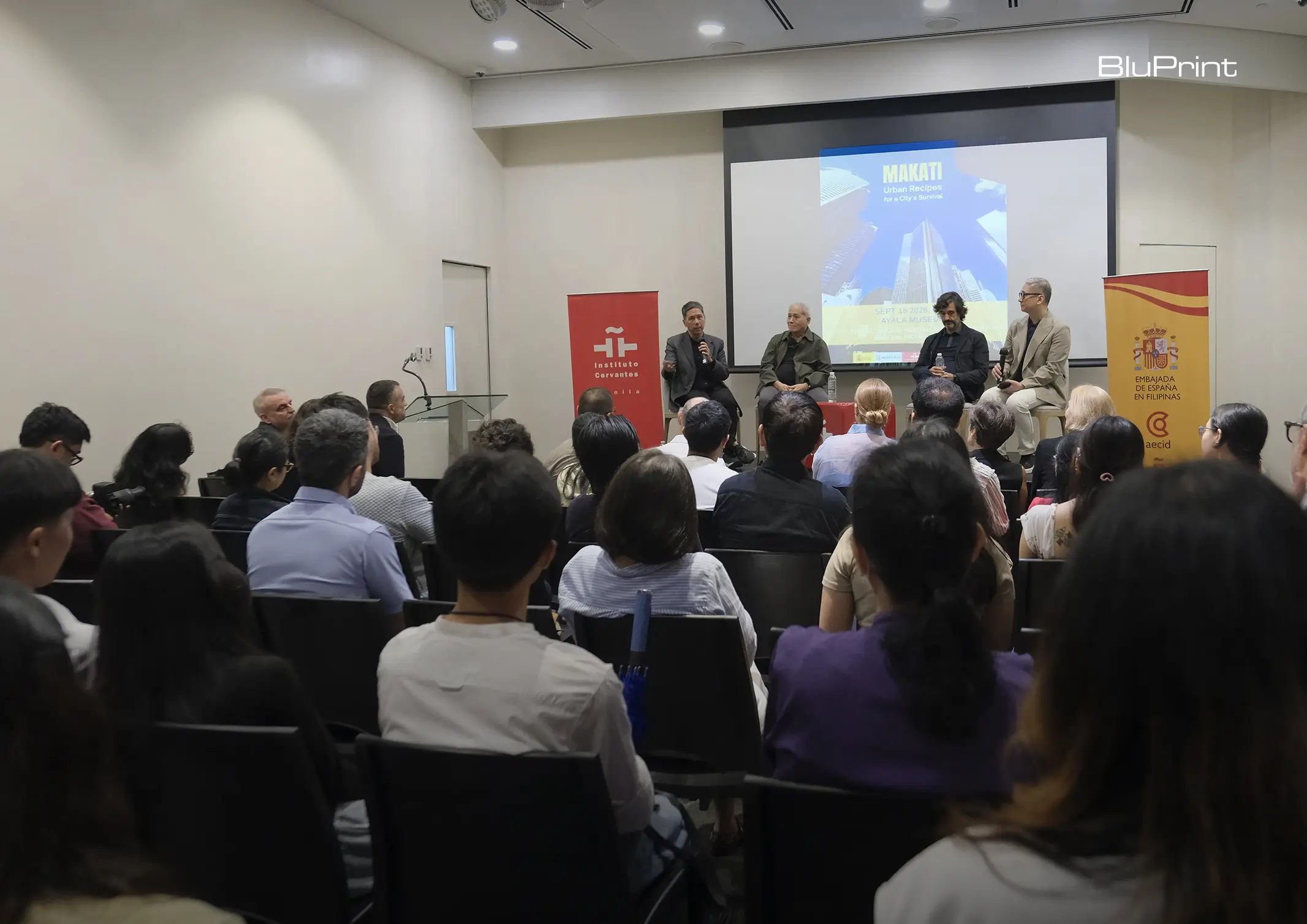
How can better-planned cities create the conditions for more creative, livable, and resilient urban environments? “Makati Urban Recipes for a City’s Survival,” a colloquium held at the Ayala Museum on September 15, brought together architects and practitioners from the fields of urbanism and the creative economy to discuss how design, planning, and collaboration can address […]
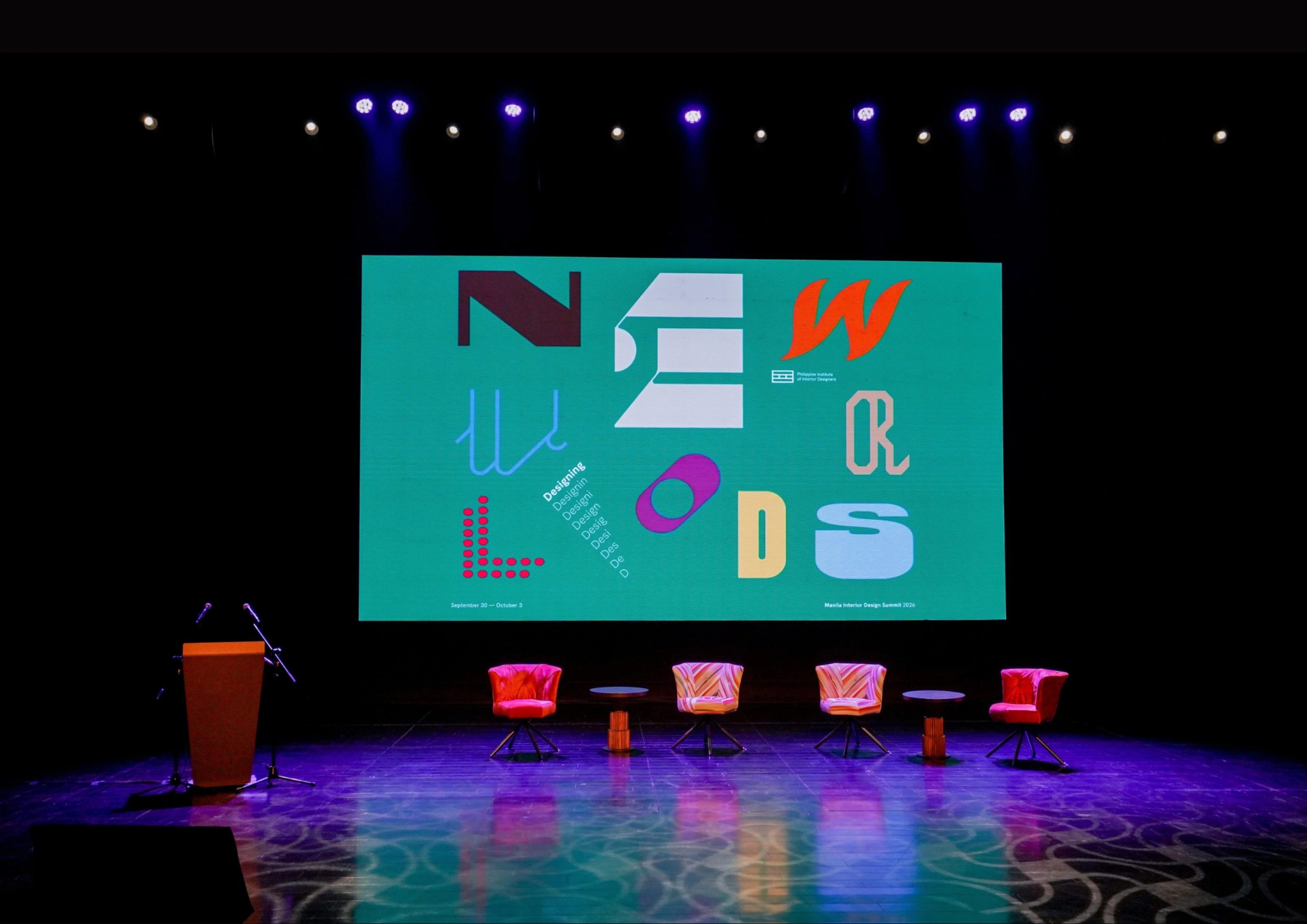
The fourth Manila Interior DesignInterior DesignThe discipline of planning and shaping interior spaces for function, comfort, safety, and beauty. It covers layout, lighting, materials, finishes, furniture, and color, and in the Philippines is a licensedGo to Interior Design Glossary Summit (MIDS) brought together more than 300 delegates for four days of conversations, exhibitions, and design […]
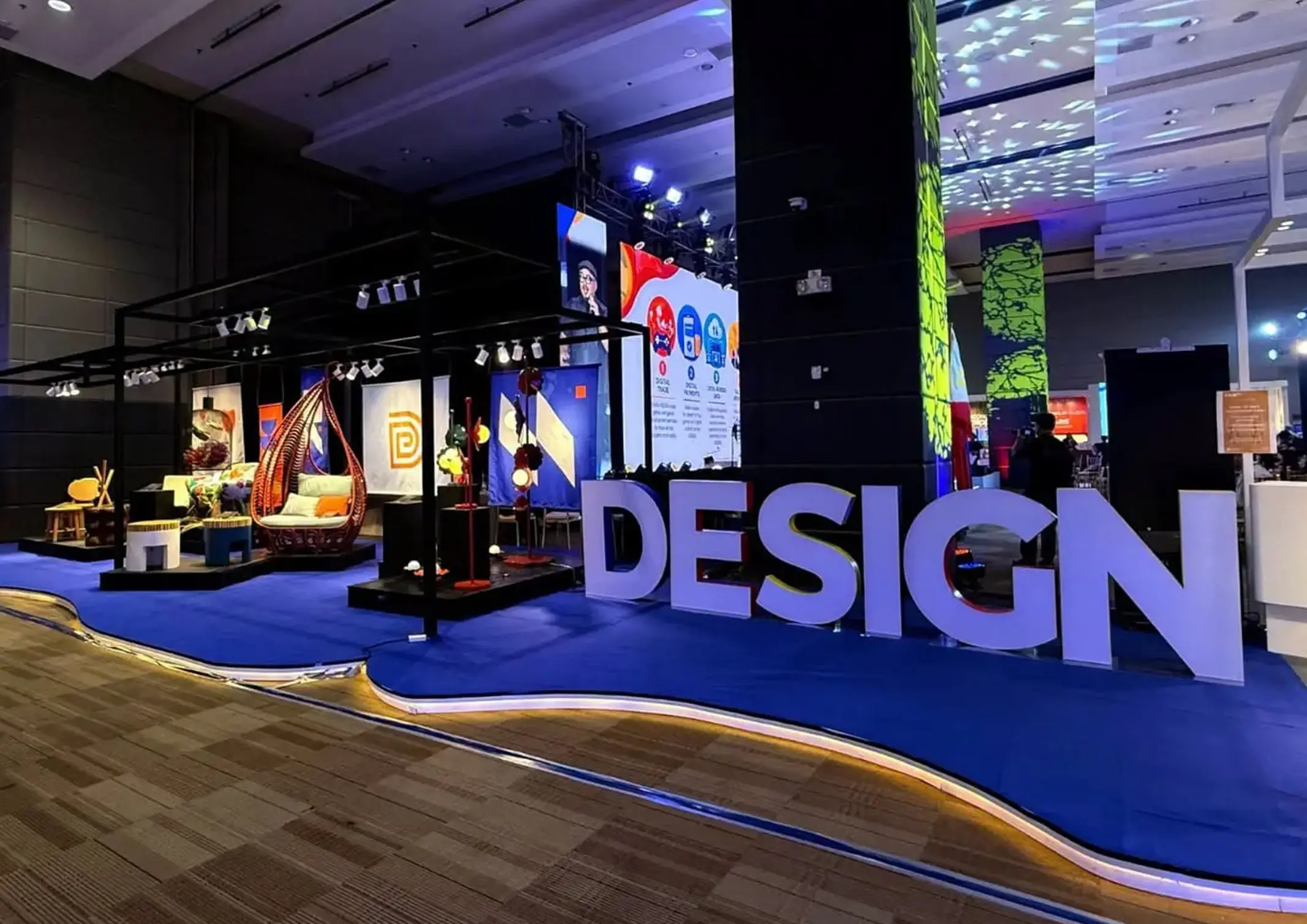
Held at the SMX Convention Center Aura in Taguig City, the first ASEAN Creative Industries Expo by Malikhaing Pinoy (ASEAN MPEx) features nine creative domains, including design, visual arts, digital interactive media, and performing arts. Organized by the Department of Trade and Industry (DTI), the event includes exhibitions, cultural performances, industry talks, and pitching sessions […]
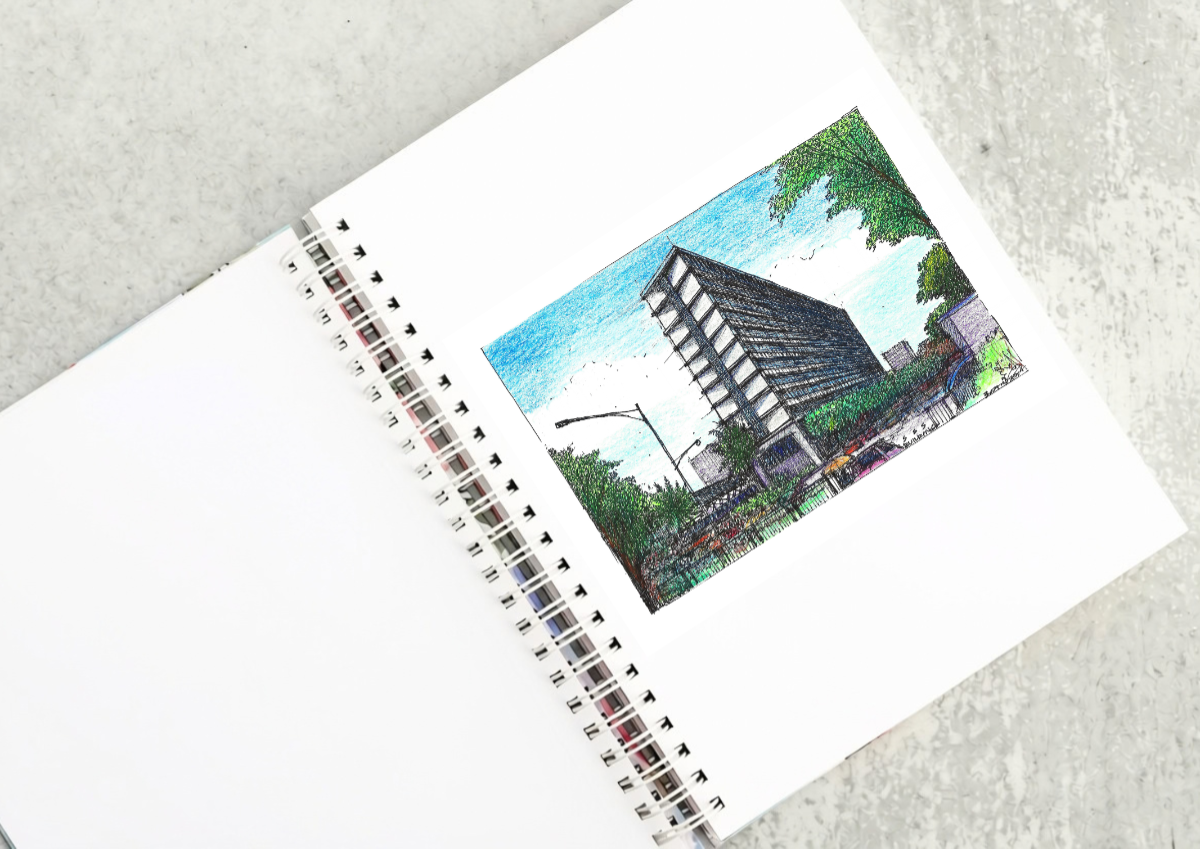
The SSS Building as an Expression of Civic Modernism My favorite modernist landmark in Quezon City is the SSS building on East Avenue. Designed by National Artist for ArchitectureArchitectureThe art and science of designing and constructing buildings, structures, and spaces that are functional, safe, and aesthetically pleasing. It encompasses the planning, design, materials, and techniques […]
Read the issues.

Collect the volumes.

Recommended Video
Tap to Unmute
Unmute
0:00
0:00