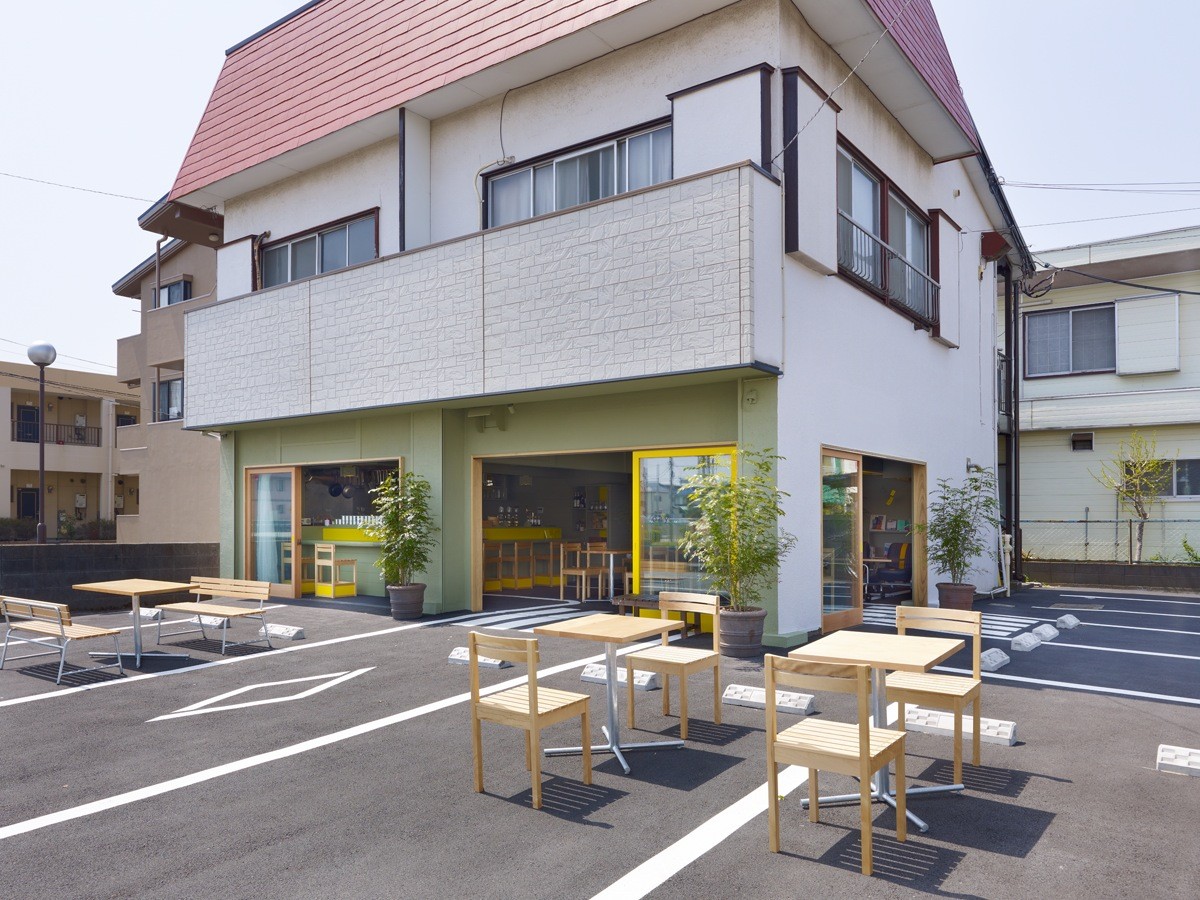
Within the streets of Shizuoka, Japan, an ordinary building goes through an extraordinary transformation. Cafe Day renews two traditional Japanese izakaya pubs into a contemporary coffee shop. It’s a project that espouses how community needs can still be retained with a new establishment such as a neighborhood gathering spot. Suppose Design Office crafts an enticing design with an imaginative combination of different tropes.
Recreating a Street into the Building
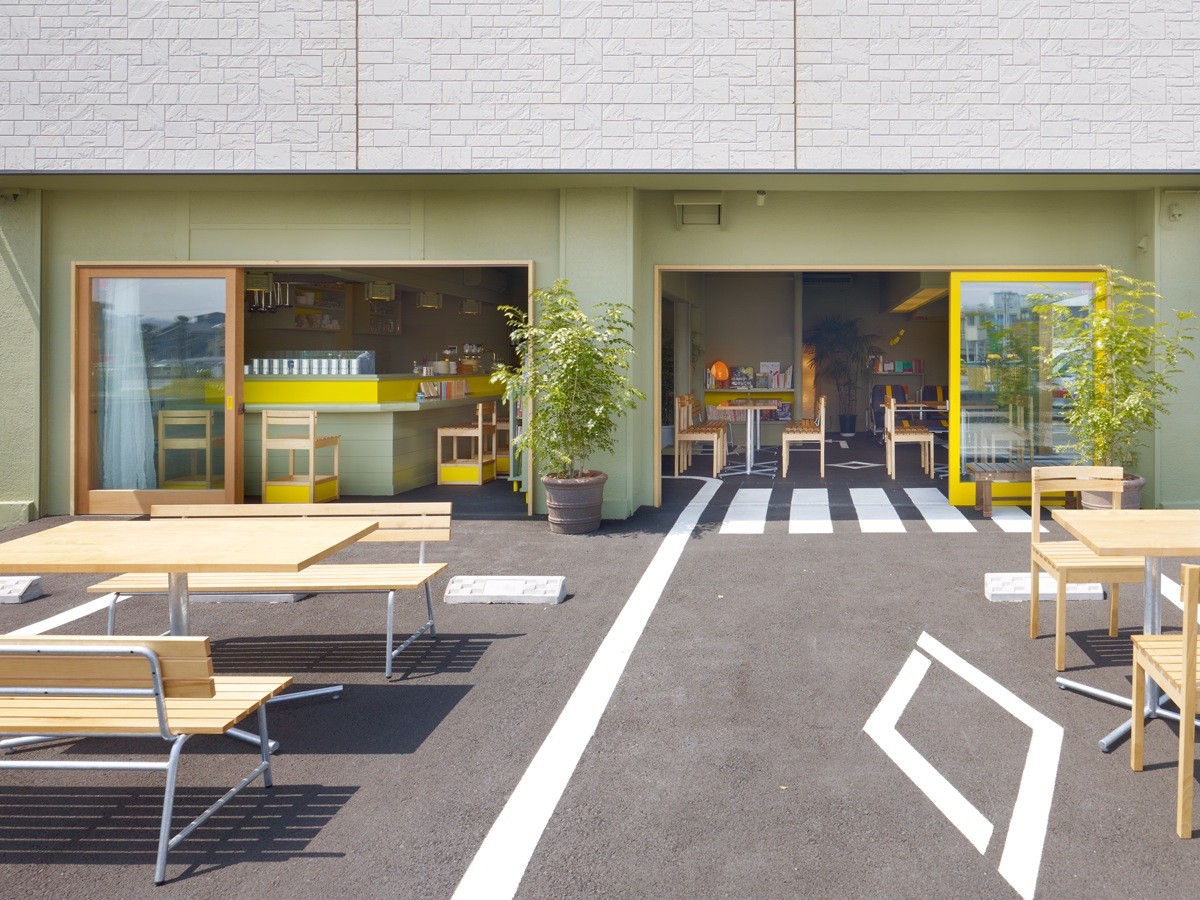
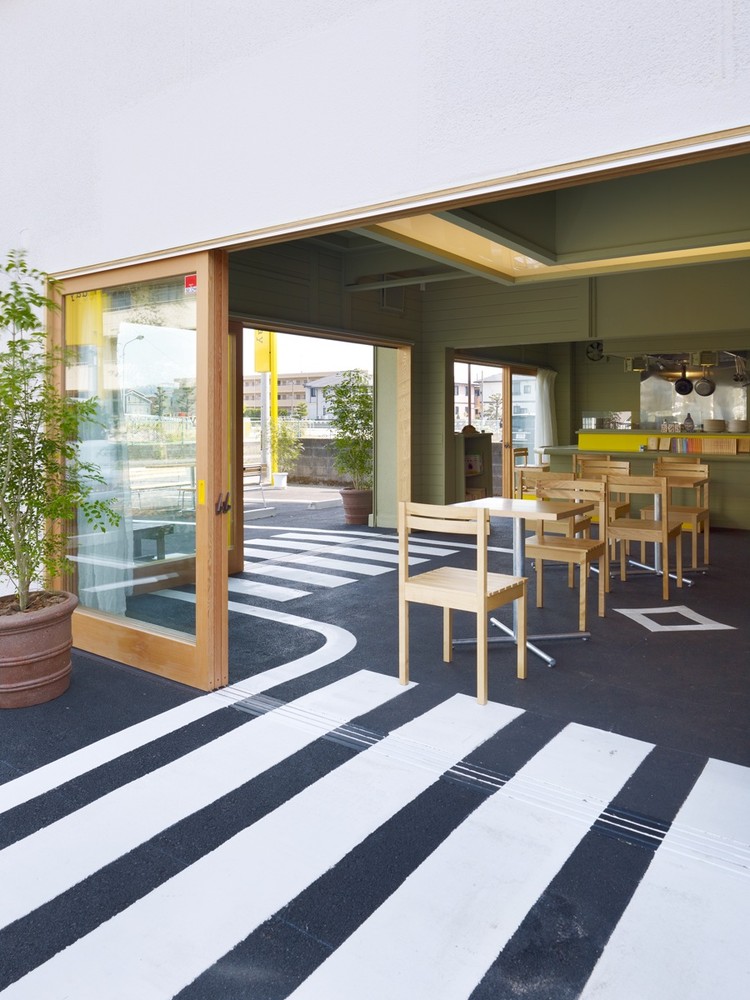
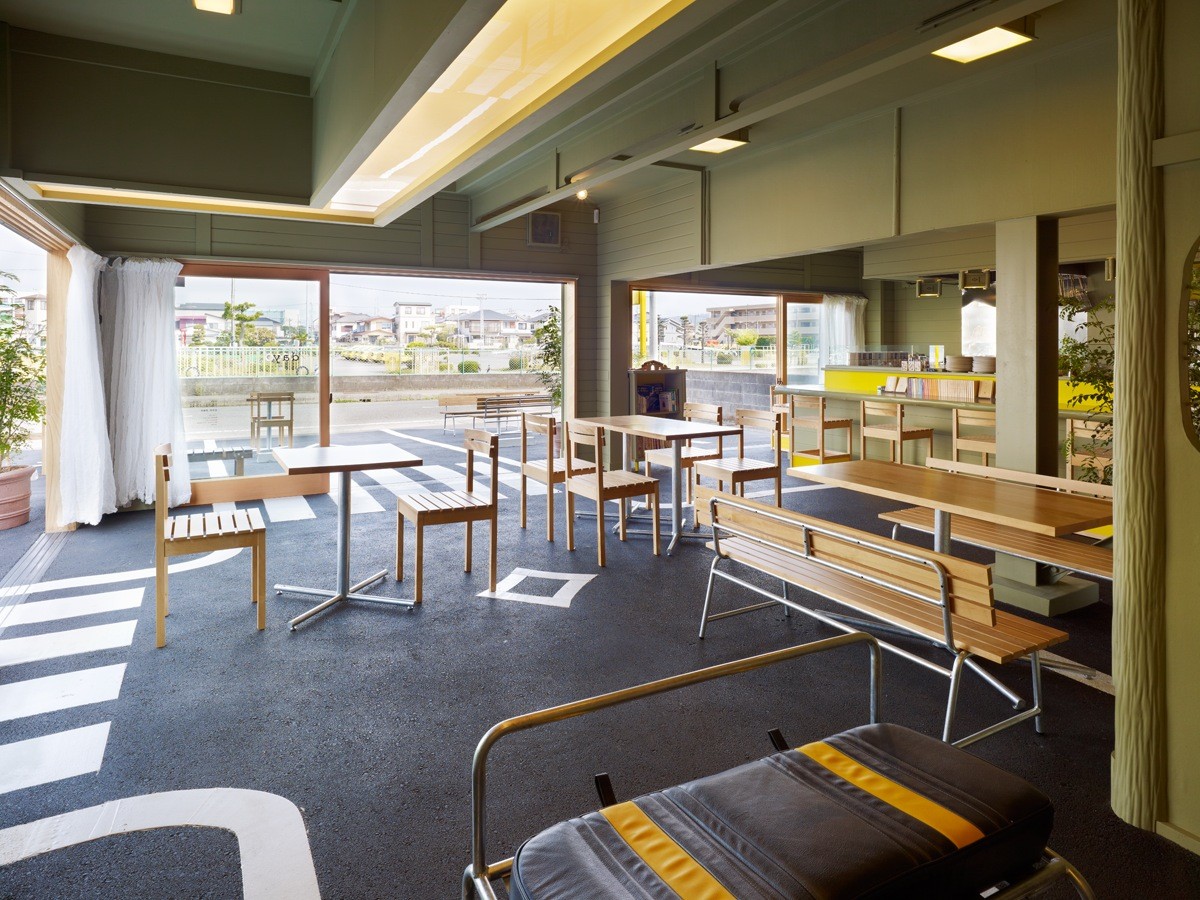
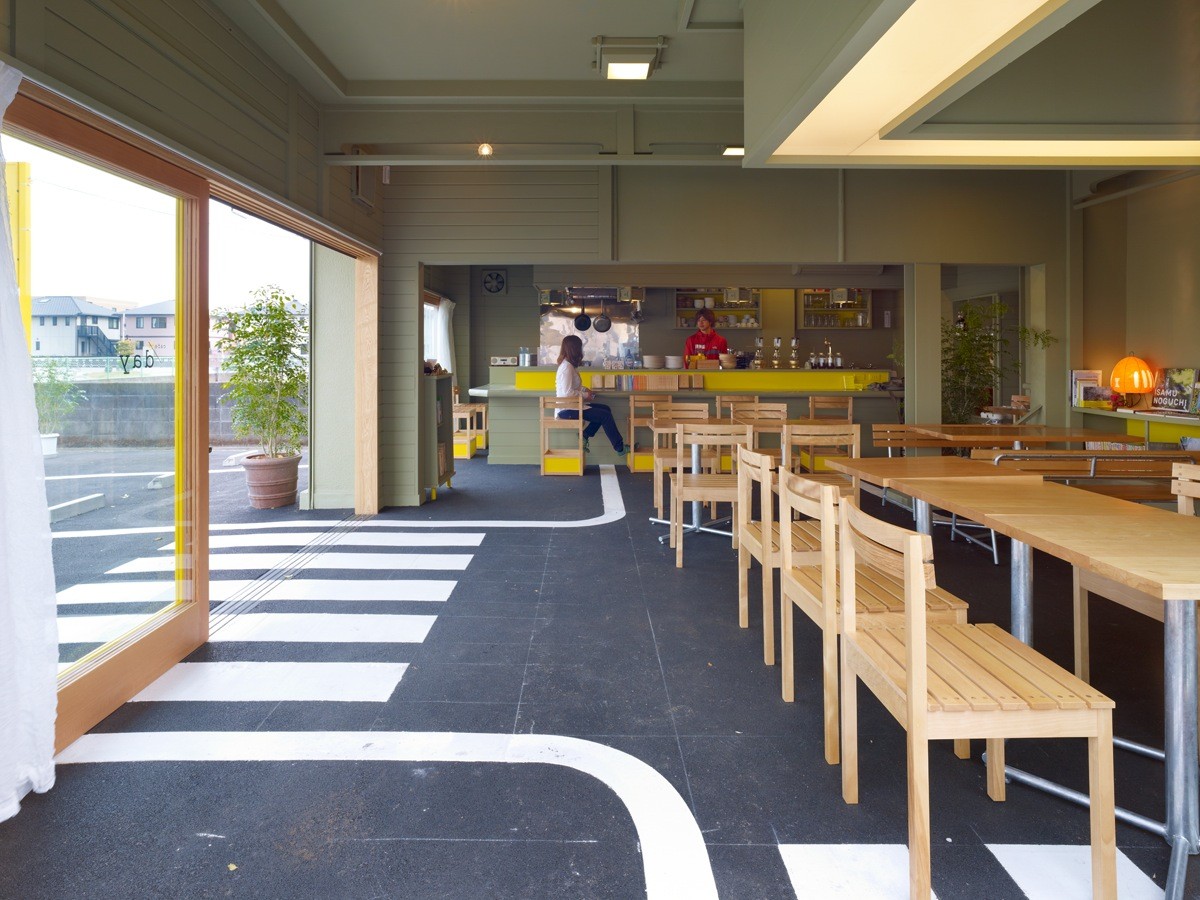
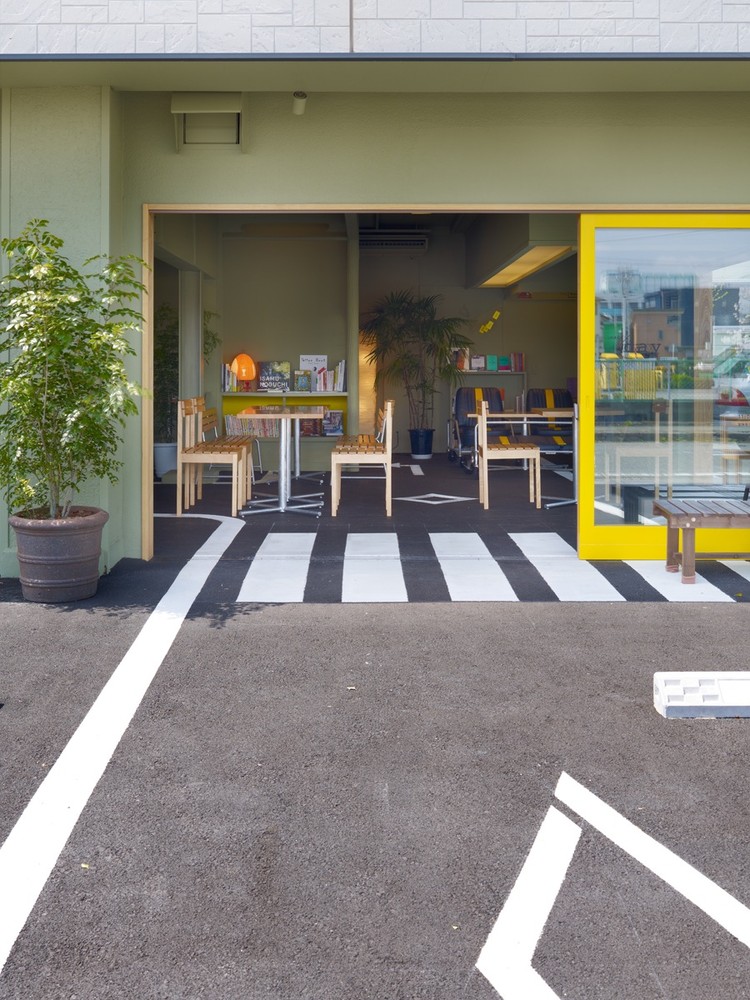
The designers start with a simple move to extend the street into the building. Asphalt replaces the previous flooring, which forms a tactile and visual consistency with the surrounding urban landscaping. Bold white lines reminisce of traditional road markings that guide visitors while yellow accents echo the adjacent driving school. It’s a playful take that explores how other aspects of our environment can be mimicked by architectural design.
The Cafe Day features a unique openness towards the surrounding urban fabric. The renovation removes previous sections of interior walls that further connects the interior with the outdoor. Because of this, the architects can blend in road elements into the heart of the design.
Advertisement
Outdoor seating further extends the cafe space into the adjacent areas. Landscaping is minimal, with only small potted vegetation flanking the entrance, reinforcing the urban character of the place.
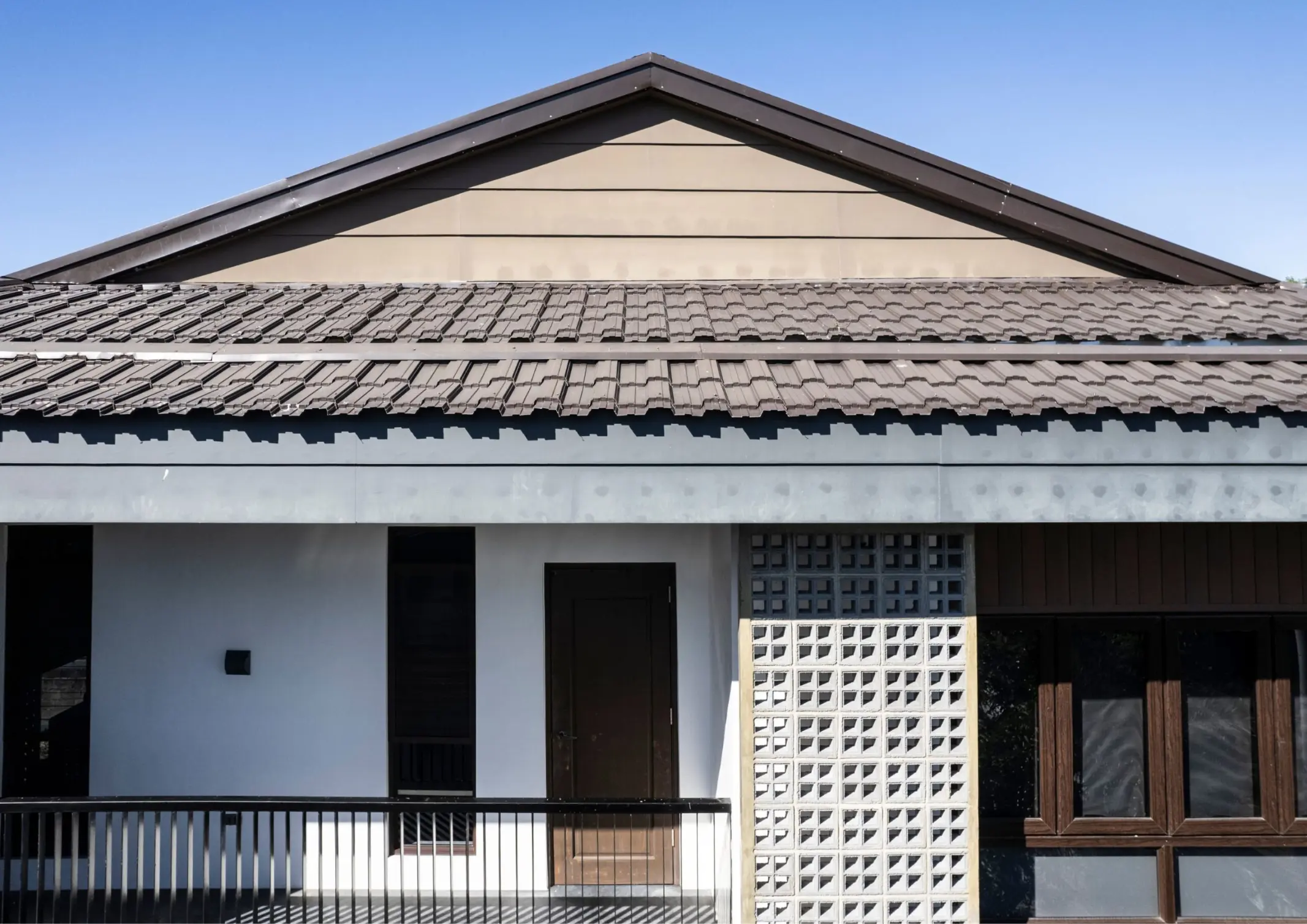
Despite its playful character, the building still pays homage to its predecessor as existing structural elements are left exposed. The roof’s gable is a prominent feature on the frontage that showcases wood cladded slats. A restrained palette formed by white walls, natural wood, and colorful trimmings forms a modern appearance. Despite this, the design is still arguably aligned with traditional Japanese architecture.
Placing Coffee in the Driver’s Seat
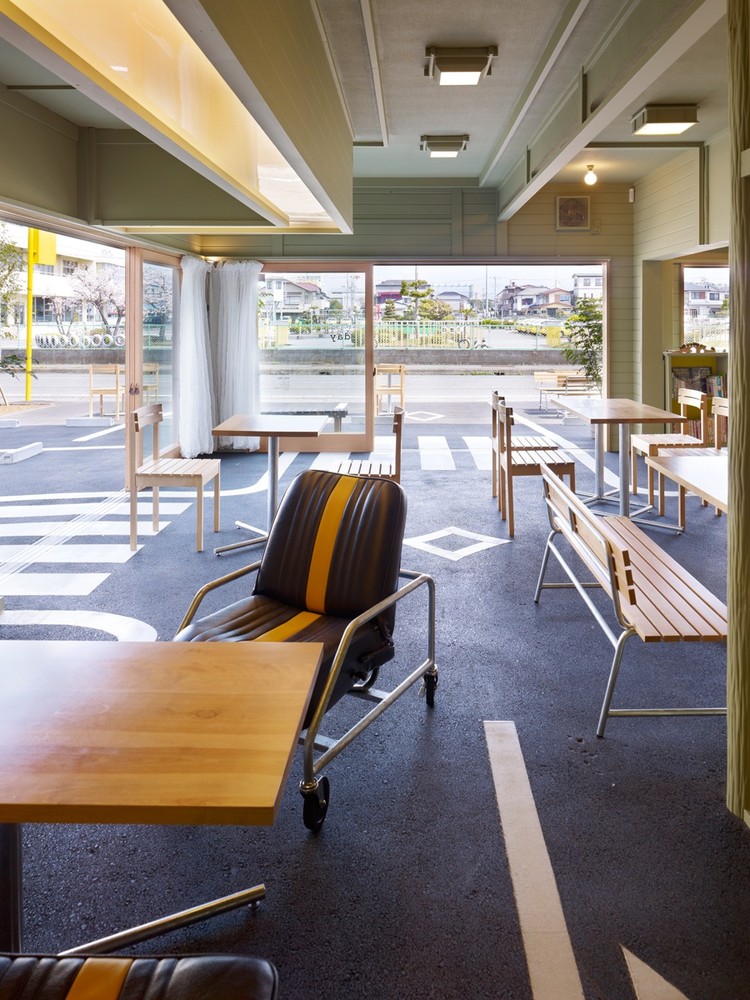
The cafe continues the theme of creative repurposing with its furniture. It’s an assembly of references to the roads of Japan, whether it be from the perspective of car users, commuters, or pedestrians. Repurposed car seats are a nod to the area’s automotive history. Bus stop-inspired benches allude to the public amenities. The cafe’s character simulates the neighborhood’s past and present by taking in these everyday objects and refurbishing them in a different context.
Cafe Day’s material palette is impactful despite its restraint. Pops of color accent the materials and finishes to create a bright and airy atmosphere. The use of concrete, wood, and painted surfaces (crisp white, desaturated green, and bold yellow) is a typical application of Asian Zen interior design principles. This effect is further enhanced by the ample glazing that floods the space with natural light.
In terms of cafe design, the main service counter has a low and approachable profile. Open shelving displays products available that inform customers of the quality ingredients used to make their beverages. The layout is a balance between staff efficiency and guest comfort. At the rear, a small outdoor terrace forms a more intimate seating zone, while a small storage room sits adjacent to the main preparation area.
Advertisement
Creating a “Third Place” for the Locals
The Cafe Day offers its community a “third place” away from home and work. It presents itself as a hub for social interaction and neighborhood vitality brought together by its caffeinated products. Its design supports daily activities, whether it be deep working sessions, group meetings, or just simply enjoying a cup of coffee. The choice to make its space seamlessly strewn across the outdoors encourages chance encounters and immersion with the surroundings.
Through a process of repurposing and reimagining, Suppose Design Office introduces a vibrant destination that celebrates its context. It offers a model for adaptive reuse that supplements a local identity through a new lens, filled with references and strengthened with a functional use.
Modern bathrooms are no longer purely functional spaces. Increasingly, they are being designed as environments that support cleanliness, ease, and quiet restoration within the home. As daily life becomes more demanding and health awareness continues to rise, homeowners are beginning to expect more from the spaces where daily rituals begin and end. For architects and […]
From the moment a diner steps through the door, each detail shapes how a meal is experienced. Restaurant design has evolved, with architects and culinary professionals collaborating to create built spaces that are as intentional as the menu itself. The spatial atmosphere acts as an additional ingredient that can define the culinary experience. Taupe and […]
With climate change and global warming, the Philippine climate is in constant evolution. Consequently, it is important for Filipinos to have living spaces that respond to the local environment. In this article, BluPrint lists down Filipino architects who are reimagining the tropical house, aligning the built and natural environment. BAAD Studio Principal architects Benjee Mendoza […]
Ventilation involves the introduction of outdoor air into a room, providing occupants with their needs. Proper ventilation allows for the moderation of internal temperatures, the creation of better airflow, the dilution of carbon dioxide to acceptable levels, and the removal of contaminants. This addresses health risks associated with indoor air pollution, such as respiratory problems […]
WORLDBEX 2026, running from March 12 to 15, 2026, proves itself as the Philippines’ leading construction and design expo as it wrapped its 29th edition. It drew together 1,000 local and international exhibitors under one theme, “Building Opportunities: Sustaining Lives.” Organized by Worldbex Services International (WSI), in support of the ABS-CBN Foundation Inc., the event […]
Located near the equator, factors such as heat and humidity are the norm in the Philippines. This tropical climate has shaped the development of architecture in the country. As Leandro V. Locsin stated: “The first consideration of the Filipino builder and certainly the most evident in his architecture, which is after all an outgrowth of […]